Securing the Supply Chain: Navigating Trade Disruptions in Oman’s LPG Distribution
Discover how Al Hosni Trading & Contracting Enterprises secures LPG cylinder distribution in Oman despite regional trade challenges and maritime disruptions.
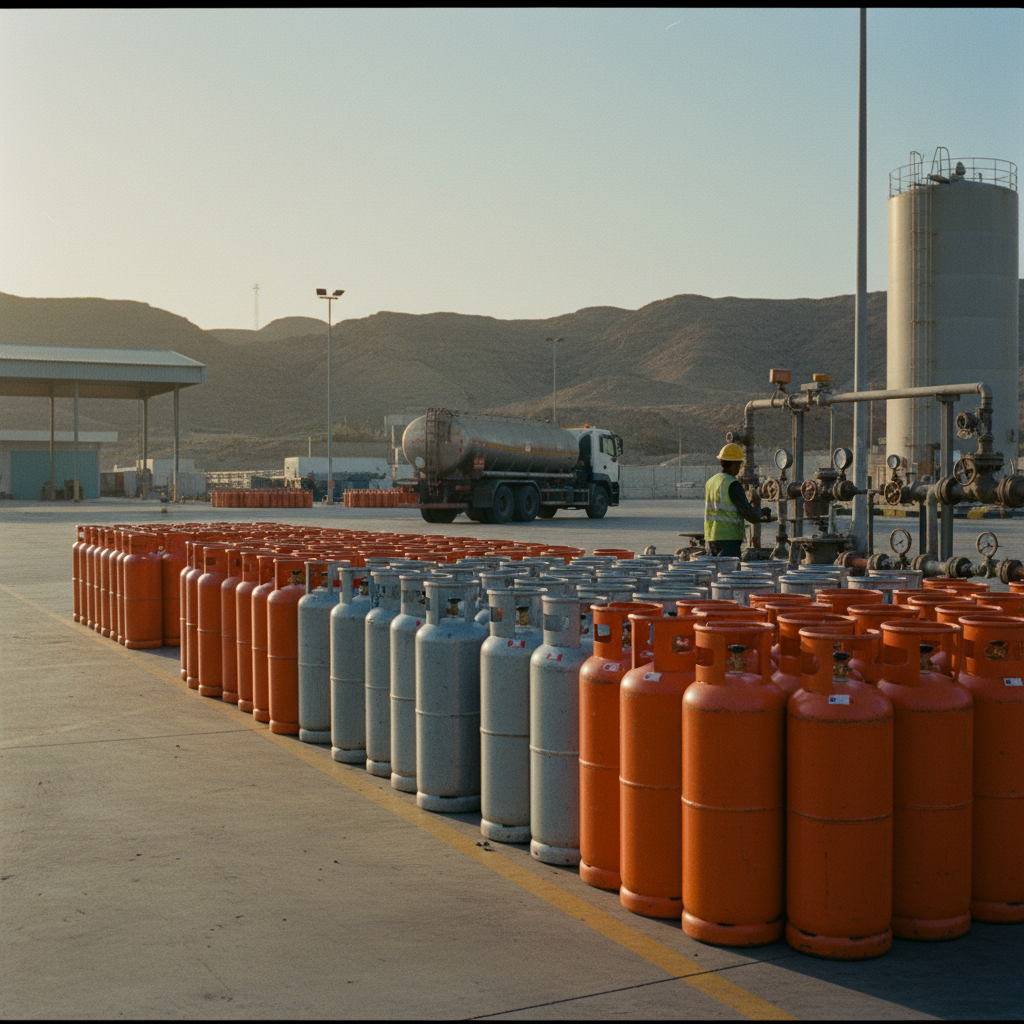
The Fragility of Global Energy Routes
In the modern global economy, the energy supply chain is often more fragile than it appears. For regions like the GCC, and specifically the Sultanate of Oman, the seamless movement of Liquefied Petroleum Gas (LPG) is the lifeblood of both domestic life and industrial productivity. However, regional maritime trade blockades and shifting geopolitical landscapes can create sudden bottlenecks that threaten this flow.
Securing a consistent LPG cylinder distribution in Oman is not merely a matter of moving product from point A to point B; it is an exercise in strategic resilience. While international markets may fluctuate, the local demand for cooking, heating, and industrial fabrication remains constant. At Al Hosni Trading & Contracting Enterprises, we view these challenges as a catalyst for refining our logistics, moving away from a reliance on vulnerable international routes and toward a more fortified, localized infrastructure.
Building Resilience Through Localized Storage
When maritime corridors face disruptions, the immediate impact is often felt in the cost and availability of imported fuels. For Oman, the geography presents both a challenge and an opportunity. While we are positioned near major trade arteries, any instability in these waters can lead to delays in bulk gas arrivals.
To mitigate this, the focus has shifted toward localized storage solutions. By increasing the volume of gas held within our domestic facilities, we create a 'buffer' that can sustain the market during short-term blockades. This proactive approach ensures that when you order a cylinder for your kitchen or a bulk delivery for your factory, the product is already within our borders, insulated from the immediate shocks of regional trade disputes. We believe that energy security starts with having the physical product pre-positioned as close to the end-user as possible.
The 'Last Mile' Challenge: Door-to-Door Reliability
A reliable supply chain is only as strong as its 'last mile' delivery. In the context of Oman’s varied terrain—ranging from bustling urban centers like Muscat to remote mountainous villages—the logistics of distribution must be exceptionally flexible.
Al Hosni Trading & Contracting Enterprises operates a dedicated fleet designed to navigate these diverse environments. We don't just rely on standard freight; we utilize a multi-tiered distribution model:
-
Strategic Hubs: Decentralized refilling and storage centers that reduce the distance a truck must travel.
-
Adaptive Routing: Using real-time data to bypass congested areas or regions affected by weather, ensuring that LPG cylinder distribution in Oman stays on schedule.
-
Bulk Versatility: Specialized tankers capable of delivering large volumes to industrial sites, minimizing the frequency of refills and reducing the exposure to transport risks.
By controlling the logistics from the refilling plant to the doorstep, we eliminate third-party dependencies that often fail during times of crisis.
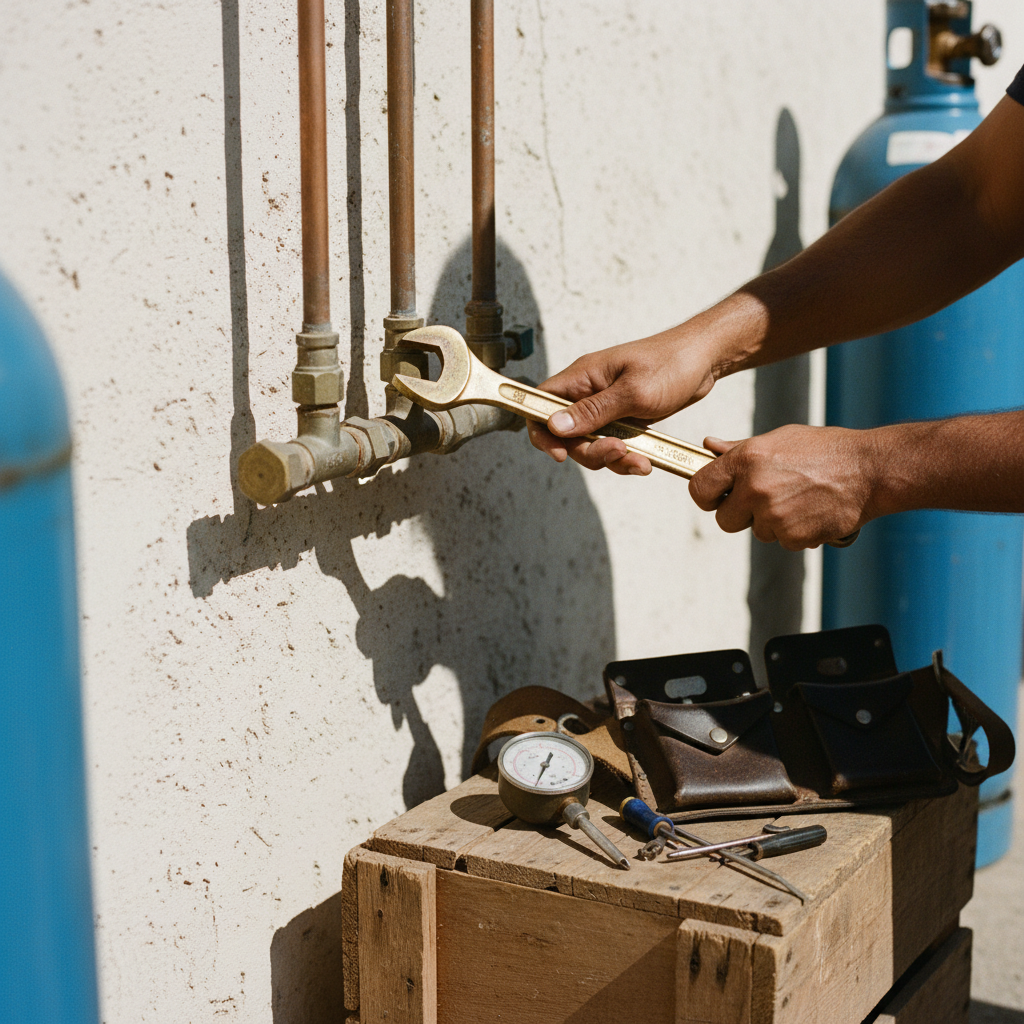
Beyond Delivery: The Role of Professional Installation
Securing the supply is only half the battle; the infrastructure that receives the gas must be equally robust. A disruption in supply often leads to a rush in demand, which can tempt some to use aging or poorly maintained equipment. This is where professional contracting and installation become vital.
At Al Hosni Trading & Contracting Enterprises, our contracting division focuses on installing gas systems that are built to withstand the rigors of the Omani climate. Whether it is a commercial kitchen in a hotel or a centralized gas system for a residential complex, we use high-grade copper piping and safety-rated regulators. When a system is installed correctly and maintained through regular servicing, it operates more efficiently, consuming less gas and further insulating the user from supply-side volatility. Investing in quality appliances and professional installation is a long-term strategy for energy independence.
Fortifying the Future of Omani Energy
The future of energy distribution in the region lies in the integration of technology and local expertise. While we cannot control international trade routes, we can control how we respond to the data they provide. Predictive maintenance on our delivery fleet, digital inventory tracking at our showrooms, and a commitment to safety standards across the GCC are the pillars of our operational philosophy.
As we look ahead, the goal remains clear: to ensure that every household and business in Oman has access to safe, reliable, and affordable gas, regardless of the complexities of the global market. Through local empowerment, localized storage, and meticulous logistics, Al Hosni Trading & Contracting Enterprises remains a steadfast partner in the nation's energy landscape.
Frequently asked questions
How does Al Hosni ensure LPG remains available during regional trade blockades?
Al Hosni Trading & Contracting Enterprises maintains strategic reserves and utilizes a localized fleet that bypasses primary international bottlenecks, ensuring localized LPG cylinder distribution in Oman remains fluid.
What is the difference between residential and industrial delivery logistics?
Bulk industrial gas is transported via specialized tankers, while residential cylinders are managed through a high-frequency route system that prioritizes high-demand hubs.
What are the key maintenance steps for a safe LPG setup?
Annual inspections, valve checks during refilling, and professional installation are critical to preventing leaks and ensuring the longevity of your gas system.
About Al Hosni Trading & Contracting Enterprises
Regional trading and contracting company focused on gas products, installations and services (LPG cylinders, industrial gas, system installations).
A brand that sells physical or packaged products directly to customers.
Contact Al Hosni Trading & Contracting Enterprises
buy or browse the relevant product with Al Hosni Trading & Contracting EnterprisesNext step
Continue with Al Hosni Trading & Contracting Enterprises
Regional trading and contracting company focused on gas products, installations and services (LPG cylinders, industrial gas, system installations).
Visit Al Hosni Trading & Contracting EnterprisesWritten with information published by Al Hosni Trading & Contracting Enterprises.