Is Your Visitor Logbook a Liability? A Guide to NDPA-Compliant Visitor Management
Your paper visitor logbook is a compliance risk under Nigeria’s NDPA 2023. Learn how digital gate pass management systems secure your office or estate.

The Open Secret of the Nigerian Reception Desk
Walk into many offices, residential estates, or government buildings across Nigeria today, and you will be asked to sign in. The security guard will push a well-worn, dog-eared logbook across the counter. Inside, in full view, are the names, phone numbers, car registrations, and signatures of everyone who came before you. This paper logbook has been the bedrock of Nigerian access control for decades. But in the age of data privacy and heightened security, this familiar ritual has become a significant, often overlooked, liability. As a provider of workplace management solutions like Carrotsuite Space, we've seen firsthand how organisations are grappling with this challenge, especially now that data protection is no longer an abstract concept but a legal mandate.
The Legal Shift: Why the NDPA 2023 Changes Everything for Visitor Data
The enactment of the Nigeria Data Protection Act (NDPA) in June 2023 marked a turning point for every entity in Nigeria that handles personal information. This isn't just for banks and telcos; it applies to any organisation—from a corporate head office in Lagos to a residential estate in Abuja—that collects data from individuals.
That visitor logbook on your front desk? It's a database. Each entry, containing a name, phone number, and time of visit, is considered 'personal data' under the Act. This means its collection and storage are now regulated activities, governed by several key principles:
-
Lawful Basis and Purpose Limitation: You must have a legitimate reason for collecting visitor data (e.g., security) and you cannot use it for other purposes (like unsolicited marketing).
-
Data Minimisation: You should only collect what is strictly necessary. Do you truly need a visitor's home address, or just their name and the person they are visiting?
-
Integrity and Confidentiality: This is where the paper logbook fails spectacularly. The NDPA mandates that you must take appropriate technical and organisational measures to secure personal data. An open book on a public-facing desk, visible to other visitors, delivery drivers, and anyone who glances over, is the antithesis of confidentiality.
-
Storage Limitation: Data should not be kept forever. The Act requires you to define how long you need to retain visitor information and to ensure its secure disposal afterwards. Stacks of old logbooks gathering dust in a back office represent a significant compliance breach.
Failing to comply with the NDPA is not a trivial matter. The Nigeria Data Protection Commission (NDPC) has the authority to investigate breaches and impose significant fines. Simply put, continuing to use an unsecured paper logbook is an active choice to risk non-compliance.
The Old Way vs. The New Way: A Practical Comparison
The common argument for paper is that it's 'simple' and 'cheap'. But when you factor in the risks and inefficiencies, the total cost of ownership tells a different story. A digital gate pass management system fundamentally re-engineers the process for security and efficiency.
Here’s a direct comparison of the workflows:
| Feature | Paper Logbook & Manual Pass | Digital Gate Pass Management System |
|---|---|---|
| Visitor Registration | Manual, error-prone handwriting at the gate upon arrival. Causes queues. | Host pre-registers visitor online; visitor receives a digital pass (e.g., QR code) via email or SMS before arrival. |
| Data Security | Personal data (names, phone numbers) is exposed to all other visitors. High risk of data misuse. | Visitor data is encrypted and stored in a secure database with role-based access controls. Compliant with NDPA. |
| Check-in Process | Slow manual verification. Guard writes out a physical pass. Inconsistent process. | Fast QR code scan at the gate. Check-in is instant and timestamped. |
| Host Notification | Guard calls the host's extension or mobile. Often disruptive and unreliable. | Host receives an automatic notification (SMS, push, or email) the moment their guest checks in. |
| Audit & Reporting | Near impossible. Records are illegible, easily falsified, or lost. Difficult to investigate incidents. | Creates a complete, searchable, and tamper-evident audit trail of every entry and exit. Reports can be generated instantly. |
| Data Retention | No clear policy. Old books are stored indefinitely, creating a massive data liability. | Automated data retention policies can be set to purge records after a specified period, ensuring NDPA compliance. |
This isn't just about replacing paper with a screen; it's about implementing a structured, secure, and auditable workflow that protects your organisation and your visitors.
How a Digital Gate Pass System Works: The Carrotsuite Space Workflow
To make this concrete, let’s walk through the journey using a modern platform like Carrotsuite Space. The goal is to make the process secure for the organisation, seamless for the host, and frictionless for the visitor.
-
The Invitation: An employee (the 'host') expects a visitor. Instead of telling them to 'ask for me at reception,' the host logs into the Carrotsuite Space web or mobile app and enters the visitor's name and expected arrival time. The system immediately generates a unique, time-bound QR code.
-
The Digital Pass: The visitor receives an email or SMS with their digital pass. This message contains the QR code, the office address, the host's name, and the valid time for the pass. There is no need for them to print anything.
-
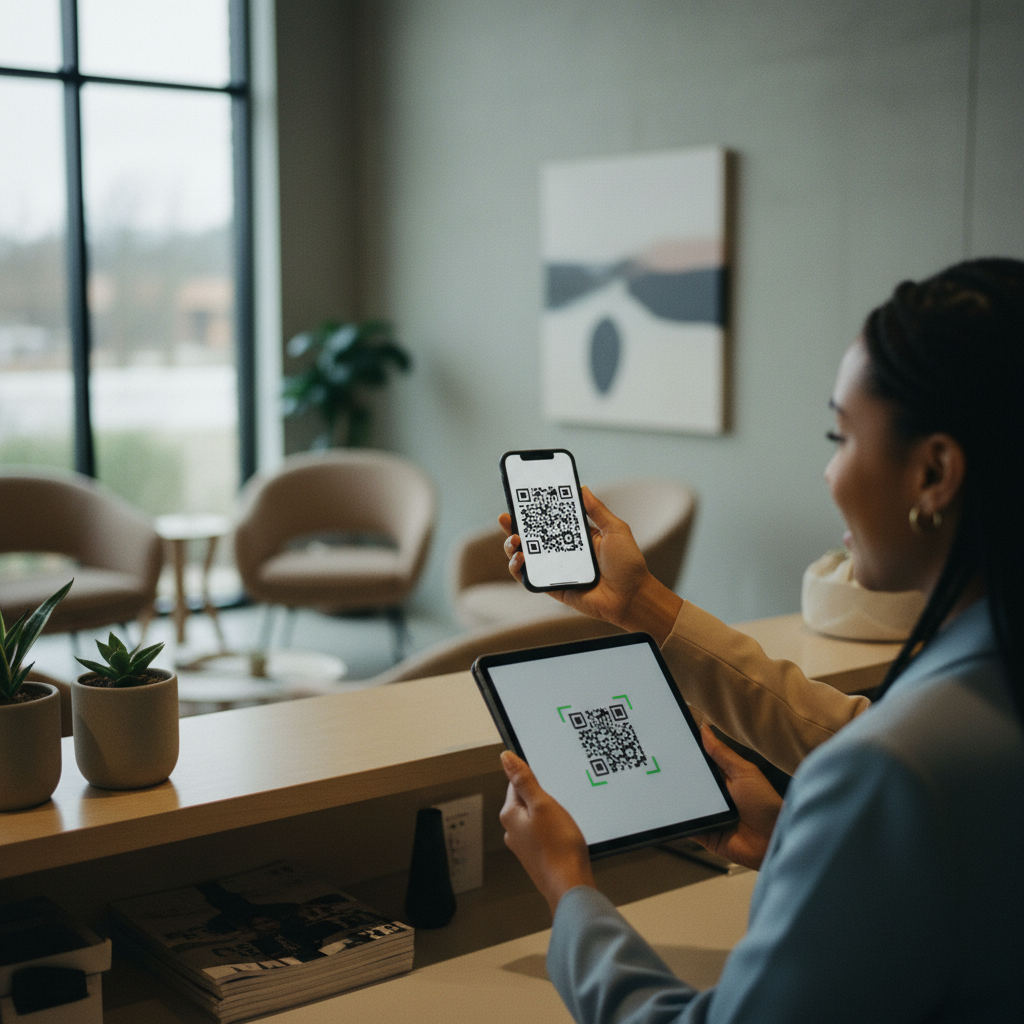
The Arrival: Upon reaching the gate or reception, the visitor presents their QR code on their phone to a scanner (often a simple tablet or dedicated device). The system instantly verifies the pass against the pre-registration record.
-
The Notification & Check-in: The moment the code is scanned and validated, two things happen simultaneously:
-
The system logs the visitor's entry with a precise timestamp.
-
The host receives an automatic notification saying, 'Your guest, [Visitor's Name], has arrived and is at reception.'
- The Check-out: When leaving, the visitor can be scanned out, completing the digital record of their visit duration. Once the pass expires or is used, it becomes invalid.
This entire process is fast, professional, and, most importantly, secure. Visitor data is never left exposed, and a complete, unalterable record is created for compliance and security purposes.
Beyond the Office: Use Cases in Residential Estates and Construction Sites
The need for secure, auditable access control extends far beyond the corporate environment. Digital gate pass systems are becoming essential tools for a variety of Nigerian organisations:
-
Residential & Gated Estates: Residents can pre-register guests, domestic staff, and delivery services through a mobile app. This eliminates long queues of cars at the gate and provides the estate management with a clear record of who is on the premises at all times. It also enhances security by ensuring every visitor is tied to a specific resident's invitation.
-
Construction Sites: Managing access to a busy construction site is a major challenge. Digital systems, like our own Build by Carrot, can be used to manage contractor and worker check-ins, track time on site, and even control the movement of materials with digital material gate passes. This ensures only authorised personnel are on site, improving both safety and project oversight.
-
Schools and Campuses: Protecting students is paramount. Digital visitor systems ensure that every person entering the campus—parents, vendors, contractors—is registered, vetted, and has a legitimate reason to be there. In an emergency, administrators can quickly generate a real-time list of all non-staff and non-students on site.
Making the Switch: Your Implementation Checklist
Migrating from a paper logbook to a digital system is a straightforward process, but it requires planning. If your organisation is ready to become NDPA-compliant and improve its security posture, here is a simple checklist to guide you:
-
Define Your Access Policy: Who needs to be registered? Just visitors? Or also contractors, delivery personnel, and vehicles? What information do you really need to collect to meet your security goals (Data Minimisation)?
-
Choose the Right Solution: Look for a platform that is mobile-first and designed for the Nigerian context. Does it offer offline capabilities for when network is poor? Can it send notifications via SMS as well as email? At Carrotsuite, we build for these local realities.
-
Assess Your Hardware Needs: In most cases, all you need is a tablet or smartphone at your reception or gatehouse. Some providers may offer specialised scanning kiosks. Ensure your security personnel have a reliable power source.
-
Train Your Staff: Your security guards and receptionists are the frontline users. They need to be comfortable with the new system. The training should be simple: how to assist a visitor who didn't pre-register, and how to handle exceptions.
-
Communicate the Change: Inform employees, residents, and regular visitors about the new system before you launch it. Explain that the change is being made to better protect their data and enhance security for everyone.
By following these steps, you can transition to a digital system smoothly and finally retire the liability that is the paper logbook.
The Pitfalls of Paper Logbooks
Paper visitor logbooks, a staple in many Nigerian organizations, inherently create data privacy vulnerabilities. Personal information like names, phone numbers, and signatures are openly accessible, making it challenging to comply with the Nigerian Data Protection Act (NDPA). This exposure risks unauthorized data access and misuse, leaving organizations susceptible to penalties. "Relying solely on paper logbooks for visitor management in today's regulatory landscape is a significant oversight; the potential for NDPA non-compliance and reputational damage far outweighs the perceived simplicity." — the Carrotsuite team.
The Pitfalls of Manual Visitor Logs
“Manual visitor logbooks, while seemingly straightforward, pose significant privacy risks under Nigeria’s NDPA. The open display of personal information like names, phone numbers, and signatures can easily lead to data breaches or misuse. Implementing a digital gate pass system isn’t just about modernization; it’s a critical step towards safeguarding visitor data and ensuring compliance with national privacy regulations, thereby mitigating potential liabilities for businesses.” — the Carrotsuite team.
Beyond Paper: Digital Compliance
We believe that clinging to paper logbooks in today's digital landscape is not just inefficient, but a significant compliance risk. "Many businesses underestimate the vulnerability of physical visitor records to breaches, loss, or unauthorized access, directly contravening NDPA guidelines. Transitioning to a secure digital gate pass system is no longer a luxury but a fundamental requirement for data protection and operational integrity." — the Carrotsuite team. Digital solutions offer robust audit trails and enhanced privacy features essential for protecting sensitive visitor information.
Digital Transformation for Compliance
“Many organizations still rely on paper visitor logs, unaware of the significant NDPA compliance risks this poses. Manual records are not only inefficient but also notoriously difficult to secure and audit, making them a prime target for data breaches and non-compliance fines.” — the Carrotsuite team. This insight underscores the urgent need for a shift to digital solutions. Implementing an NDPA-compliant digital gate pass system protects sensitive visitor data, streamlines access control, and ensures adherence to Nigeria’s data protection regulations, mitigating liabilities and enhancing operational security.
Frequently asked questions
What is the price of a digital gate pass system in Nigeria?
Pricing for digital gate pass systems typically depends on the number of locations, users, and visitor volume. Some providers charge a monthly subscription fee per site. For a clear breakdown tailored to your needs, it's best to request a quote. Carrotsuite Space offers flexible plans suitable for single offices, multi-tenant buildings, and large estates.
Is a digital visitor logbook compliant with the NDPA 2023?
Yes, provided the system is designed with data protection in mind. A compliant digital system encrypts personal data, uses role-based access control to prevent unauthorised viewing, allows for setting data retention policies to automatically delete old records, and facilitates obtaining visitor consent. A simple spreadsheet or an unsecured app would not be compliant; you need a purpose-built platform.
Can these systems work with poor internet connectivity?
This is a critical feature for the Nigerian market. The best systems are designed to be 'offline-first' or have robust offline modes. This means your security guards can continue to check in pre-registered visitors by scanning their QR codes even if the internet connection at the gate is down. The data then syncs with the cloud server once connectivity is restored.
Do we need to buy expensive hardware to use a digital visitor system?
Not necessarily. Many modern digital visitor management systems, including Carrotsuite Space, are designed to run on standard, off-the-shelf hardware like an Android tablet or an iPad. This significantly lowers the barrier to entry compared to older systems that required proprietary kiosks or scanners.
How do we handle visitors who arrive without pre-registering?
A good digital system includes a workflow for walk-in visitors. The security guard or receptionist can use their tablet to quickly register the guest on the spot. The system then sends an approval notification to the host, who can approve the entry with a single click from their phone or computer. The process is still faster and more secure than using a paper book.
About Carrotsuite
Carrotsuite is a Nigerian business software / SaaS company that builds and sells multiple mobile-first digital management applications for small and medium businesses, healthcare providers, construction teams, and organizations. It offers platforms for retail sales and inventory, hospital management and EMR, field construction management, visitor/workplace management, CRM, and workflow/approvals. The company is headquartered in Lekki, Lagos, Nigeria and serves customers in Nigeria and across Africa.
Software or an online platform sold by subscription or usage.
start a trial, sign up or subscribe with CarrotsuiteNext step
Continue with Carrotsuite
Carrotsuite is a Nigerian business software / SaaS company that builds and sells multiple mobile-first digital management applications for small and medium businesses, healthcare providers, construction teams, and organizations. It offers platforms for retail sales and inventory, hospital management and EMR, field construction management, visitor/workplace management, CRM, and workflow/approvals. The company is headquartered in Lekki, Lagos, Nigeria and serves customers in Nigeria and across Africa.
Visit CarrotsuiteWritten with information published by Carrotsuite.
Keep reading
A practical guide for Nigerian construction teams on how to track site progress with mobile tools, even with poor internet. Learn offline-first strategies.
A guide for Ghanaian hospitals on selecting EMR/HMS software, drawing lessons from Nigeria's Data Protection Act (NDPA) 2023 for best-practice data security.
Don't just look at the monthly fee. Use our calculator to find the true total cost of a POS system for your Nigerian mini-mart or supermarket in 2026.