POS with Multi-Store Stock Control in Nigeria: A 2026 Cost Guide
Choosing a POS with multi-store stock control in Nigeria? Our 2026 guide covers offline-first realities, predictable monthly costs, and how to avoid hidden fees.
Executive Summary
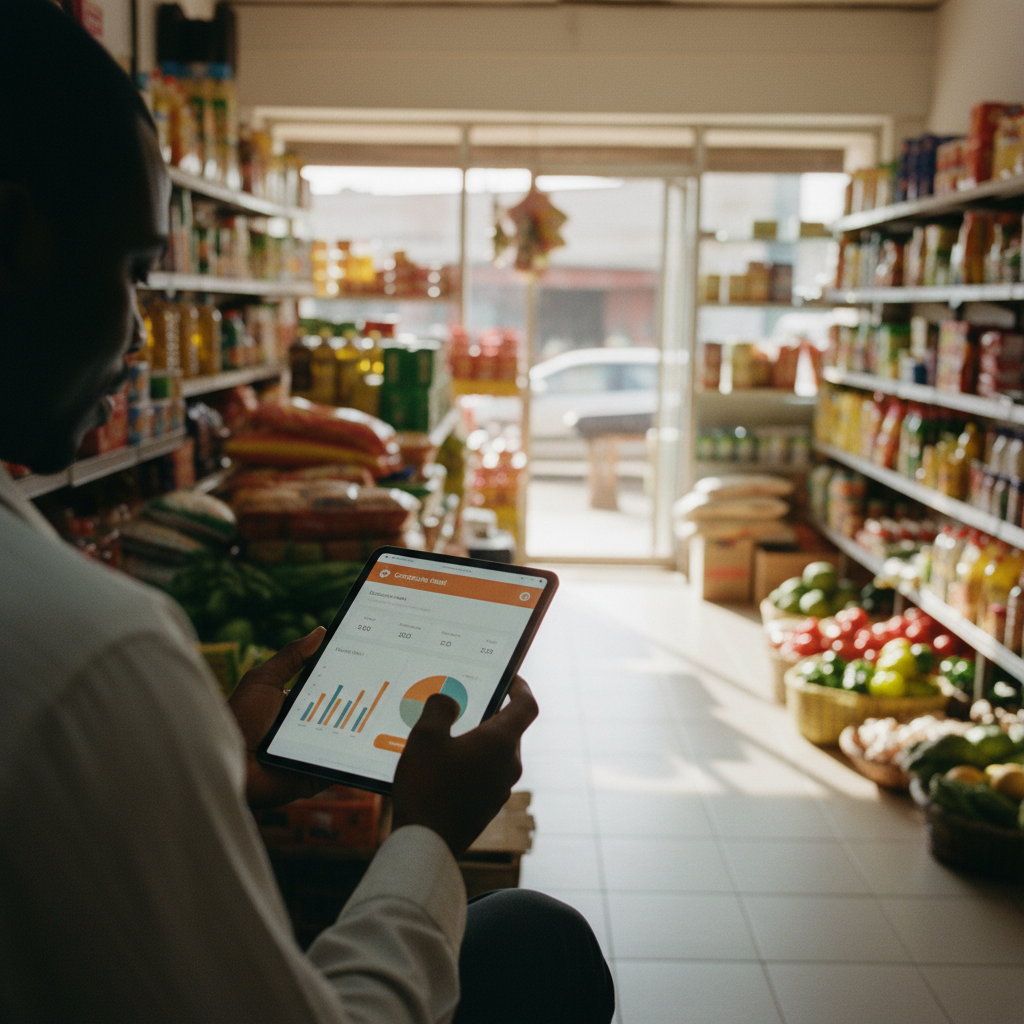
For a Nigerian retail business aiming to expand, the best POS system is one that offers robust multi-store stock control and reliable offline-first functionality at a predictable monthly cost. As you scale from one to five branches, your software must handle centralised inventory, sales reporting, and product management without crippling your operations during internet or power outages. The key is to find a platform where costs don't explode with each new branch. Many international POS systems charge steep per-location fees (often $150+/month per branch), which is unsustainable for many Nigerian SMEs. In contrast, solutions built for the Nigerian market, like Carrotsuite Retail, are designed to support multi-branch growth affordably, often bundling multiple locations into a single, predictable subscription. This guide will help you evaluate options based on total cost of ownership, not just the sticker price.
The Three Pillars of a Scalable Nigerian POS System in 2026
As your retail business grows beyond a single location, the simple cash register or basic POS app that got you started quickly becomes a liability. Managing stock, sales, and staff across multiple sites requires a system built for complexity. Yet, many business owners in Nigeria get paralyzed by the options, or worse, locked into expensive foreign software that doesn't fit our market realities.
At Carrotsuite, we've helped hundreds of Nigerian retailers—from supermarkets in Lagos to pharmacies in Abuja and boutiques in Port Harcourt—navigate this exact challenge. The consensus is clear: a future-proof POS system for a growing Nigerian business must deliver on three non-negotiable pillars:
-
True Multi-Store Stock Control: The ability to see and manage inventory, sales, and pricing across all your branches from a single dashboard. This isn't just about viewing reports; it's about active management, like transferring stock between stores.
-
Resilient Offline-First Functionality: The system must continue to process sales, print receipts, and manage local inventory even when the internet connection is down—a daily reality for many. The data should then sync automatically once connectivity is restored.
-
Predictable and Transparent Pricing: Your monthly software bill should not be a surprise. You need clarity on how costs will change as you add more branches, tills, or users, allowing you to budget for growth without fear of runaway expenses.
What Does “Multi-Store Stock Control” Actually Mean?
The term 'multi-store' is often used, but the capabilities can vary dramatically. A basic system might only offer separate accounts for each store, forcing you to log in and out to see how each is doing. This is not true multi-store management. A proper system, designed for the demands of a Nigerian multi-branch retailer, provides a unified, command-and-control view of your entire operation.
Here’s what that looks like in practice:
-
Centralised Product Catalogue: You maintain one master list of all your products. You can then manage stock levels for each item at each specific branch. A change to a product's name or price can be pushed to all stores simultaneously.
-
Branch-Level & Consolidated Reporting: You should be able to instantly switch between viewing the performance of a single branch (e.g., 'Ikeja store sales today') and seeing the aggregated data for the entire business ('Total company revenue this month').
-
Inter-Branch Stock Transfers: A customer wants an item that's out of stock in your Lekki branch but available in your Surulere warehouse. A robust multi-store POS allows you to initiate, track, and receive that stock transfer directly within the system, ensuring inventory counts are always accurate across all locations.
-
Role-Based Access Control: As an owner, you need to see everything. Your branch manager in Kano, however, should only see and manage the inventory and sales for their own branch. This ensures data security and prevents operational errors.

Comparing Multi-Store POS Options for Nigerian Retailers
When evaluating POS systems, the most critical divergence appears in their pricing models for multiple locations. International platforms often seem appealing with their slick marketing, but their cost structures are typically built for markets with higher margins and different cost sensitivities.
Let's compare the common models you'll encounter:
| Feature | Typical International POS (e.g., Lightspeed, Shopify POS Pro) | Typical Nigeria-First POS (e.g., Carrotsuite Retail) |
|---|---|---|
| Base Price | Starts high, e.g., $149 - $199 / month for a single location. | Starts affordably, often under ₦25,000 / month. |
| Multi-Store Model | Charges per location. Adding a second store often means doubling the monthly fee. | Often includes multiple branches in a single plan or charges a smaller, incremental fee per additional branch. |
| Cost to Scale (5 Branches) | Can easily exceed $700+ per month (approx. ₦1,050,000). | Remains predictable and significantly lower, designed for local business budgets. |
| Offline Mode | Often limited or requires expensive hardware. May not handle prolonged outages well. | A core feature. Designed for unreliable internet, with robust local databases and auto-syncing. |
| Local Payments | Limited direct integrations with Nigerian payment gateways. | Deep integration with Paystack, Flutterwave, and direct bank transfers. |
The Verdict: For a small but growing Nigerian retailer, the choice is clear. While global giants offer powerful platforms, their per-location pricing models make them prohibitively expensive to scale with in Nigeria. A Nigeria-first platform like Carrotsuite Retail is architected from the ground up for the financial and operational realities of running a multi-branch business here. You get the essential features for growth—multi-store control, offline reliability—at a total cost of ownership that makes sense.
The “Offline-First” Litmus Test: Will Your Business Stop When the Internet Does?
In Nigeria, internet connectivity is not a utility; it's a variable. Between power cuts affecting fibre relays and unreliable mobile data signals, your business will face periods of disconnection. An 'online-only' or 'cloud-based' POS that requires a constant internet connection to function is a non-starter.
This is where the concept of 'offline-first' becomes critical. It's more than just an 'offline mode'; it's a fundamental design philosophy. Here's how to tell if a POS is truly offline-first:
-
Does it use a local app? The POS should run as a native application on your device (Windows desktop, Android tablet) with its own local database. This allows it to record sales, manage inventory, and even print receipts without needing to 'phone home' to a central server for every transaction.
-
How does it sync? When the internet connection is restored, the local app should automatically and intelligently sync all the sales and inventory changes that occurred offline with the central cloud dashboard. It should handle this process in the background without manual intervention.
-
Can you run the business from one branch? If the internet goes down across your entire company, each branch's POS should still function independently, allowing them to continue serving customers. Once connectivity returns, the owner's central dashboard will be updated with the consolidated data from all locations.
Don't let a vendor tell you their system 'works offline' without asking these questions. A system that just queues a few transactions is not the same as a robust application designed for the realities of the Nigerian market.
Budgeting for Growth: How to Calculate Your POS Total Cost of Ownership
The biggest mistake retailers make is focusing only on the advertised monthly subscription fee. The true cost of a POS system—its Total Cost of Ownership (TCO)—is much broader. When planning your expansion, you need to budget for the complete picture to avoid nasty surprises.
Here’s a checklist to build a realistic budget:
-
Software Subscription: This is the base fee. Ask vendors for a clear breakdown: How much for the first branch? How much for each additional branch? Is there a limit on users or transactions?
-
Hardware Costs: You will need POS terminals (desktop PCs or tablets), receipt printers, barcode scanners, and cash drawers for each new location. Ensure the software you choose is compatible with standard, affordable hardware, not proprietary, expensive machines.
-
Payment Processing Fees: Your POS needs to talk to a payment gateway (like Paystack or Flutterwave) to process card payments. These gateways charge a small percentage per transaction (typically around 1.5% + ₦100). This is separate from your POS subscription fee.
-
Implementation and Training: Will you need to pay for setup? Is on-site training available for your staff in new locations? Reputable local providers often include remote setup and have a more hands-on approach to training.
-
Support Costs: What happens when something goes wrong? Is support included in your plan? Do you have access to help via channels you actually use, like WhatsApp or a direct phone line? A cheaper plan with no support can be the most expensive choice when your system is down during peak hours.
By forecasting these costs for a three- or five-branch setup, you can make a much more informed decision. A slightly higher monthly fee from a provider like Carrotsuite, which bundles multi-store features and offers robust local support, often results in a significantly lower TCO than a seemingly 'cheap' international option with hidden scaling costs.
Start Scaling Your Retail Business Today
Choosing the right POS system is one of the most critical decisions you will make as you grow your retail footprint in Nigeria. Don't let your ambition be throttled by software that can't keep up or costs that spiral out of control. By prioritising true multi-store stock control, resilient offline-first functionality, and a predictable cost model, you can build a stable foundation for a thriving multi-branch business.
Ready to see how a POS built for Nigerian realities can transform your business? Explore Carrotsuite Retail and learn how our platform can help you manage your growth journey from one store to many, with the confidence and control you need to succeed.
Frequently asked questions
What is the best POS software for a supermarket with multiple branches in Nigeria?
The best POS for a multi-branch supermarket in Nigeria is one that combines robust multi-store inventory management, offline-first reliability, and a pricing model that doesn't penalise growth. You need a system that allows you to track stock levels at each branch, perform inter-branch transfers, and view consolidated sales reports from a central dashboard. Given the unreliable internet, it's crucial the system can process sales and print receipts offline, syncing data later. Platforms like Carrotsuite Retail are designed for these specific Nigerian challenges.
How much does POS software with multi-store stock control cost in Nigeria?
The cost varies significantly. International POS systems can cost upwards of $150 per month for a single location, with similar fees for each additional branch, making a 5-store setup very expensive (over ₦1,000,000/month). In contrast, Nigeria-focused solutions like Carrotsuite Retail are more affordably priced, often bundling multiple stores into a single plan or charging a much smaller incremental fee, making it possible to run multiple branches for a fraction of that cost.
Can I use one POS license for multiple stores?
Generally, no. POS software is licensed per business, but the structure for multiple locations differs. Most vendors require you to pay for each store. The key difference is how much they charge. Some, typically international brands, will charge you the full license fee for each new store. More locally-attuned providers will have multi-store plans where the cost per additional store is significantly reduced or a certain number of stores are included in a tiered plan.
What hardware do I need for a multi-branch POS system?
For each branch, you will typically need a core POS terminal (a Windows PC, or in some cases an Android tablet), a thermal receipt printer, a barcode scanner, and a cash drawer. The good news is that modern software-based POS systems work with a wide range of affordable, off-the-shelf hardware, so you don't need to buy expensive proprietary equipment.
How does offline POS sync data for multiple stores?
An offline-first POS runs a local application at each store with its own database. When the internet is down, sales are recorded in this local database. Once connectivity is restored, the application automatically sends the saved transaction data to the central cloud server. The owner can then see the updated, consolidated sales and inventory figures from all branches on their main dashboard.
About Carrotsuite
Carrotsuite is a Nigerian business software / SaaS company that builds and sells multiple mobile-first digital management applications for small and medium businesses, healthcare providers, construction teams, and organizations. It offers platforms for retail sales and inventory, hospital management and EMR, field construction management, visitor/workplace management, CRM, and workflow/approvals. The company is headquartered in Lekki, Lagos, Nigeria and serves customers in Nigeria and across Africa.
Software or an online platform sold by subscription or usage.
start a trial, sign up or subscribe with CarrotsuiteNext step
Continue with Carrotsuite
Carrotsuite is a Nigerian business software / SaaS company that builds and sells multiple mobile-first digital management applications for small and medium businesses, healthcare providers, construction teams, and organizations. It offers platforms for retail sales and inventory, hospital management and EMR, field construction management, visitor/workplace management, CRM, and workflow/approvals. The company is headquartered in Lekki, Lagos, Nigeria and serves customers in Nigeria and across Africa.
Visit CarrotsuiteWritten with information published by Carrotsuite.
Keep reading
A practical guide for Nigerian construction teams on how to track site progress with mobile tools, even with poor internet. Learn offline-first strategies.
Your paper visitor logbook is a compliance risk under Nigeria’s NDPA 2023. Learn how digital gate pass management systems secure your office or estate.
A guide for Ghanaian hospitals on selecting EMR/HMS software, drawing lessons from Nigeria's Data Protection Act (NDPA) 2023 for best-practice data security.
Don't just look at the monthly fee. Use our calculator to find the true total cost of a POS system for your Nigerian mini-mart or supermarket in 2026.