Mastering the 1,600-Hour Rule: A Guide to GDC Clinical Evidence for Indian Dentists
For Indian BDS graduates applying for ORE, learn how to document and evidence 1,600 hours of direct patient care experience required for GDC registration in the UK.
Understanding the 1,600-Hour Requirement
To achieve GDC registration and ORE eligibility in the UK, Indian dentists must evidence at least 1,600 hours of direct patient care. This guide explains how Indian BDS graduates can accurately document their clinical experience to meet the General Dental Council's requirements. We detail what activities count towards the 1,600-hour rule, provide specific advice for the Indian context, and outline common pitfalls to avoid. Understanding these guidelines is crucial for a successful application and progressing towards practicing dentistry in the UK.

What Counts as 'Direct Patient Care'?
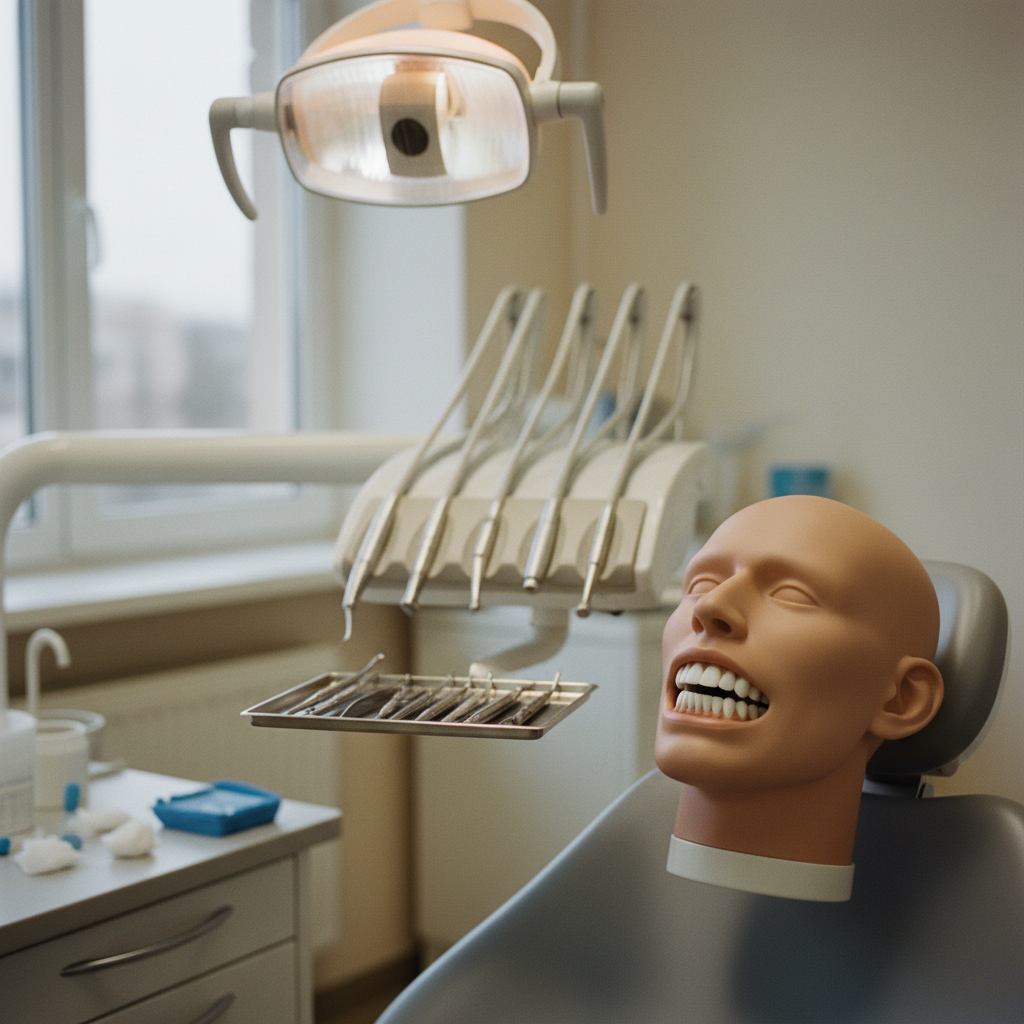
The GDC defines the 1,600 hours as time spent in 'direct patient care.' This means you must have been the primary clinician performing diagnosis, treatment planning, and dental procedures. In the context of the Indian dental education system, this typically spans your final years of BDS and your compulsory rotatory internship.
However, the GDC is specific about exclusions. You cannot count:
-
Time spent in lectures or seminars.
-
Purely observational 'shadowing' hours.
-
Laboratory work where a patient was not present.
-
Time spent in non-clinical community service (unless it involved direct treatment).
For most Indian graduates, a standard internship provides roughly 1,200 to 1,400 hours of clinical contact. This means most candidates need at least 3 to 6 months of additional post-internship private practice or junior residency in India to safely clear the 1,600-hour threshold. At Ddcdental, we advise students to aim for 1,700 hours to provide a 'safety buffer' against any hours the GDC assessor might disqualify.
Documenting Your Hours: The Indian Context
The GDC does not take your word for it; you need signed, stamped evidence. For Indian applicants, this usually involves two main documents: the Institutional Certificate (from your dental college) and Employer References (from private clinics or hospitals).
To ensure your evidence is robust, follow these steps:
-
Request a Detailed Internship Breakdown: Do not just submit a certificate saying you completed an internship. Ask your Principal or Dean to provide a letter on official letterhead detailing the specific hours spent in clinical postings (e.g., Oral Surgery, Periodontics, Endodontics).
-
Quantify Private Practice: If you are using post-BDS experience, your employer must state your weekly hours and the total number of weeks worked. Phrases like 'full-time' are too vague; the GDC prefers '40 hours per week over 24 weeks.'
-
Align with UK Standards: The GDC looks for a breadth of experience. Ensure your logs reflect a variety of treatments, which mirrors the diverse skill set required for the ORE Part 2 training you will eventually undergo.
Consistency is key. If your flight dates for a UK visit or a previous visa application contradict your clinical work dates in India, the GDC may flag the application for inconsistency.
Common Pitfalls and How to Avoid Them
One of the biggest mistakes candidates make is failing to account for the financial and temporal costs of this stage. While you are gathering your 1,600 hours in India, you should also be preparing for the ORE Part 1.
Ddcdental acts as a bridge during this period. While you focus on completing your clinical hours in a local setting, our academy handles the nuances of the syllabus transition. The transition from the Indian DCI (Dental Council of India) standards to the GDC's Safe Practitioner Framework is significant. Even while you are still in India, understanding the quality of those 1,600 hours—focusing on communication, consent, and evidence-based practice—will make your future ORE or LDS Part 2 prep much more manageable.
Beyond Eligibility: Preparing for the UK Standards
The 1,600-hour rule is just the beginning. Once your eligibility is cleared, you face the challenge of securing a seat in an increasingly crowded system. With limited ORE Part 2 places available annually, your preparation must be surgical in its precision.
Many Indian dentists choose to move to the UK on a Standard Visitor Visa for intensive training once they have cleared Part 1. During this phase, the focus shifts from counting hours to perfecting clinical delivery. Whether you are tackling the ORE or the LDS route, the expectation of the UK examiner is a clinician who demonstrates 'Safe Practitioner' behaviours—something that Ddcdental integrates into every mock exam and manikin session.
About Ddcdental
Ddcdental (DDC Dental Academy) is a premier dental education and exam-preparation provider dedicated to helping overseas dentists navigate the path to UK registration. We specialise in comprehensive training for the ORE and LDS Part 2 exams, offering hands-on manikin practice, OSCE workshops, and structured clinical reasoning sessions. Serving a global cohort of dentists from India, Pakistan, Nigeria, and the Middle East, we take the administrative burden off our students, allowing them to focus entirely on mastering the clinical standards required by the GDC. Our mission is to transform experienced international dentists into successful UK practitioners through evidence-based teaching and rigorous mock assessments.
Evidencing Your Clinical Hours
'''"Successfully navigating the ORE requires meticulous record-keeping. Many candidates underestimate the depth of detail needed to demonstrate 1,600 hours of clinical experience, leading to unnecessary delays." — the Ddcdental team.''' We understand the challenges in compiling the necessary documentation for ORE eligibility. Our experience shows that a proactive approach to logging all clinical work, even seemingly minor tasks, can significantly streamline the application process. This ensures every hour contributes effectively to meeting the stringent requirements.
Evidencing Clinical Experience
“Thoroughly documenting your clinical hours isn't just a requirement; it's a foundational exercise in professional development that reflects your dedication and practical skills. We consistently advise our candidates to treat their clinical log as an evolving portfolio, capturing the breadth and depth of their experiences, because a well-evidenced journey speaks volumes about a practitioner's readiness for the ORE.” — the Ddcdental team
Clinical Experience for ORE Eligibility
“Thorough documentation of clinical hours is paramount for ORE eligibility; it’s not merely about accumulating time, but accurately reflecting the breadth and depth of your practical experience. We consistently advise candidates to maintain detailed logbooks and secure robust supervisory sign-offs, as these elements are often the deciding factor in evidencing compliance.” — the Ddcdental team
The Ddcdental Team on Clinical Experience
“Thoroughly documenting every clinical hour is paramount, as incomplete records can significantly delay ORE eligibility. We’ve seen many skilled dentists face setbacks because their portfolios lacked the specific detail required by the GDC for the 1,600-hour rule. It’s not just about the hours; it’s about the verifiable evidence.” — the Ddcdental team
Frequently asked questions
Does my internship in India count towards the 1,600 hours?
Yes, your one-year compulsory rotatory internship in India usually accounts for a significant portion of these hours, provided you were engaged in direct clinical treatment rather than just observation. Ddcdental recommends obtaining a detailed breakdown from your dental college principal.
Can I include time spent in dental labs or observerships?
The GDC is strict about 'direct patient care.' Hours spent in theoretical lectures, laboratory work (without patients), or administrative duties cannot be included in the 1,600-hour total.
What happens if I apply with fewer than 1,600 hours?
If you cannot provide evidence for 1,600 hours, your ORE eligibility application will likely be rejected. You must continue practicing in a clinical setting in India or elsewhere until you meet the threshold before applying for the exam.
About Ddcdental
DDC Dental (presented as DDC Dental Academy) is a dental education and exam-preparation provider targeting dentists preparing for UK licensing exams. It delivers course-based training and practice support focused on qualifications such as LDS Part 2 and the ORE, and handles course practice and administrative tasks so students can focus on studying.
Courses, qualifications, tutoring, academic programmes or research output.
register, apply or save a place with DdcdentalNext step
Continue with Ddcdental
DDC Dental (presented as DDC Dental Academy) is a dental education and exam-preparation provider targeting dentists preparing for UK licensing exams. It delivers course-based training and practice support focused on qualifications such as LDS Part 2 and the ORE, and handles course practice and administrative tasks so students can focus on studying.
Visit DdcdentalWritten with information published by Ddcdental.