RGB Mini-LED vs. OLED: Choosing the Ultimate 2026 Vision
Battle of the 2026 TV titans: We compare RGB Mini-LED and OLED across brightness, contrast, and color to find out which display tech is right for your home.
The 2026 Display Landscape: A New Definition of Quality
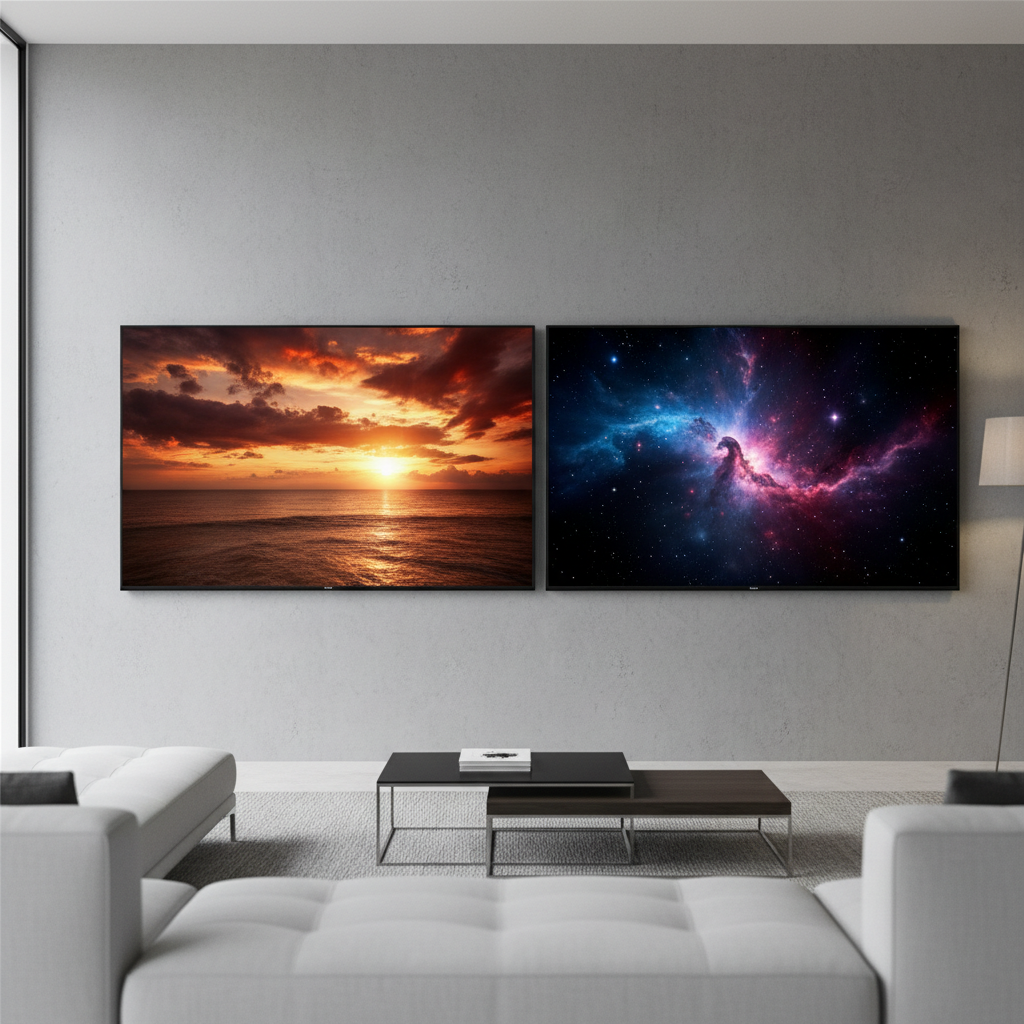
For years, the television market followed a simple rule: buy an OLED if you want the best picture quality, and buy a Mini-LED if you have a bright room. As we move through 2026, those lines are blurring into insignificance. With the advent of RGB Mini-LED and the latest refinements in Micro Lens Array (MLA) OLED, both technologies have evolved to address their historical weaknesses.
At Gadgetilla, we’ve spent hundreds of hours in the darkroom and under high-noon glare to see how these panels actually perform in real-world living rooms. The "best" TV is no longer a universal truth; it is a choice dictated by your windows, your seating distance, and whether you prefer the searing brightness of a midday sun or the infinite depth of a midnight sky. In this guide, we strip away the marketing jargon to tell you which technology earns your hard-earned paycheck.
Understanding RGB Mini-LED: More Than Just Brightness
The biggest shift in 2026 has been the transition from standard "Blue-LED with Phosphor" backlights to true RGB Mini-LED. Traditional Mini-LEDs used a blue light source filtered through a layer to create white, which was then filtered again for color. This led to "light leakage" or blooming around bright objects.
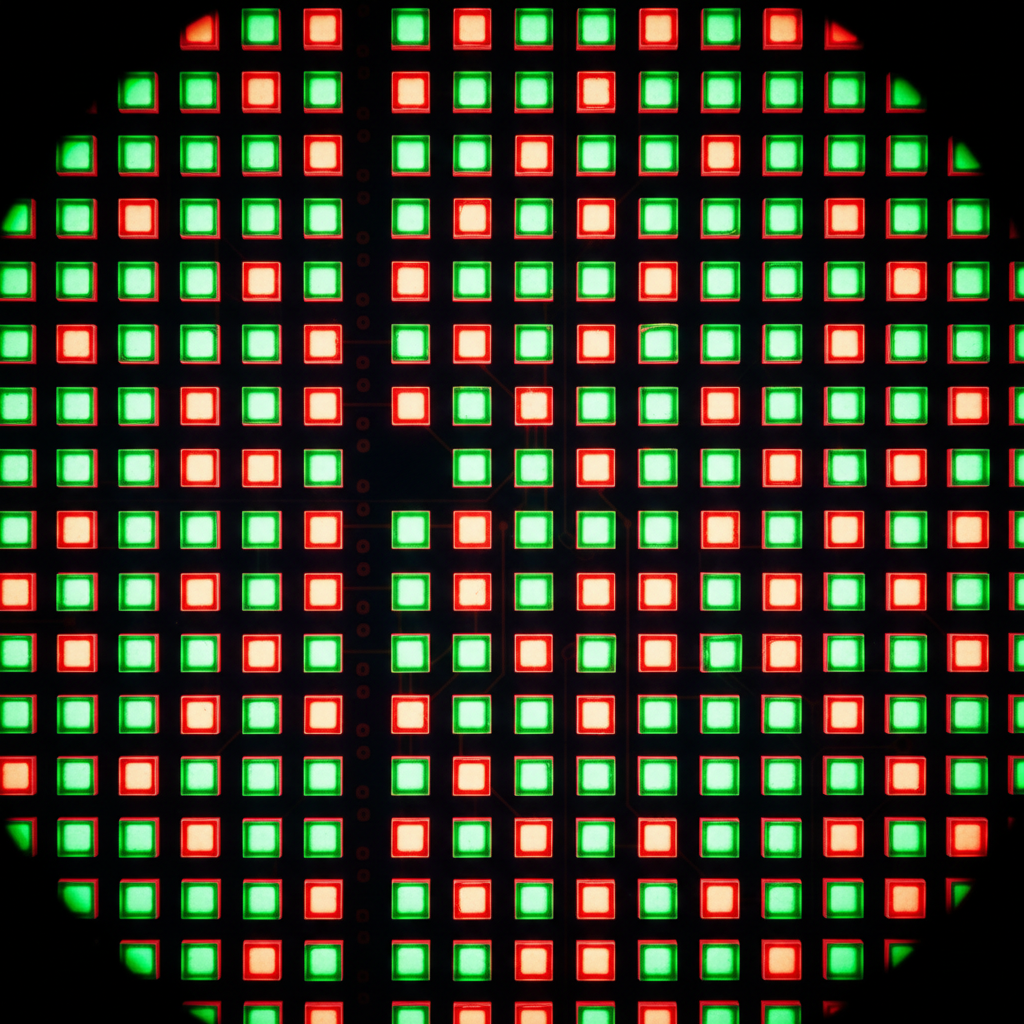
RGB Mini-LED changes the game by using clusters of tiny Red, Green, and Blue LEDs as the backlight itself. This allows for:
-
Higher Color Purity: Because the light source starts as pure color, the vibrancy in HDR content is staggering.
-
Extreme Local Dimming: Modern sets now feature over 10,000 dimming zones, bringing the contrast ratio closer to OLED than ever before.
-
Unrivaled Brightness: We are now seeing peaks of over 4,000 nits, making these TVs perfect for rooms with floor-to-ceiling windows.
OLED’s Refinement: The King of Contrast Holds its Ground
While Mini-LED is catching up on contrast, OLED (Organic Light Emitting Diode) is fighting back with massive leaps in brightness. The 2026 flagship OLEDs utilize a second-generation Micro Lens Array (MLA) paired with new deuterated organic compounds that allow the panels to run cooler while pushing higher voltages.
The result is "Ink-Black" levels that remain the gold standard. In an OLED, every single pixel is its own light source. When a pixel needs to be black, it simply turns off. This creates an infinite contrast ratio that even the best 10,000-zone Mini-LED cannot perfectly replicate. For cinema purists who watch movies in light-controlled "man caves" or darkened bedrooms, OLED remains the undisputed king of depth and texture.
Side-by-Side: Real-World Performance Metrics
When we put these panels side-by-side in the Gadgetilla testing lab, the differences became clear during specific use cases:
-
Gaming: OLED typically wins for motion clarity. Its near-instantaneous response time (0.1ms) means zero ghosting in high-frame-rate shooters. However, RGB Mini-LED is now the preferred choice for HDR "wow factor" in bright, colorful games like racing simulators.
-
Sports: This is where RGB Mini-LED shines. The high average picture level (APL) means a football pitch looks bright and consistent, whereas OLEDs sometimes trigger "Auto Static Brightness Limiter" (ASBL) to protect the panel, slightly dimming the image during long shots of green grass.
-
Cinematic Movies: If you are watching Interstellar or The Batman, OLED provides a three-dimensional pop that Mini-LED struggles to match. The tiny stars against a black void in space scenes are where OLED's "per-pixel" control defeats even the densest backlighting zones.
Durability and Practical Considerations
While performance is key, longevity and practicality often weigh heavier on the wallet.
-
Durability: RGB Mini-LED is inherently more robust. Being an inorganic technology, it doesn't suffer from the "organic decay" that eventually affects OLED panels. If you plan to keep your TV for 10+ years, or if you leave news channels with static logos on all day, Mini-LED is the safer bet.
-
Viewing Angles: OLED still holds a slight lead here. You can sit almost 90 degrees to the side and see perfect colors. RGB Mini-LEDs have improved with "Wide Angle" layers, but you may still see slight color shifting or "blooming" when viewing from a sharp angle.
-
Power Consumption: Interestingly, at lower brightness levels, OLED is more efficient. However, when pushed to display a bright, snowy scene, RGB Mini-LED is more power-efficient relative to its light output.
Final Verdict: Which One Should You Buy?
So, where should your money go? At Gadgetilla, our pragmatic recommendation boils down to your environment.
Choose RGB Mini-LED if: Your TV is in a living room with lots of natural light, you mainly watch sports or daytime TV, or you want the largest screen size possible (85"+) without a reflective "mirror" finish.
Choose OLED if: You are a movie buff who prefers watching in the dark, you are a competitive gamer who demands the lowest possible motion blur, or you value the "infinite depth" of true blacks over raw brightness.
In 2026, there is no "bad" choice among top-tier sets. It’s no longer a quest for the "best" technology, but the technology that best fits the room where your life happens.
Our Take on 2026 TV Tech
“For 2026, while OLED continues its reign for cinematic experiences due to unparalleled contrast, RGB Mini-LED is rapidly closing the gap in overall picture quality, especially for bright room viewing and gaming. We anticipate that RGB Mini-LED will offer a more versatile and often more cost-effective premium viewing experience for the majority of consumers, making it the smarter investment for many.” — the Gadgetilla team
Our Take on Display Tech
For 2026, we believe the choice between RGB Mini-LED and OLED hinges on individual priorities. "While OLED still offers unparalleled black levels and pixel-perfect contrast, RGB Mini-LED has made significant strides in brightness and color volume, often at a more accessible price point. Ultimately, we advise consumers to consider their primary viewing environment and content type before making a decision, as both technologies now deliver exceptional experiences," — the Gadgetilla team.com team. We’re excited to see the innovations each tech brings to the table, ensuring a vibrant future for home entertainment displays.
Our Take on 2026 TV Tech
“For 2026, while OLED continues to set the benchmark for contrast and perfect blacks, RGB Mini-LED is rapidly closing the gap in color accuracy and viewing angles, while offering superior peak brightness. We believe that for most consumers, the enhanced versatility of Mini-LED, especially in brighter viewing environments, offers a more compelling value proposition when considering overall performance against cost.” — the Gadgetilla team
Frequently asked questions
How is RGB Mini-LED different from standard Mini-LED? Supreme?
RGB Mini-LED uses a dedicated red, green, and blue LED cluster for each dimming zone, providing far higher color purity and brightness than traditional white-LED backlights.
Is OLED burn-in still a concern in 2026?
While OLED is more susceptible to burn-in than Mini-LED, 2026 models feature advanced heat-syncing and pixel-shifting software that makes it a non-issue for typical mixed-use viewing.
Which technology is more expensive?
Generally, high-end RGB Mini-LED and flagship OLEDs are priced similarly. However, RGB Mini-LED offers better value in larger screen sizes (85-inch and up).
About Gadgetilla
A pragmatic buying-guide site that publishes short-answer-first reviews and hands-on tests for everyday consumer tech — from TVs and headphones to smart home and smart pet devices.
Expert services sold to organisations — legal, accounting, agency, consultancy, engineering.
request a quote or get in touch with GadgetillaNext step
Continue with Gadgetilla
A pragmatic buying-guide site that publishes short-answer-first reviews and hands-on tests for everyday consumer tech — from TVs and headphones to smart home and smart pet devices.
Visit GadgetillaWritten with information published by Gadgetilla.