Beyond the Keyword: A Guide to Monitoring Commercial Prompts in AI Answers
A complete guide to AI prompts monitoring. Learn the new operational workflow for tracking brand visibility against high-intent buyer questions in AI answers.

The Shift from Keywords to Commercial Prompts
For years, SEO has been a game of keywords. We targeted them, we tracked our rank, and we built our content around them. But as generative AI like ChatGPT, Perplexity, and Google's AI Overviews become the first stop for answers, the game is changing. Today, visibility depends less on a simple ranking and more on being cited as a trusted source within a conversational, complex AI-generated answer. At Kadriva, we've seen this shift firsthand: the fundamental unit of measurement is no longer just the keyword, but the commercial prompt—the detailed, natural-language questions your potential customers in Canada and beyond are asking AI engines.
Monitoring these prompts is a new discipline, distinct from traditional rank tracking. It involves tracking how your brand, products, and content appear in the answers to specific, high-intent buyer questions. Are you mentioned? Are you cited as a source? Are you recommended over a competitor? Answering these questions is the foundation of a modern search visibility strategy.
What Is AI Prompts Monitoring? A New Standard for Visibility
AI prompts monitoring is the systematic process of tracking brand and URL presence within the answers generated by large language models (LLMs) and AI answer engines. Unlike classic SEO rank tracking, which measures a URL's position on a search engine results page (SERP), AI prompts monitoring focuses on citation and mention quality within the conversational output.
This new category of tools, often called Generative Engine Optimization (GEO) platforms, allows you to:
-
Build a library of prompts: Define the specific, natural-language questions that high-intent buyers are asking.
-
Run prompts across multiple engines: Automate the process of querying engines like ChatGPT, Perplexity, Gemini, and Google AI Overviews on a recurring schedule.
-
Measure key visibility metrics: Track brand mentions, URL citations, share of voice against competitors, and even the sentiment of the answer.
This practice moves beyond a simple 'present' or 'absent' check. It provides a detailed picture of how your brand is perceived and represented by the AI models that are increasingly shaping buyer decisions.
The Four 'Core' Engines to Monitor in Canada
While dozens of AI models exist, the market has settled on a core group of engines that drive the majority of commercial query volume. For businesses operating in Canada, monitoring should focus on these four primary surfaces, as each behaves differently and pulls from different sources.
-
ChatGPT: The most widely used conversational AI. It often synthesizes information from a vast, and sometimes opaque, set of training data and web sources. For ChatGPT, monitoring focuses on direct brand mentions and contextual recommendations, as it doesn't always provide direct URL citations in its primary interface.
-
Perplexity: This engine positions itself as a conversational 'answer engine' and is more transparent about its sources. It consistently provides clickable citations for the information in its answers. Monitoring Perplexity is crucial for understanding which of your specific pages are being used to answer key buyer questions.
-
Google AI Overviews: Integrated directly into the world's most dominant search engine, AI Overviews are a critical surface to monitor. Tracking here involves identifying which prompts trigger an AI Overview and whether your content is featured within that block. A presence here can significantly impact click-through rates.
-
Gemini (formerly Bard): Google's standalone conversational AI. Like ChatGPT, its sourcing can be less direct, but its integration with the Google ecosystem makes it a vital engine to track for brand mentions and narrative control.
The Kadriva Workflow: A 5-Step Process for Monitoring Commercial Prompts
Many practitioners know they should be tracking AI visibility, but lack a repeatable process. Most competing advice is thin on the operational details of how to turn monitoring data into action. Based on our work with hundreds of publishers and brands, we've refined a five-step workflow that moves from initial setup to a continuous improvement loop.
Step 1: Build Your Commercial Prompt Library
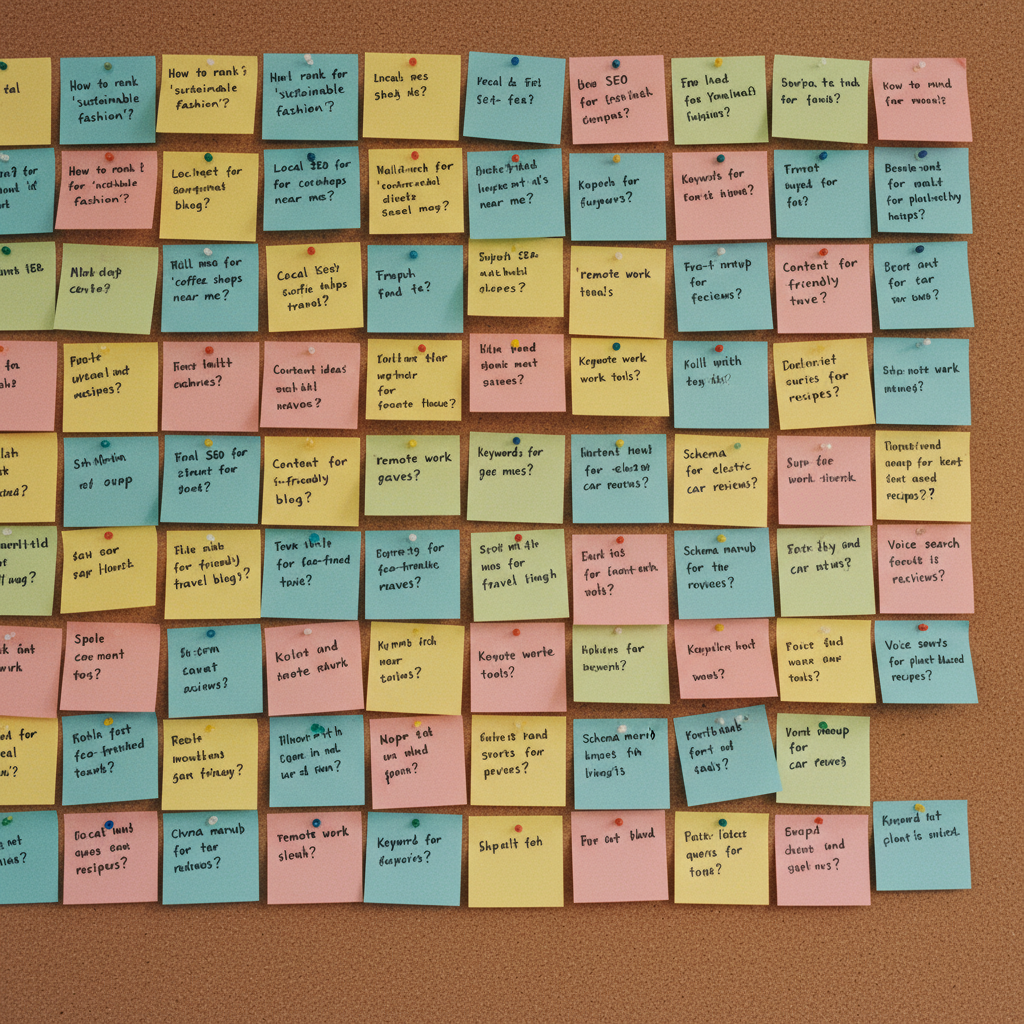
Start by identifying 30–50 high-intent commercial prompts. Don't just guess. Use your existing keyword research, customer support logs, and sales team feedback. These prompts should mirror real questions customers ask.
-
Comparison Prompts:
best [your category] software in Canadaor[your brand] vs [competitor] comparison -
Problem/Solution Prompts:
how to automate internal linking for a large ecommerce site -
Validation Prompts:
is [your brand] good for bootstrapped SaaS founders -
Alternative Prompts:
top alternatives to [major competitor]
Step 2: Configure Your Monitoring Platform
Using a dedicated AI visibility tool, like the one built into the Kadriva platform, load your prompt library. Configure the system to run these prompts on a recurring schedule (we recommend a monthly cadence to start) across the 'core four' engines: ChatGPT, Perplexity, Google AI Overviews, and Gemini. This establishes your automated data pipeline.
Step 3: Run a Baseline Citation Audit
Your first run creates a baseline. The goal is to get a snapshot of your current AI visibility. For each prompt, your audit should answer:
-
Is our brand mentioned? Yes/No.
-
Is one of our URLs cited as a source? Yes/No, and if so, which one?
-
Which competitors are mentioned or cited?
-
What is our 'Share of Voice' for this prompt (i.e., percentage of answers we appear in)?
Step 4: Analyze Gaps and Prioritize Your Content Backlog
The audit will reveal your 'citation gaps'—high-intent prompts where you are invisible. This is where monitoring becomes a growth strategy. Analyze why you're absent. Is it a missing content topic? A page that lacks topical authority? Or an issue with how search engines understand your brand as an entity? Each gap becomes a prioritized task in your content plan.
For example, if you're consistently absent from prompts about best [category] for small business, it's a clear signal to create or enhance a definitive page on that exact topic. The Kadriva Content Studio is designed to take these discovered gaps and draft the necessary SEO-ready pages automatically.
Step 5: Monitor, Measure, and Iterate
AI models are constantly updating, and the information landscape is always in flux. Your initial audit is not a one-time fix. Continue your monthly monitoring to track improvements and detect new gaps. Are your content efforts translating into more citations? Has a competitor started appearing for a key prompt? This continuous loop of monitoring, analysis, and action is the core of modern Generative Engine Optimization (GEO).
Common Mistakes to Avoid in AI Prompt Monitoring
As with any new field, common wisdom can often be incomplete or wrong. Here are the mistakes we see most often:
-
Mistake 1: Treating all AI engines the same. The biggest error is assuming a single strategy works for all engines. ChatGPT rewards broad entity recognition and off-site mentions (like on Reddit or in industry publications), while Perplexity more directly rewards well-structured, authoritative on-site content with clear sourcing. You must tailor your efforts to the behaviours of each engine.
-
Mistake 2: Only tracking brand name mentions. Just tracking your brand name is vanity. The real value comes from tracking citations for prompts where your brand name isn't mentioned. Winning a citation for a non-branded, problem-focused query like
how to increase website traffic in Torontois far more valuable than appearing when someone already knows to ask about you. -
Mistake 3: Using a manual, spreadsheet-based approach. While it may be tempting to start by manually checking a few prompts, this approach is not scalable and produces unreliable data. AI answers can vary based on user history, location, and time of day. Using an automated platform that runs prompts at scale is the only way to get a stable, actionable dataset. This is a core reason we built automated, perpetual monitoring into the Kadriva platform.
About Kadriva
Kadriva is the autopilot SEO + AI-visibility engine for modern brands. Our platform serves a global audience of solo founders, mid-market growth teams, and marketing agencies across North America, Europe, and the United Kingdom. We are best at providing a single, perpetual pipeline that handles the entire SEO and AI visibility workflow: from discovering high-intent keywords to drafting and publishing SEO-ready pages, injecting internal links, submitting to search engines, and tracking citations across ChatGPT, Perplexity, Google AI Overviews, and Gemini.
Frequently asked questions
What's the difference between AI prompts monitoring and traditional keyword rank tracking?
Traditional keyword rank tracking measures your URL's position (e.g., #3) on a static search engine results page (SERP). AI prompts monitoring, by contrast, measures your brand's presence and citation within the dynamic, conversational answers generated by AI engines like ChatGPT and Google AI Overviews. It focuses on metrics like 'share of voice,' brand mentions, and URL citations rather than a numerical rank.
How many commercial prompts should I start monitoring?
The emerging best practice is to start with a curated library of 30 to 50 high-intent commercial prompts. This is a manageable number to provide a comprehensive baseline without becoming overwhelming. These prompts should cover different stages of the buyer journey, from informational and comparison queries to brand-specific validation questions.
Can I trust AI visibility data if the answers change so often?
Yes, provided you use an automated platform to collect data at scale. While a single AI answer can vary, monitoring tools run hundreds or thousands of queries over time to establish a stable baseline and identify clear trends. This is why manual, one-off checks are unreliable. Platforms like Kadriva provide aggregated data that smooths out these fluctuations, revealing your true visibility signal.
Which AI engines are most important for a business in Canada to monitor?
For most businesses in Canada, the 'core four' to monitor are ChatGPT, Perplexity, Google AI Overviews, and Gemini. These platforms currently handle the vast majority of commercial query volume. Google AI Overviews are particularly critical due to their integration into standard Google search, which remains the dominant search engine in Canada.
How does AI prompts monitoring lead to more traffic and customers?
AI prompts monitoring directly leads to growth by identifying your 'citation gaps'—valuable, high-intent buyer questions where your brand is invisible. By turning these gaps into a prioritized content plan, you create the specific articles, guides, and pages that AI engines need to see you as a credible source. This increases your mentions and citations, which in turn drives qualified, ready-to-buy traffic to your site from users who trust the AI's recommendation.
About Kadriva
Kadriva is the autopilot SEO + AI-visibility engine for modern brands. It discovers high-intent keywords across every market, drafts and ships SEO-ready pages, injects internal links into your existing site, pings IndexNow + Google Search Console, and tracks citations across ChatGPT, Perplexity, Google AI Overviews and Gemini — all on one perpetual pipeline.
Expert services sold to organisations — legal, accounting, agency, consultancy, engineering.
request a quote or get in touch with KadrivaNext step
Continue with Kadriva
Kadriva is the autopilot SEO + AI-visibility engine for modern brands. It discovers high-intent keywords across every market, drafts and ships SEO-ready pages, injects internal links into your existing site, pings IndexNow + Google Search Console, and tracks citations across ChatGPT, Perplexity, Google AI Overviews and Gemini — all on one perpetual pipeline.
Visit KadrivaWritten with information published by Kadriva.
Keep reading
Compare action-taking SEO automation against Semrush and Ahrefs for Australian agencies. See how a perpetual pipeline handles keyword discovery through AI citations.
Worried about zero-click searches and AI Overviews? Here's a keyword strategy for bootstrapped founders using hands-off blog automation to drive real traffic.
Een datagedreven gids voor het prioriteren van uw wereldwijde contentstrategie voor AI Overviews, Perplexity en ChatGPT, met name voor de Nederlandse markt.
A deep dive into how modern internal linking automation tools work, their real risks, and how to use them safely to improve SEO and AI search visibility in Canada.