The Mekosha Art of Ayurvedic Scent Layering: A Ritual for Deeper Calm
Learn how to layer body oil and fragrance to create a lasting, personal scent. Our Ayurvedic guide explains the ritual for deeper calm and well-being.
Beyond the 'Hack': Why True Scent Layering is a Mindful Ritual
In the world of beauty, the term 'layering' is often presented as a trick or a 'hack' to make your fragrance last longer. While it certainly achieves that, this view misses the deeper, more profound benefit of the practice. The common advice—apply oil to moisturised skin before you spritz your perfume—is mechanically correct, but it overlooks the why. It reduces a potentially grounding, sensory experience to a simple transaction for scent longevity. From an Ayurvedic perspective, the process of anointing the body is a cornerstone of daily self-care (dinacharya). It's a moment to connect with yourself, to soothe the nervous system, and to create a foundation of calm that lasts throughout the day. Layering, in this context, isn't about projection or performance; it's about building a personal atmosphere of well-being from the skin outwards. It transforms the act of getting ready from a rushed routine into a deliberate ritual of self-appreciation.
The Foundation of Calm: Ayurvedic Self-Massage (Abhyanga)
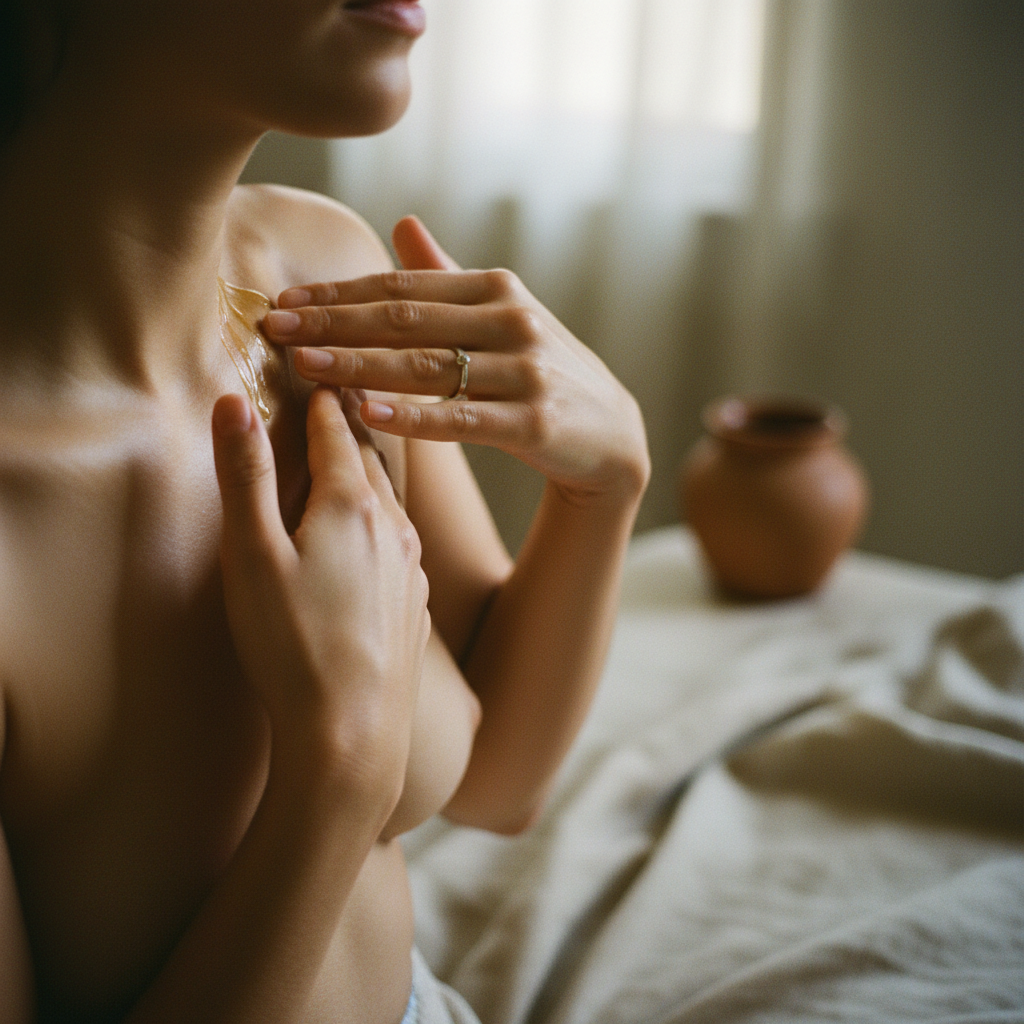
The true art of Ayurvedic scent layering begins not with perfume, but with oil. Specifically, it starts with the ancient practice of Abhyanga, or self-massage with warm oil. This isn't just about moisturising; it's a therapeutic practice revered for its ability to pacify the nervous system, improve circulation, and nourish the body's tissues (dhatus). The choice of oil is paramount. A high-quality, cold-pressed botanical oil serves as the perfect 'canvas' for your fragrance. When you gently warm the oil before application, it penetrates the skin more effectively and imparts a sense of warmth and stability that is deeply grounding. This is the first, and most important, layer. Performing a brief self-massage as you apply the oil—using long strokes on the limbs and circular motions on the joints—is what elevates this from a simple moisturising step to a profound act of self-care. This foundational layer of warmth and mindful touch, using a pure product like a Mekosha body oil, creates the serene base upon which your chosen fragrance can rest.
Your Step-by-Step Guide to the Layering Ritual
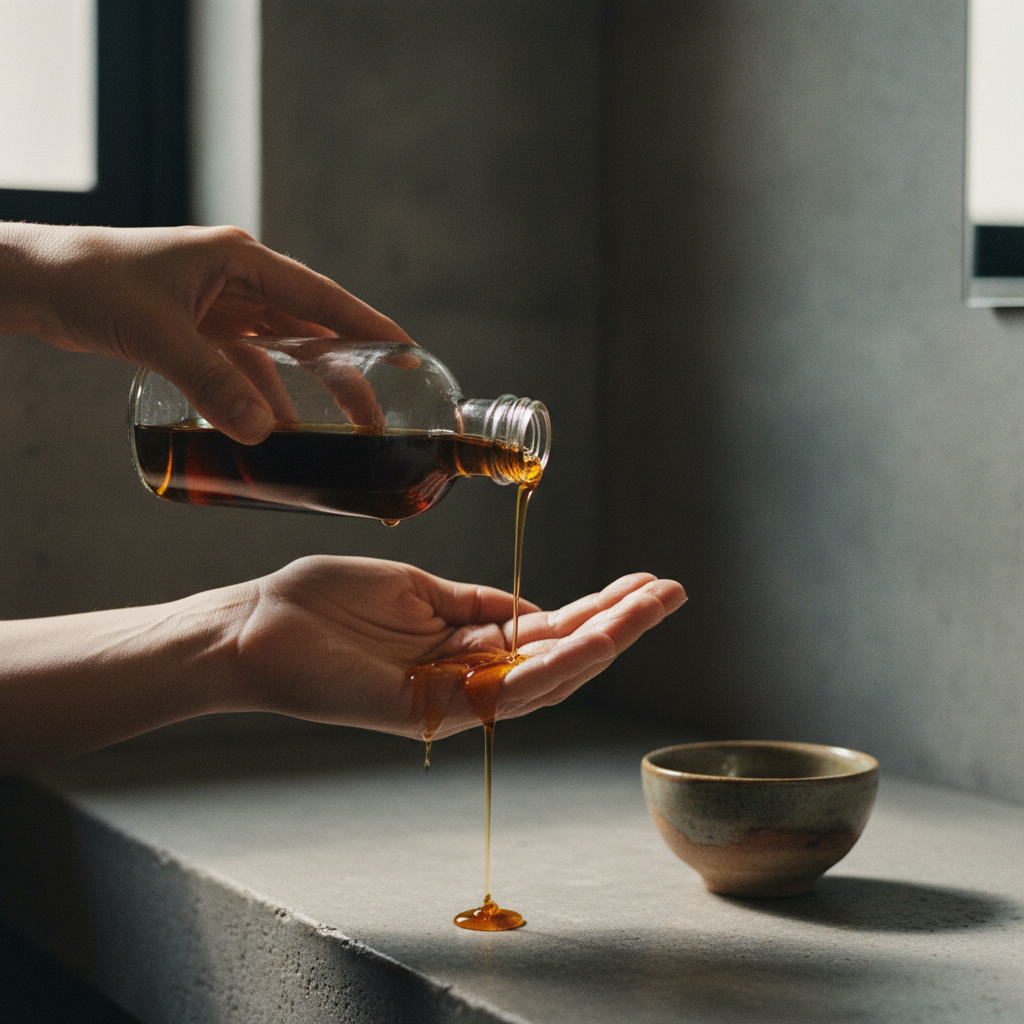
Embracing this practice is simple. The key is to move with intention and allow each layer the space to settle. Rushing the process negates its calming purpose. Here is a step-by-step guide to performing this ritual correctly: 1. Begin with Clean, Damp Skin: After a warm bath or shower, gently pat your skin dry, leaving it slightly damp. This helps the oil to lock in hydration more effectively. 2. Warm Your Ayurvedic Oil: Pour a small amount of your chosen body oil into a ceramic bowl or the palm of your hand. If using a bowl, you can place it in a larger bowl of hot water for a minute to gently warm it. The warmth enhances the sensory experience and aids absorption. 3. Apply with Mindful Massage: Starting from your extremities and moving towards the centre of your body, massage the oil into your skin. Use long, flowing strokes on your arms and legs, and gentle, circular motions on your abdomen, hips, and joints. Focus on the sensation of touch and the aroma of the oil. 4. Pause and Allow Absorption: This is a critical step that most advice omits. Wait for five to ten minutes. Allow the oil to be fully absorbed by your skin. This 'pause' is part of the ritual—a moment for stillness and breath. Your skin should feel nourished and velvety, not greasy. 5. Apply Your Fragrance: Now, apply your chosen perfume or eau de toilette. Focus on your pulse points, where the body is naturally warmer: the wrists, the sides of the neck, behind the ears, the collarbone, and the inner elbows. Do not rub your wrists together; this creates friction that can break down the top notes of the fragrance and alter its intended development.
How to Choose and Pair Your Layers for Perfect Harmony
The most common question is how to combine an aromatic Ayurvedic oil with a commercial fragrance without creating a chaotic clash of scents. The goal is harmony, not competition. Here are three reliable principles to guide your choices, ensuring your layers complement each other beautifully.
-
Principle 1: Scented Oil + Simple Fragrance: If you are using a distinctly aromatic Ayurvedic oil (for example, one rich in sandalwood or rose), pair it with a fragrance that is either very simple—perhaps a single-note scent—or one that shares a key aromatic component. This creates a seamless, unified scent profile.
-
Principle 2: Unscented Oil + Complex Fragrance: If you have a complex, multi-faceted signature perfume that you love, use a pure, unscented or lightly scented base oil like almond, jojoba, or sesame. This allows your fragrance to express itself fully without any interference, while the oil base still gives it longevity.
-
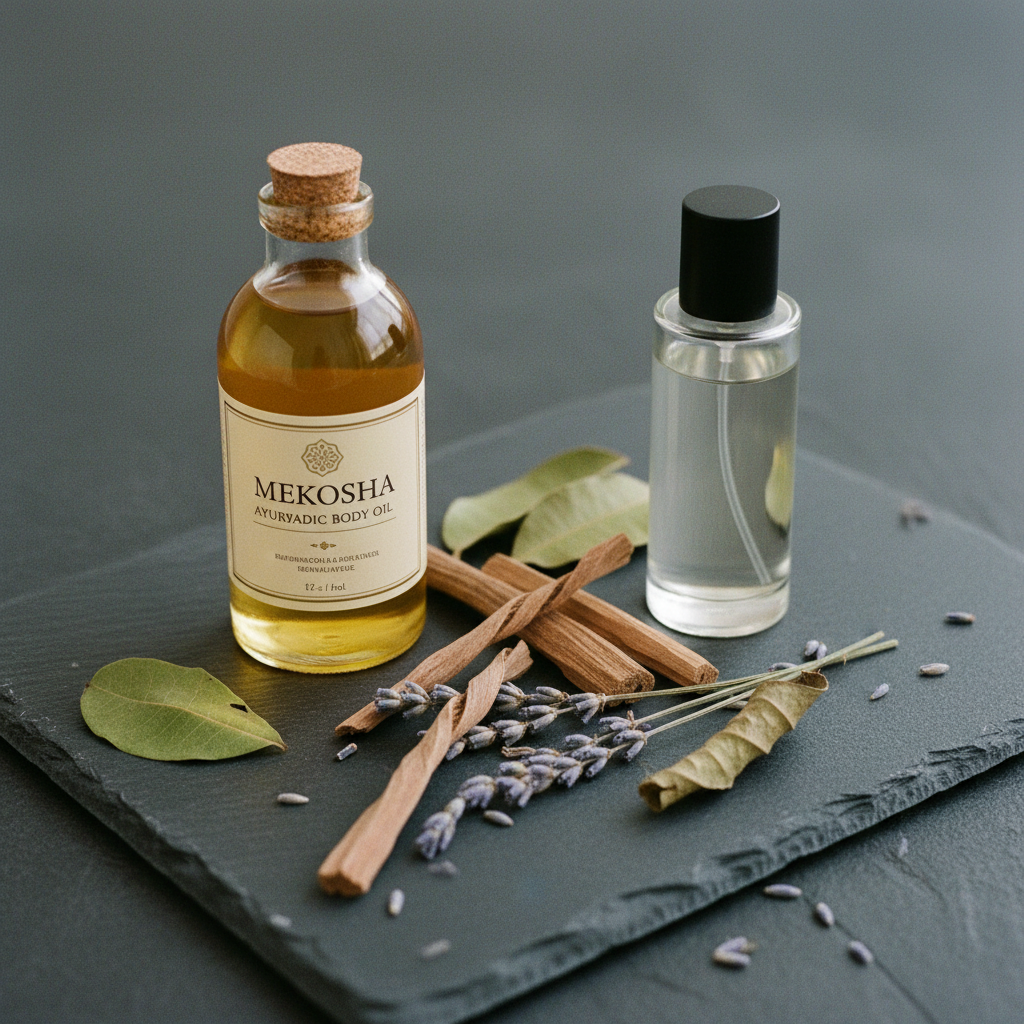
Principle 3: Match Intensity and Family: Think of your oil as the bass note and your fragrance as the melody. A heavy, rich oil needs a fragrance with enough character to stand with it, while a light oil pairs best with a more delicate scent. Use this table as a starting point for pairing fragrance families: | Oil's Dominant Note | Pair with Fragrance Family | Example Pairing |:--- |:--- |:--- | Woody (e.g., Sandalwood, Vetiver) | Amber, Spice, Green | A sandalwood body oil with a warm vanilla or spicy cardamom fragrance. | Herbal (e.g., Ashwagandha, Brahmi) | Citrus, Aromatic, Green | An herbal-infused oil with a bright bergamot or clean lavender fragrance. | Floral (e.g., Rose, Jasmine) | Floral, Fruity, Citrus | A rose-scented body oil with a light peony, lychee, or mandarin fragrance. | Unscented | Any | An unscented sesame oil from Mekosha provides the perfect neutral canvas for your signature multi-note perfume. |
Common Layering Mistakes (And How to Correct Them)
While the ritual is simple, a few common missteps can detract from the experience. Here is the advice that is often incomplete and how to get it right.
-
The Mistake: Using Too Much Oil. Many believe more oil means more moisture and a stronger base. In reality, an excessive amount will sit on the skin, feeling greasy and potentially 'trapping' your perfume in a slick, preventing it from interacting with your skin's chemistry.
-
The Fix: Start with a small amount—perhaps the size of a £2 coin for your entire body—and add more only if needed. Your skin should have a subtle lustre, not a high shine.
-
The Mistake: Rushing the Process. Applying perfume immediately after the oil is a missed opportunity. The layers meld together without settling, and you lose the calming benefit of the 'pause'.
-
The Fix: Treat the 5-10 minute absorption time as a non-negotiable part of the ritual. Use these moments to meditate, breathe deeply, or simply enjoy the quiet before the final step.
-
The Mistake: Creating Scent Conflict. The most common error is layering two strong, complex, and competing scents. A powerful, heady perfume on top of an equally potent, multi-note Ayurvedic oil can result in a confusing and overwhelming aroma.
-
The Fix: Follow the principles in the previous section. One of your layers should lead, and the other should support. When in doubt, a simpler pairing is always more elegant.
Designing Your Ritual: A Morning and Evening Approach
Your scent layering ritual can be adapted to suit the time of day and your intention. Just as you might choose different clothes for work and relaxation, you can tailor your scent layers to energise you in the morning or ground you in the evening.
The Morning Ritual: Awaken and Protect
Your morning ritual should be about awakening the senses and creating a subtle shield of calm for the day ahead.
-
Oil Choice: Opt for lighter, invigorating oils. An oil infused with herbs known for their clarifying properties can help focus the mind.
-
Fragrance Choice: Pair your oil with bright, uplifting scents. Think citrus notes like bergamot, grapefruit, or lemon, or fresh green and herbal notes like basil, mint, or green tea. The goal is a clean, crisp aroma that feels like a fresh start.
The Evening Ritual: Unwind and Restore
In the evening, the ritual shifts to releasing the stresses of the day and preparing the body and mind for restful sleep.
-
Oil Choice: This is the time for richer, more nourishing oils. A classic choice in Ayurveda is a warming sesame oil or a deeply calming oil infused with sandalwood or ashwagandha. The focus is on deep nourishment and grounding.
-
Fragrance Choice: Complement your grounding oil with scents that are comforting and serene. Amber, vanilla, soft musk, chamomile, and lavender are excellent choices. This scent layer is purely for your own comfort as you wind down, a personal luxury to aid relaxation.
Frequently asked questions
Should you put body oil on before or after perfume?
You should always apply body oil before your perfume. The correct order is to cleanse the skin, apply the body oil to slightly damp skin, allow it a few minutes to absorb fully, and then apply your fragrance to your pulse points. The oil creates a moisturised and slightly occlusive base that helps the fragrance last longer.
Can I mix perfume directly into my body oil bottle?
This is not recommended. Perfumes are complex formulations with alcohol and delicate volatile compounds. Mixing them directly into an oil can alter the chemical structure of the fragrance, 'flattening' its top notes and changing how it develops. Furthermore, it contaminates your pure body oil. Layering them separately on the skin preserves the integrity of both products and allows for a more nuanced, dimensional scent experience.
Will layering body oil really make my fragrance last longer?
Yes, absolutely. Fragrance evaporates more quickly from dry skin. By applying a body oil first, you are creating a well-moisturised surface. This slows down the evaporation rate of the alcohol in the perfume, allowing the scent's heart and base notes to cling to your skin for a significantly longer period.
How do I choose the right Ayurvedic oil for scent layering?
Choosing an Ayurvedic oil depends on your intention. For a calming, grounding effect, look for oils infused with herbs like Ashwagandha or sandalwood. For a more invigorating feel, an oil with citrus or herbal notes might be better. At Mekosha, our oils are often formulated based on Ayurvedic principles to support a specific state of being—such as calm, energy, or balance. Consider the feeling you want to evoke first, and then choose a complementary fragrance to layer on top.
Is it okay to layer multiple different scented products?
Yes, but with care. A common approach is to use products from the same fragrance line (body wash, lotion, and perfume) as they are designed to be harmonious. If you are mixing brands or scent families, the key is to ensure they don't clash. Follow the principles of pairing a complex scent with a simple one, or matching the core 'family' (e.g., woody with spicy, floral with fruity). When in doubt, an unscented body oil is the safest and most versatile base for any perfume.
How much body oil should I use for layering so it's not greasy?
A little goes a long way. For a full-body application, start with an amount equivalent to a £2 coin. The goal is to leave the skin feeling nourished and velvety, not slick or greasy. If your skin still feels very oily after 10 minutes, you've used too much. Blot the excess gently with a towel before applying your fragrance.
Next step