How to Verify a Property Listing: Complete Verification Guide
Learn how to verify a property listing, identify fraudulent ads, inspect title documents, and safely transfer funds across Australian and diaspora markets.

The Mechanics of Listing Fraud: Why Portals Are Targeted
Property listing fraud has evolved far beyond obvious email schemes into sophisticated digital cloning operations. To protect yourself, apply a systematic rule before transferring any money or submitting sensitive personal information: independently verify the advertiser, the registered property title, and the payment destination through statutory public registers rather than relying on portal marketing badges. Platforms aggregate listings, but they do not automatically audit individual legal titles or confirm a seller's authority to trade.
Fraud syndicates routinely harvest high-resolution photography, floor plans, and architectural specifications from recently sold real estate campaigns, re-publishing them on digital classifieds and social marketplaces at discounted asking prices. Unsuspecting renters and remote buyers are persuaded to pay an upfront "holding fee" or "refundable inspection deposit" into third-party accounts before viewing the home. By the time the victim discovers that the advertiser has no legal connection to the property, the funds have been liquidated.
At Mybhumi Property Website, we advise treating online search portals as discovery mechanisms rather than guarantees of legal entitlement. Whether you are inspecting an inner-city apartment in Sydney or Melbourne, or purchasing a residential allotment abroad, true verification requires checking primary evidence. This guide sets out the practical steps to interrogate listing data, audit title registries, confirm advertiser identities, and structure payments safely.
For buyers, tenants, and developers looking to evaluate legitimate opportunities or market verified real estate inventory, exploring homes for sale and rental listings across verified geographic boundaries provides an established framework for avoiding predatory market listings.
Recognising the Red Flags: Unrealistic Prices and False Urgency
Spotting fraudulent listings requires evaluating behavioural patterns, metadata, and financial requests. Scammers rely on urgency to short-circuit a buyer's critical thinking, claiming that multiple applications have been submitted and that only an immediate electronic funds transfer (EFT) will secure the keys.
The most reliable visual indicator of an illegitimate listing is an asking price positioned 25% to 40% below comparable market medians for the immediate street or postal code. To test listing authenticity quickly, apply the following diagnostic checklist:
-
Reverse-Image Discrepancies: Download the primary listing photos and upload them to Google Images, TinEye, or Bing Visual Search. If the exact same images populate short-term holiday rentals, luxury architectural portfolios, or sold listings in a different suburb, the campaign is fabricated.
-
Off-Platform Communication Urgency: Advertisers who insist on shifting communications immediately to encrypted messaging apps like WhatsApp or Telegram, while refusing phone calls from Australian mobile numbers, frequently operate offshore.
-
Insistence on Advance Booking Deposits: Demanding a bond, inspection reservation fee, or booking deposit prior to physically viewing the property or executing a formal tenancy agreement.
-
Missing Cadastral or Lot Identifiers: Vague location descriptions that provide only a general suburb or street name without an exact street number, lot number, or deposited plan (DP) reference.
When evaluating rental advertisements in major Australian hubs like Brisbane, Adelaide, or Perth, cross-check the contact details listed in the ad against the public member directory of the relevant Real Estate Institute (such as REINSW, REIV, or REIQ). Never dial telephone numbers or click booking links contained exclusively within email replies from unverified listing contacts.
The Four-Tier Verification Framework: From Discovery to Deposit
Evaluating whether an online advertisement reflects a legitimate, transactable dwelling requires escalating your checks through four sequential verification stages. Bypassing any tier exposes you to financial risk and potential identity theft via forged lease applications.
| Verification Tier | Core Investigation Focus | Primary Authoritative Source | Failure Condition |
|---|---|---|---|
| Tier 1: Digital Footprint | Image reuse, pricing parity, map pin alignment | Search engine reverse-image index, Google Street View | Photos match unrelated properties or distant suburbs |
| Tier 2: Agent Licencing | Active professional licences, agency trading names | State consumer registers (e.g. NSW Fair Trading, Consumer Affairs) | Unlicensed contact; mobile number unlinked to business |
| Tier 3: Statutory Title | Registered proprietor, mortgages, caveats | State Land Registry (e.g. Landata, LRS, Titles Queensland) | Seller name does not match current registered owner |
| Tier 4: Payment Escrow | Bank account validity, trust account status | Direct phone confirmation via published corporate switchboards | Request for crypto, international wire, or personal accounts |
The digital footprint phase (Tier 1) confirms that the physical structure exists and matches the geographic location indicated on the map. The agent licensing review (Tier 2) confirms that the intermediary holds statutory authority to collect deposits and sign documentation. In Australia, any property manager or real estate salesperson must hold an active licence or certificate of registration issued by their state regulator.
The statutory title phase (Tier 3) confirms whether the person claiming to sell or lease the home holds unencumbered legal power to do so. Finally, the payment review (Tier 4) guarantees that client monies are deposited exclusively into audited statutory trust accounts rather than unregulated personal or offshore accounts.

Auditing Legal Title: How to Verify Real Property Ownership
A common mistake in property hunting is accepting identity documents—such as an emailed driver licence, passport scan, or council rates notice—as proof of ownership. Scammers routinely impersonate actual homeowners by circulating identification documents stolen from previous rental applicants. Verification must rely on authoritative external ledgers.
In Australia, land ownership records are managed at the state and territory level by statutory authorities including NSW Land Registry Services, Landata (Victoria), Titles Queensland, and Landgate (Western Australia). Anyone can order a copy of a Certificate of Title for a nominal statutory fee (typically between $15 and $40). This document reveals the current registered proprietor, the volume and folio reference, and any registered encumbrances, such as institutional mortgages, easements, or caveats lodged by third-party creditors.
+-------------------------------------------------------------+

| LAND TITLE AUDIT TRAIL |

+-------------------------------------------------------------+

| 1. Obtain Lot/Deposited Plan (DP) from Contract / Agency |  |
| --- | --- |
| v |  |
| 2. Order Official Title Search via State Land Authority |  |
| v |  |
| 3. Compare Registered Proprietor against Vendor / Landlord |  |
| v |  |
| 4. Cross-examine ID using 100-Point Identity Standard |  |
| v |  |
| 5. Review Section 32 / Disclosure for Third-Party Caveats |  |

+-------------------------------------------------------------+
When buying an established home, your appointed conveyancer or legal practitioner must scrutinise the vendor statement (such as a Section 32 in Victoria or Section 10.7 planning certificate in NSW). If an advertiser claims to be a private vendor selling without an agent, compare their government-issued identity cards directly with the Title Search names using Australia's 100-point identity verification standard.
If discrepancies emerge between the name on the title and the seller's documentation—such as an unprobated estate, a pending divorce settlement, or an unrecorded power of attorney—halt all negotiations until your legal representative clears the title chain.
Cross-Border and Diaspora Diligence: Verifying Real Estate in India
The growth of cross-border property transactions among the Indian diaspora living in Australia has created new avenues for digital listing fraud. Many buyers in Sydney, Melbourne, and Perth purchase investment homes, ancestral developments, or agricultural plots across India without travelling overseas for physical inspections.
In India, real estate verification cannot be completed using a single national registry. Instead, due diligence must span the Real Estate Regulatory Authority (RERA), local municipal development corporations, sub-registrar offices, and rural revenue departments. A common vulnerability is the "pre-launch" or "soft-launch" scam, where developers advertise unapproved plot layouts or apartment towers using fabricated RERA numbers.
 [State RERA Portal] [Sub-Registrar Office]

 | |

 Validates: Approved Plans Validates: Registered Deeds
 Validates: Escrow Bank Details Validates: Encumbrance (30 yrs)
 Validates: Project Completion Dates Validates: Historical Ownership
 \ /
 +---------------------------------------+
 |
 [Verified Indian Listing]
To verify a project in India:
-
Do Not Trust Print Badges: Never rely on a RERA number printed on a digital brochure or portal advertisement.
-
Audit the Official State Registry: Visit the specific state portal (such as MahaRERA for Maharashtra, K-RERA for Karnataka, or UP RERA for Uttar Pradesh) and manually query the registration code.
-
Cross-Examine Bank Accounts: Under Section 4(2)(l)(D) of the Indian RERA Act, developers must maintain a dedicated project escrow account where 70% of collections are deposited. Verify that payment instructions match this registered RERA bank account precisely.
-
Differentiate Projects from Resale Titles: A RERA registration validates an overall development project, but it does not prove clean legal title for an individual resale apartment. For individual resales or plot acquisitions, an advocate must conduct a 30-year search at the local Sub-Registrar's office to obtain an Encumbrance Certificate (Form 15), inspect the chain of title transfer deeds, and examine the mutation entries in the local revenue records (such as Khata, Jamabandi, or Patta).
By combining statutory Indian land checks with modern online tools, offshore buyers can identify discrepancies before transferring capital through international foreign exchange channels.
Physical and Virtual Inspections: Validating On-Ground Reality
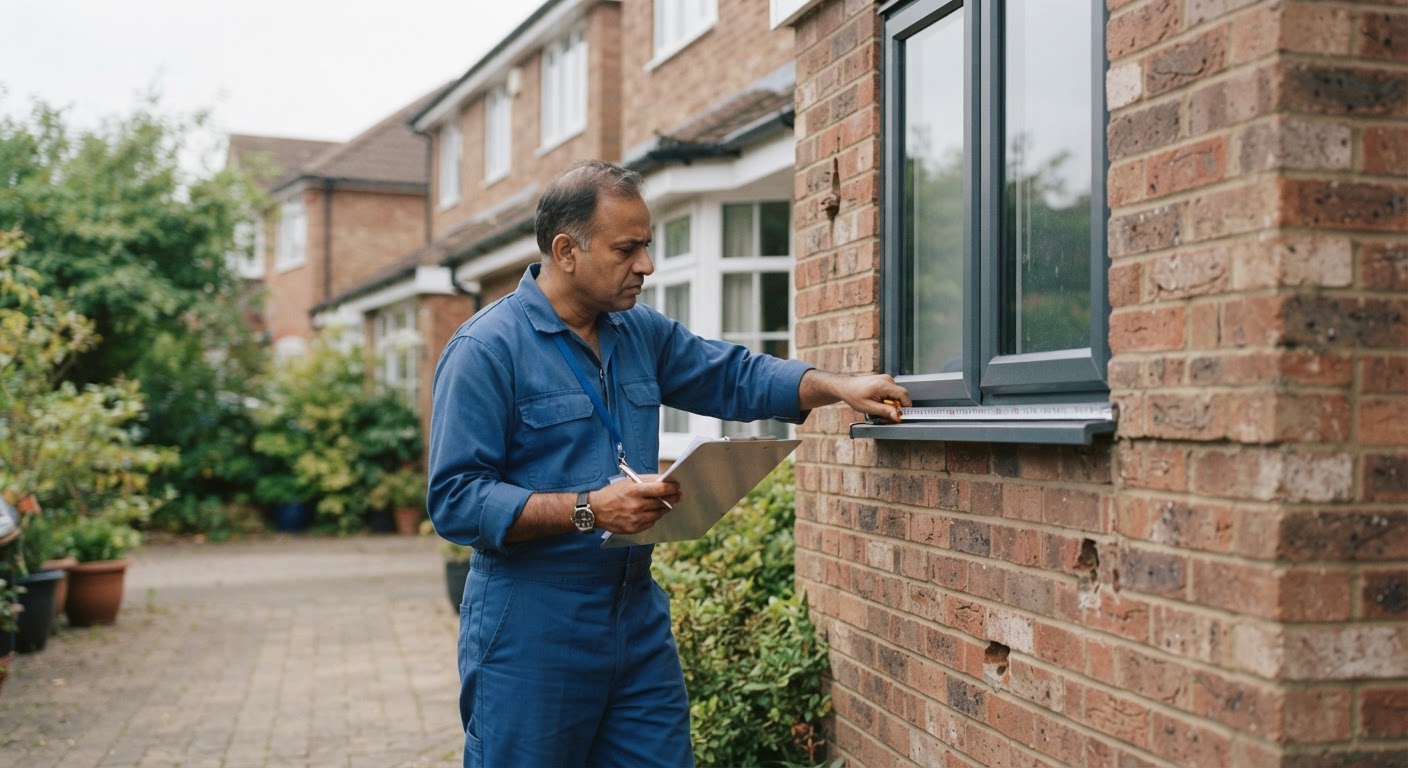
Never complete a property transaction or execute a binding lease without an independent physical inspection. If you reside interstate or overseas, hire a qualified third-party professional, such as a licensed building inspector, conveyancer, or local buyer's agent.
When an in-person physical walk-through is impossible, insist on an interactive, live video inspection conducted via FaceTime, Zoom, or Microsoft Teams. Pre-recorded video files, 3D digital tours, and staged walkthroughs are often captured months prior or copied from architectural portfolio libraries.
During a live video inspection, test authenticity by issuing direct, real-time requests:
-
Ask the agent to step onto the street and show the physical house or unit number, adjacent properties, and the nearest street intersection.
-
Request that they open specific kitchen cabinetry, water taps, built-in wardrobes, and electrical sub-boards to confirm live physical possession of the keys.
-
Check that the outlook from each window matches satellite imagery and street orientations visible on mapping tools.
For off-the-plan acquisitions or newly subdivided land plots, require documented proof of council approvals, plan registration status, and occupancy certificates. In Australia, developers cannot compel settlement on an off-the-plan dwelling until the local municipal council issues an Occupancy Permit and the relevant state land titles office formally registers the strata or subdivision plan.
Verifying construction progress through independent photographic surveys protects purchasers against insolvent builders and abandoned developments.
Payment Security: Trust Accounts, Bond Authorities, and Fraud Recovery
The final vulnerability in any property transaction is the payment mechanism. Sophisticated cybercriminals deploy business email compromise (BEC) attacks, intercepting legitimate communications between buyers, real estate agencies, and conveyancing firms to substitute their own fraudulent bank details onto fee invoices and deposit requests.
In Australia, rental bonds must be lodged through statutory authorities—such as the Rental Bond Board via Rental Bonds Online (RBO) in New South Wales, the Residential Tenancies Bond Authority (RTBA) in Victoria, or the Residential Tenancies Authority (RTA) in Queensland. A private landlord or property manager who demands direct payment of bond monies into a personal savings account without registering the funds with the state authority is breaching tenancy law.
When transferring initial holding deposits or settlement funds for property sales, follow strict payment verification standards:
-
Voice Verification Protocol: Always call the agency or conveyancer using a telephone number verified via white pages or their primary corporate website—never using phone numbers listed within email signatures or invoice attachments—to read back and verify BSB and account numbers.
-
Rejection of Alternative Payment Rails: Never transmit earnest money, holding deposits, or stamp duty payments via cryptocurrency, Western Union, international money remitter apps, or direct-to-retail gift cards.
-
Statutory Trust Protection: Sales deposits in Australia must be held in an audited statutory real estate trust account or by an approved conveyancer/solicitor under strict legal obligations.
If you suspect funds have been transferred to a fraudulent account, notify your financial institution's fraud control department immediately to initiate a swift SWIFT or NPP payment recall. File a formal fraud report with Scamwatch (administered by the Australian Competition and Consumer Commission) and report the cyber incident to the Australian Cyber Security Centre via ReportCyber. Documenting these complaints establishes the evidentiary paper trail required for bank chargeback investigations and police reviews.
About Mybhumi Property Website
Mybhumi Property Website operates an online real estate listings platform for India, engineered to connect buyers, sellers, tenants, and real estate professionals across dynamic residential, plot, and commercial property sectors. The platform allows users to search homes, plots, and commercial developments for sale or rent by city or 6-digit PIN code, delivering granular, street-level geographic precision.
Recognising the friction and unnecessary overheads common to traditional agency networks, the platform allows property owners to list their properties for free, ensuring transparent, direct communication between owners and buyers. Alongside its comprehensive marketplace capabilities, the platform maintains a five-level affiliate commission program that rewards community partners and digital marketers for connecting authentic real estate inventory with motivated domestic and diaspora buyers.
Whether you are looking for owner-direct residential housing in India's emerging Tier-2 and Tier-3 urban centres, tracking commercial investments, or accessing our affiliate partner network, register your account on Mybhumi Property Website to post property listings, monitor real-time local search trends, and expand your property network today.
Frequently asked questions
Can a landlord ask for a deposit before an in-person inspection?
A legitimate landlord or property manager will never ask for a holding fee or security deposit before you or a nominated representative inspects the property. Demands to wire cash, transfer cryptocurrency, or pay via peer-to-peer services before viewing are classic signs of fraud. Always check the agent's licence on your state's public registry (such as NSW Fair Trading or Consumer Affairs Victoria) and pay only into an audited statutory trust account.
How do I reverse-search listing photos to catch duplicate ads?
Open Google Images or TinEye and upload screenshots of the property photos. Scammers frequently steal photos from sold listings, hotel galleries, or short-term holiday rentals. If the same house appears with different addresses, prices, or contact numbers across different sites, the listing is likely compromised. Real listings should match satellite imagery and street views on Google Maps or Nearmap.
What document proves who actually owns a residential property?
In Australia, request a copy of the Contract of Sale or conduct a Title Search via the relevant state Land Registry (e.g., NSW Land Registry Services or Landata Victoria) to check the registered proprietor's name. When using digital platforms like Mybhumi Property Website for cross-border investments into India, cross-reference the registered owner against the state land revenue records (such as Patta or Jamabandi) and verify project registrations on the relevant state RERA portal.
Does a RERA registration guarantee that a development is completely safe?
A RERA registration number confirms that a commercial or residential development is registered with the state real estate regulatory authority in India, but it does not guarantee clean private resale title or protect against secondary disputes. You must manually visit the specific state RERA portal (e.g., MahaRERA or Karnataka RERA), enter the certificate number, and review approved building plans, financial disclosures, and litigation histories.
What should I do immediately if I transfer funds to a fraudulent listing?
If you sent funds via bank transfer or credit card, notify your financial institution's fraud desk immediately to request a recall or chargeback. Collect all text messages, emails, bank receipts, and listing URLs. In Australia, lodge an official report with Scamwatch (run by the ACCC) and the Australian Cyber Security Centre (ReportCyber). Also file an incident report directly with the listing platform so the fake ad is removed.
Can non-resident buyers safely purchase property without visiting in person?
Yes. Buying or renting remotely requires strict verification: hire an independent local conveyancer or buyer's agent, insist on a live, interactive video walkthrough showing street numbers, and cross-reference geographic boundaries using exact PIN codes or cadastral plans. Never rely solely on marketing brochures, static photos, or unverified seller claims.
About Mybhumi Property Website
MyBhumi operates an online property listings platform for India that lets users search homes, plots and commercial property for sale or rent by city or 6-digit PIN code. The site allows property owners to list properties for free and runs a 5-level affiliate commission program.
Software or an online platform sold by subscription or usage.
Contact Mybhumi Property Website
start a trial, sign up or subscribe with Mybhumi Property WebsiteNext step
Continue with Mybhumi Property Website
MyBhumi operates an online property listings platform for India that lets users search homes, plots and commercial property for sale or rent by city or 6-digit PIN code. The site allows property owners to list properties for free and runs a 5-level affiliate commission program.
Visit Mybhumi Property WebsiteWritten with information published by Mybhumi Property Website.
Keep reading
Discover why city-level property search fails in India and learn how to search property by 6-digit PIN code for accurate, direct-owner real estate discovery.
Discover what makes the best property website for residential homes, plots, and commercial real estate. Compare direct owner listings, PIN code search, and tech workflows.
A detailed breakdown of how 5-level affiliate real estate commission programs work for Canadians interested in the Indian property market, comparing models and explaining the rules.
Learn how to verify online property listings in India. Cross-check RERA registration numbers, land survey records, municipal approvals, and pricing anomalies.