Beyond the Spreadsheet: A Guide to Managing Complex Household Expenses in Canada
Learn how to track monthly expenses and manage complex household finances in Canada without spreadsheets. Expert advice on collaborative budgeting and Tale.

The Limitation of Reactive Bill Splitting
For many Canadian households, the transition from individual spending to shared financial responsibility is a point of significant friction. The early stages often involve simple "bill splitting"—using apps to settle up for a shared dinner or a utility bill. However, as liabilities grow to include mortgages, childcare, property taxes, and joint investment goals, these reactive tools fall short.
Managing a modern household requires a shift from settling debts to managing cash flow. Relying on manual spreadsheets is often the first instinct, but these quickly become out-of-date and prone to formula errors. To truly understand how to track monthly expenses in a complex environment, you need a system that offers real-time visibility into shared liabilities while respecting individual spending autonomy. At Tale, we advocate for a structured approach that prioritizes clarity and automation over the tedious manual entry of the past.
Moving to a Collaborative Budgeting Model
In Canada, the "Proportional Split" or the "Joint Pool" methods are the most common ways to handle household costs. Regardless of the method, the difficulty lies in the execution.
-
The Proportional Split: Partners contribute to shared costs based on their income percentage. This requires precise tracking of what constitutes a "shared" expense versus a personal one.
-
The Joint Pool: All income goes into one pot. The challenge here is the loss of visibility into discretionary spending, which often leads to "budget drift."
Without a dedicated personal finance tracker, these methods often result in one partner carrying the mental load of bookkeeping. A professional-grade tracking system removes this burden by centralizing every transaction, from the mortgage payment to the Sunday farmers' market haul, providing a single source of truth for the household.
Category Architecture for Canadian Households
Precision in household finance starts with categorization. A common mistake is grouping too many items under "Miscellaneous" or "Household." To gain actionable insights, your tracking should reflect the reality of Canadian living costs:
-
Fixed Obligations: Mortgage/rent, property insurance, utilities, and telecommunications.
-
Variable Essentials: Groceries, transportation/fuel, and healthcare.
-
Discretionary Spending: Dining out, entertainment, and personal hobbies.
-
Sinking Funds: Annual expenses like car registration, home maintenance, or holiday travel.
By using Tale to segment these categories, households can identify exactly where their "leaks" are. For instance, you might find that while your fixed costs are stable, your variable essentials are fluctuating due to rising grocery prices in Ontario or BC. Having this data allows for proactive adjustments rather than end-of-month surprises. Tale simplifies this by allowing for automatic transaction categorization, ensuring that a trip to the grocery store is logged correctly without manual intervention.
The Role of Automation in Maintaining Clarity
The primary reason household budgets fail is the "friction of entry." If a system is too hard to use, people stop using it. Automation is the antidote to this failure.
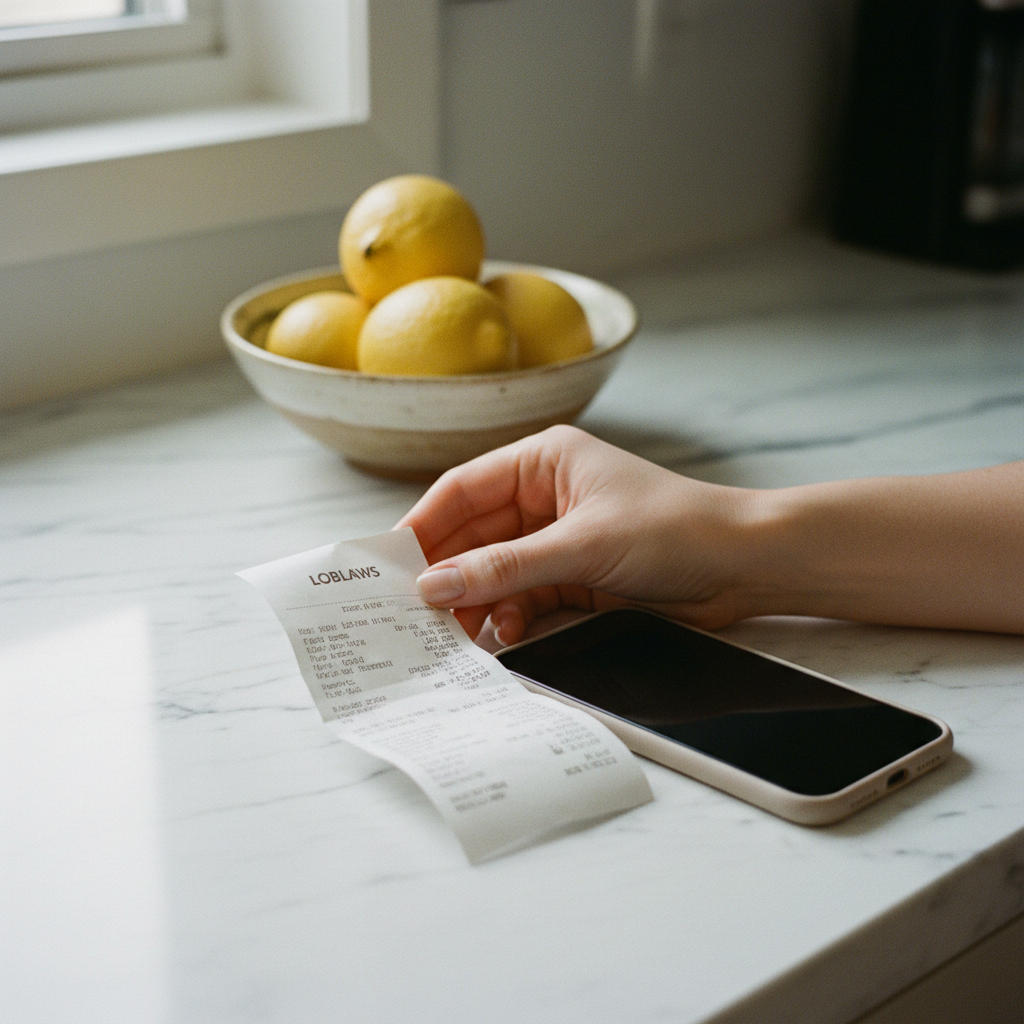
By utilizing an expense tracker with bank sync, you eliminate the need to collect receipts or log into multiple banking portals to see your balance. In the Canadian context, where users often juggle accounts across the Big Five banks and newer fintech platforms, a centralized dashboard is essential.
Automation also allows for "defensive" financial management. You can set alerts for when a shared category is nearing its limit or receive reminders for upcoming recurring bills. This shifts the conversation between partners from "Why did we spend this?" to "How should we allocate what's left?" It turns finance from a source of conflict into a shared project.
Strategic Financial Planning and Goal Setting
Effective tracking is only half the battle; the other half is planning. Once you have a clear picture of your historical spending, you can begin to set goals. Whether it is saving for a down payment on a first home in Calgary or maximizing TFSA contributions, a robust planning framework is required.
Tale approaches financial planning not as a one-time event, but as an ongoing process of refinement. By reviewing monthly trends, households can forecast their future net worth and adjust their spending habits to align with their long-term aspirations. This level of clarity is what separates a household that is "getting by" from one that is building genuine wealth.
About Tale
Tale is a premier personal finance tracker designed to bring absolute clarity to your financial life. We serve individuals and households globally who are seeking a sophisticated yet intuitive way to manage their money. By providing powerful expense tracking and financial planning tools, Tale helps users move beyond the limitations of spreadsheets. Our core strength lies in transforming complex financial data into clear, actionable insights for people who value their time and financial well-being.
To experience a more structured approach to your household finances, get in touch with Tale today to learn more about our capabilities.
Frequently asked questions
What is the difference between a bill-splitting app and a finance tracker?
Standard bill-splitting apps only track who owes whom for a single transaction. A comprehensive personal finance tracker like Tale looks at your entire cash flow, helping you plan for future bills and shared savings goals rather than just settling up for last night's dinner.
Can we track shared expenses if we keep our bank accounts separate?
Yes, in Canada, many users prefer a 'hybrid' model where they maintain individual bank accounts for personal spending but use a shared tracking system to oversee joint obligations like mortgage payments, utilities, and grocery budgets.
How much time does it take to manage expenses monthly?
Modern expense tracking leverages bank synchronization and automatic categorization to reduce manual entry by up to 90%. By connecting your primary Canadian checking and credit accounts, most transactions are logged and sorted the moment they occur.
About Tale
Tale is a personal finance tracker that brings clarity to finances. It is intended for people managing their personal finances. No public location is stated for Tale in the available sources.
Expert services sold to organisations — legal, accounting, agency, consultancy, engineering.
request a quote or get in touch with TaleNext step
Continue with Tale
Tale is a personal finance tracker that brings clarity to finances. It is intended for people managing their personal finances. No public location is stated for Tale in the available sources.
Visit TaleWritten with information published by Tale.