Beyond the Chatbot: Why Your Thesis Requires Source-Grounded AI for Credible Research
Discover why source-grounded AI is essential for thesis writing. Avoid AI hallucinations and ensure academic integrity with traceable, source-aware research tools.

The Structural Flaw of Generic AI in Academia
The rise of large language models has fundamentally changed how we interact with information. For the casual user, a generic chatbot is a marvel of convenience, capable of summarizing recipes or writing creative stories. However, for the doctoral candidate or the career researcher, these general-purpose tools pose a significant risk. The fundamental architecture of many popular AI models is designed for fluency, not accuracy. In the world of academia, where a single misattributed quote can derail a career, the "hallucination" problem is not just a bug; it is a structural failure. To produce a credible thesis, researchers must move beyond the conversational chatbot and embrace source-grounded AI research. This technology ensures that every sentence generated is anchored to a specific, verifiable document, creating a digital paper trail that upholds the highest standards of academic integrity.
From 'Probable' to 'Proven': The Retrieval-Augmented Advantage
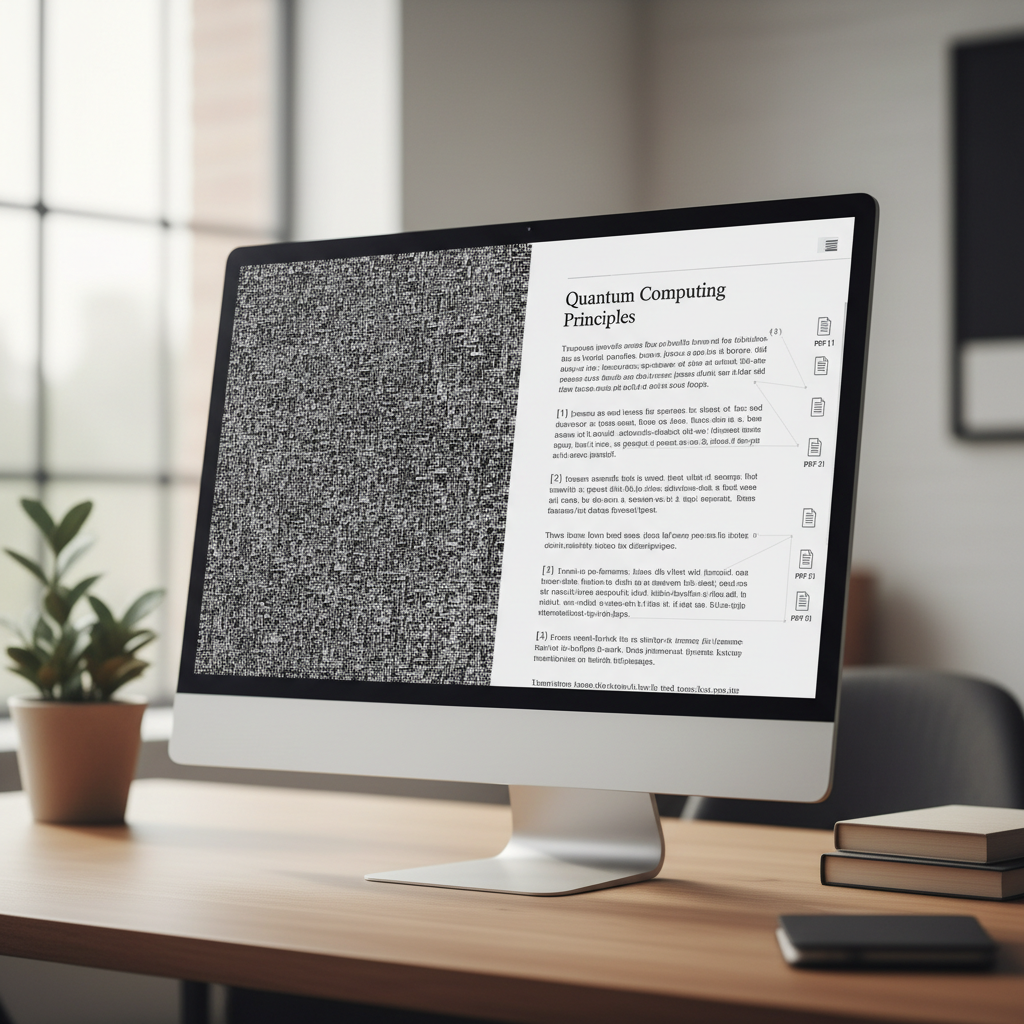
Generic AI models are trained on a massive, undifferentiated corpus of internet data. When you ask them a technical question, they predict the next most likely word in a sequence based on that training. They do not "know" facts; they understand patterns. This results in "stochastic parroting," where the AI provides a confident-sounding answer that may have no basis in reality. Source-grounded AI, such as the systems pioneered by Thesionyx, flips this script through a process known as Retrieval-Augmented Generation (RAG). Instead of pulling answers from a vast pool of unknown internet data, the AI is tethered to a private, curated repository of academic literature—what we refer to as 'The Vault.' When the researcher asks for a synthesis of current debates in post-colonial theory, the AI only looks at the peer-reviewed texts provided to it. If the information isn't in those sources, the AI says so, rather than inventing a plausible but fake citation.
The Precision of the Literature Review Generator
The literature review is often the most daunting phase of the PhD journey. It requires synthesizing hundreds of papers while ensuring that the "intellectual map" you are drawing is accurate. A typical chatbot might provide a decent summary of a well-known theory, but it cannot perform the heavy lifting of a Literature Review Generator that understands source primacy. Source-grounded tools allow researchers to:
- Trace the genealogy of an idea: By anchoring outputs to specific texts, you can see exactly which author influenced a particular line of thought.
- Identify genuine research gaps: Because the AI operates within a closed loop of verified data, it can accurately highlight where the current literature is silent, rather than simply filling the void with generic text.
- Maintain categorical precision: In fields like law, medicine, or engineering, a slight nuance in terminology matters. Source-aware engines preserve these nuances by pulling directly from the technical lexicon of the source material.
Integrity Through Traceability
Academic integrity isn't just about avoiding plagiarism; it’s about the accountability of your claims. The tension between AI and universities often stems from the "black box" nature of technology. If a student cannot explain where a specific insight came from, the work loses its scholarly value. Thesionyx solves this through a Citation Validator and the Academic Critique Engine. These tools don't just help you write; they audit your writing. They cross-reference your drafts against your uploaded sources to ensure that you haven't misrepresented an author’s findings. This level of transparency transforms the AI from a ghostwriter into a sophisticated research assistant. It turns the process into a collaborative verification loop, ensuring that the student remains the master of their own 'Vault' of knowledge.
Closing the Loop: From Drafting to Defense
A thesis is more than a document; it is a preparation for a professional life in research. The final hurdle, the Viva or Thesis Defense, requires the researcher to defend every word. Using a generic chatbot to draft a thesis often leaves the student vulnerable during the defense because they lack a deep, cellular connection to the sources the AI "guessed" at. Conversely, by using a Live Viva/Defense Simulator grounded in one's own research library, the student practices defending specific citations. The AI acts as a mock examiner, questioning the student on the very sources it helped manage within The Vault. This creates a cohesive ecosystem where the software used for drafting is the same software used for verification and final defense preparation. In conclusion, the future of higher education does not lie in banning AI, but in demanding better AI. As we move beyond the era of the generic chatbot, source-grounded AI research will become the standard for any student looking to contribute something truly original and irrefutable to their field.
Frequently asked questions
How does source-grounded AI differ from a high-performance chatbot?
Traditional chatbots generate text based on probabilities, often creating 'hallucinations' or fake citations. Source-grounded AI like Thesionyx pulls information directly from a curated database of verified papers, ensuring every claim is backed by a real source.
Can I control which sources the AI uses for my thesis?
By using a 'The Vault' style system, researchers can upload and index their own bibliography. The AI then operates only within the boundaries of those specific documents, preventing it from pulling in irrelevant or incorrect external information.
Does using source-grounded AI replace the need for critical thinking?
Thesionyx is designed as a collaborative partner. It handles the organizational heavy lifting—summarizing complex papers and identifying thematic gaps—allowing the student to focus on high-level analysis and original contribution.
Next step
Continue with Thesionyx
An AI-powered operating system designed to assist researchers and higher-education students in drafting source-grounded theses and preparing for viva defenses.
Visit ThesionyxKeep reading
Discover why a dedicated academic research operating system is essential for modern thesis drafting, source management, and viva preparation.
Learn how to eliminate AI hallucinations in academic writing using source-grounded tools and AI citation validator research for your thesis.
Learn how to use AI writing tools like Thesionyx within the legal and ethical frameworks of German universities. Avoid plagiarism and maintain integrity.
Master AI academic regulations in 2024. Learn how to use Thesionyx to draft your thesis while staying compliant with Canadian university standards and global laws.