Beyond the Prompt: Why Agentic Workflows are the Future of the Ph.D. Thesis
Discover how agentic AI for research is replacing one-off prompts with integrated workflows for source discovery, thesis drafting, and viva preparation.

The Fallacy of the One-Off Prompt
The current state of AI in academia is often defined by "The Prompt." Students and researchers frequently treat AI as a sophisticated search engine or a high-speed copyeditor, feeding it a single instruction and hoping for a polished result. However, for a 80,000-word dissertation or a complex master’s thesis, this fragmented approach is insufficient. It creates a "Frankenstein" document—disjointed paragraphs that lack a cohesive narrative thread and, more dangerously, often drift away from the grounded reality of the source material. The transition we are witnessing now is the move toward agentic AI for research. Unlike a standard chatbot that waits for the next command, an agentic system operates through a series of interconnected loops. It views the thesis not as a collection of separate tasks, but as a single, living ecosystem. This shifts the researcher’s role from a "prompt engineer" to a "system architect." Instead of asking an AI to "write an introduction," the researcher oversees a workflow that discovers literature, validates citations, and drafts chapters in relative harmony.
The Power of the Integrated Loop: Source to Draft
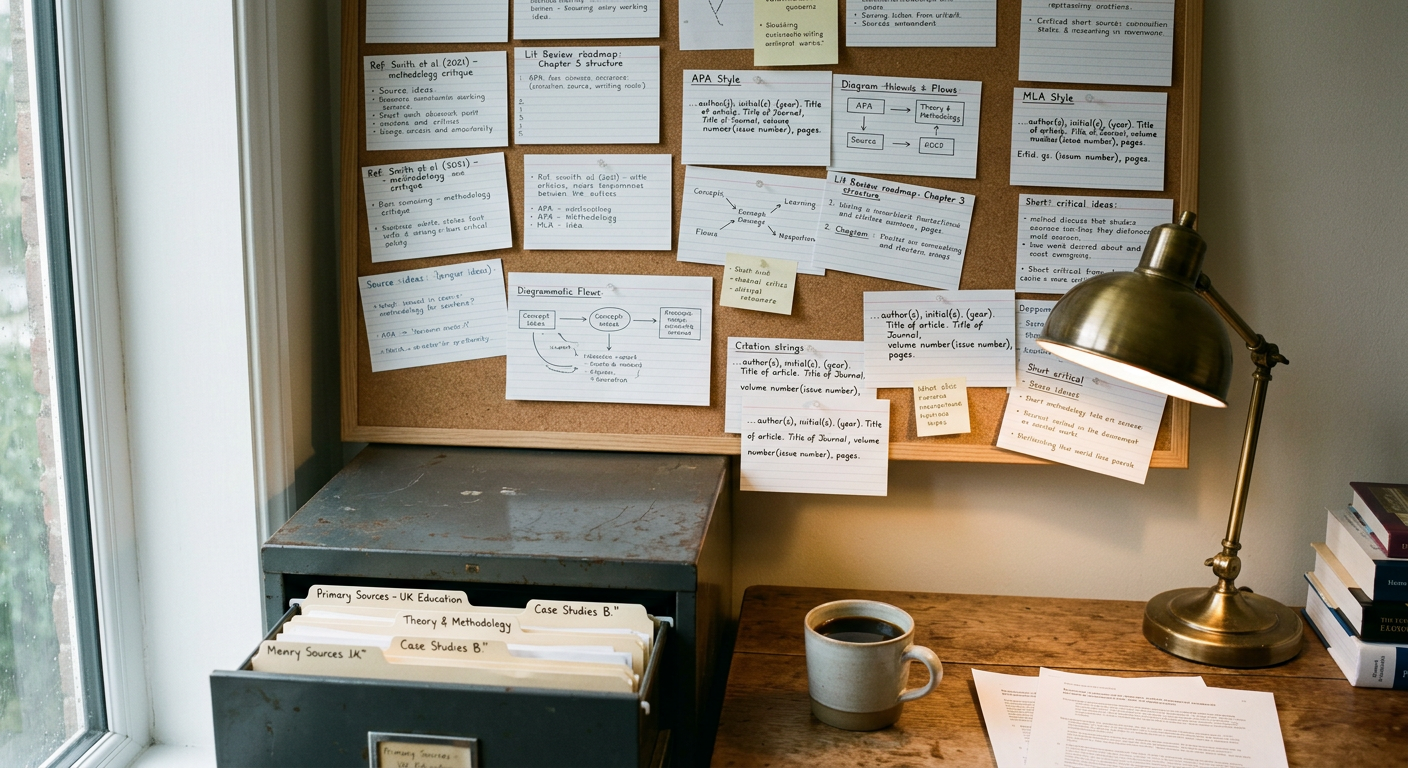
In a traditional workflow, a researcher finds a paper, takes notes, creates a citation, and then tries to remember that insight weeks later during the drafting phase. At each hand-off point, information is lost. Agentic workflows solve this through what we call "The Vault" concept. In the Thesionyx ecosystem, The Vault serves as the central intelligence hub. When you use a Literature Review Generator within an agentic framework, it doesn't just summarize a PDF; it "tags" the findings into a relational database. * Autonomous Discovery: The agent identifies gaps in your current bibliography.
- Contextual Memory: When drafting Chapter 3, the agent remembers the specific critique of a methodology you found while researching Chapter 1.
- Verification Loops: Before a sentence is even written, the system cross-references the claim against the stored sources in your Vault. This creates a "grounded" environment where the AI is physically incapable of hallucinating, because its "world" is strictly limited to the high-quality academic sources you have provided or verified.
Predictive Defense: Beyond Simple Text Generation
Writing a thesis is not just about producing text; it is about defending an argument. This is where the Academic Critique Engine and Live Viva/Defense Simulator become essential components of the agentic workflow. In a fragmented model, you write the thesis and then, months later, try to figure out how to defend it. In an agentic model, the defense is part of the drafting process. As the Thesis Chapter Drafting Tool generates content, the Critique Engine simultaneously acts as a "devil’s advocate," flagging weak transitions or under-supported claims. This creates a continuous feedback loop:
- Draft: The system generates a subsection based on Vault sources.
- Critique: The engine identifies a potential counter-argument used by a prominent scholar in your field.
- Refine: The system suggests a revision to preemptively address that critique.
- Simulate: You practice defending that specific section in the Viva Simulator, which uses the same source data to ask you challenging questions.
Maintaining Technical Integrity Across Borders
One of the biggest hurdles in global academia is the "Citation Gap"—the technical errors that occur when moving between different formatting styles or managing hundreds of references across several years. A truly agentic workflow utilizes a Citation Validator that operates in the background of every drafting session. It doesn't just check if a comma is in the right place; it verifies the "linkage." It ensures that a claim made on page 150 still aligns with the source data saved in the initial Literature Review phase. This horizontal consistency across the entire document is something a human eye, or a simple prompt-based AI, often misses during the exhaustion of the final months of a Ph.D.
The Future: From Tools to Operating Systems
The move toward agentic AI for research represents a fundamental shift in how we perceive academic labor. We are moving away from the era of "automated ghostwriting" and toward a partnership of "augmented synthesis." By using a unified "operating system" like Thesionyx, researchers in the UK, US, and beyond are finding that they can spend less time on the mechanical friction of drafting and more time on the intellectual heavy lifting that earns a degree. The future of the thesis is not found in better prompts, but in better systems—systems that respect the source, challenge the researcher, and maintain the integrity of the academic record from the first search to the final defense.
Frequently asked questions
How does agentic AI differ from standard ChatGPT prompts?
Unlike standard chatbots that respond to individual queries, agentic AI processes complex, multi-stage goals by iterating through tasks like source verification, drafting, and cross-referencing without constant manual intervention.
How does an agentic workflow prevent hallucinations in a thesis?
Thesionyx uses a 'closed-loop' system where the Thesis Chapter Drafting Tool only draws from verified sources within The Vault, ensuring that every claim is grounded in legitimate academic literature.
Is using AI for thesis drafting considered academically rigorous?
Yes. Agentic workflows are designed to handle the heavy lifting of organization and initial drafting, allowing the researcher to focus on high-level analysis, synthesis, and original contribution.
Next step
Continue with Thesionyx
An AI-powered operating system designed to assist researchers and higher-education students in drafting source-grounded theses and preparing for viva defenses.
Visit ThesionyxKeep reading
Moving from generic AI to a source-grounded AI research system. Learn how to eliminate hallucinations and build a verifiable, citation-first thesis.
Learn how AI citation validation and source-grounded tools like Thesionyx protect your academic credibility from AI hallucinations and reference errors.
Learn how to use a viva defense simulator to prepare for academic scrutiny and prove the integrity of your AI-assisted thesis during your final oral exam.
Learn how to use AI Literature Review tools to move beyond simple summaries and achieve the high-level synthesis required for PhD and Master's level research.