From PDF to Podium: Mastering the Viva Defense with Multimodal AI Simulation
Thesionyx's AI viva simulator converts your thesis research PDFs into a personalized, realistic defense rehearsal. Practice your oral examination with multimodal AI simulation to master your viva defense and confidently transition from writing to your final exam.
The Chasm Between Writing and Defending
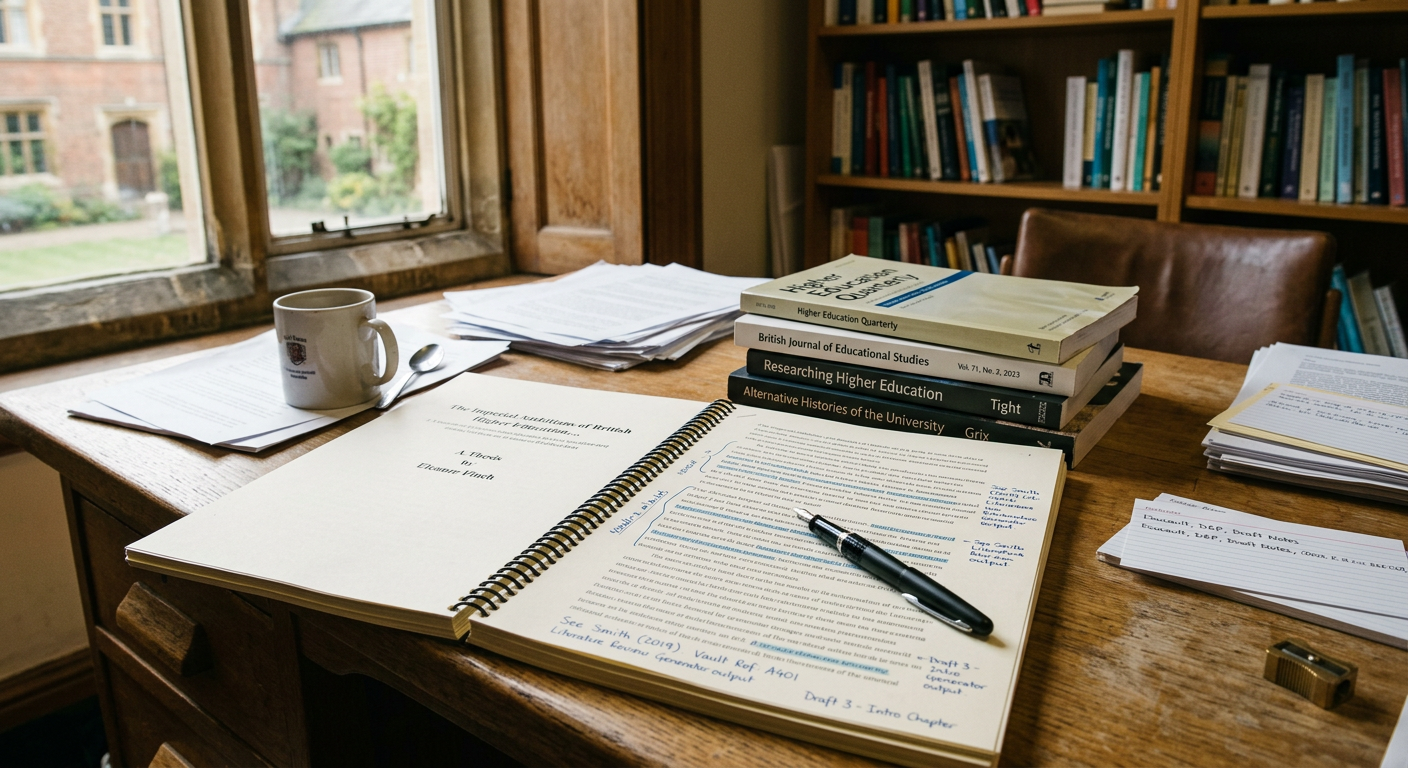
For many doctoral and master’s candidates, the transition from the silent world of literature reviews and data analysis to the high-pressure environment of the viva voce (oral defense) is a jarring leap. You have spent years living inside PDFs and spreadsheets, yet you are suddenly expected to perform your knowledge verbally before a panel of experts. This leap from PDF to podium is where many researchers feel most vulnerable. The challenge is not a lack of knowledge, but a lack of 'performance fluency.' You know what you wrote, but do you know how to defend it when a critic pivots to a specific methodology choice you made three years ago? This is where multimodal AI and the AI viva simulator have become essential components of the modern academic toolkit. By synthesizing your specific research corpus, these tools provide a bridge between the written word and the spoken defense.
How Multimodal AI 'Reads' Your Research Mind
Traditional preparation for a viva usually involves reading through one's thesis and guessing what examiners might ask. This is inherently limited by your own blind spots. Multimodal AI changes the trajectory by acting as a 'synthetic examiner' that has perfectly indexed your entire library. Unlike generic AI chat models, a specialized AI viva simulator—integrated with tools like The Vault for source management—doesn't just know academic theory; it knows your academic theory. It reads your uploaded PDFs, identifies the tensions in your literature review, and flags the potential weaknesses in your data set.
-
Source-Grounded Inquiry: The AI generates questions based on the specific citations you used, challenging you to justify why you chose one framework over another.
-
Gap Detection: It identifies areas where your conclusion may lean too heavily on a single source, mimicking the 'deep dive' tactics of experienced examiners.
-
Cross-Document Synthesis: The AI can pull a thread from Chapter 1 and ask how it reconciles with the findings in Chapter 5, ensuring you have a 360-degree view of your own work.
Building Performance Fluency: The Power of Simulation
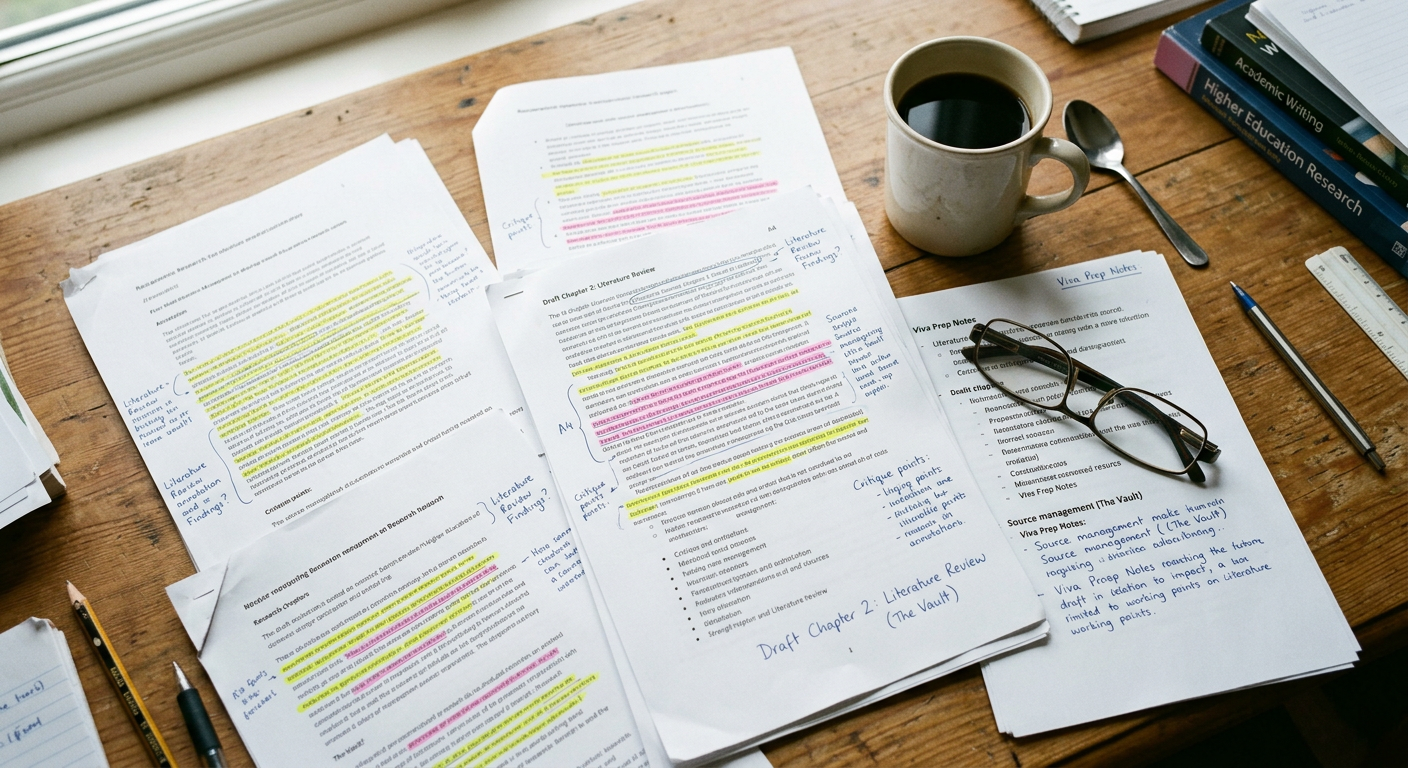
The 'multimodal' aspect of modern research AI refers to its ability to process information across different formats—moving from text-based PDFs to voice-simulated interactions. In a defense simulation, the AI mimics the cadence, tone, and adversarial nature of a real viva committee. Practicing with an AI viva simulator allows you to iterate on your verbal delivery. Most students find that their first few attempts at answering a complex question are cluttered with 'filler' words and circular logic. By simulating the defense repeatedly, you build 'muscle memory' for your arguments. You learn to lead with your primary claim, support it with your data, and conclude with the broader implication—all while maintaining the professional composure required for the podium. This isn't just about memorizing answers; it's about developing the ability to think on your feet using the language of your specific discipline. The AI can be set to different 'examiner modes'—from the supportive mentor to the rigorous skeptic—preparing you for any personality you might encounter on the panel.
Beyond the Script: Dynamic Source Validation
One of the most daunting aspects of the viva is the 'Citation Trap'—when an examiner asks about a specific study you cited that you haven't looked at in months. A robust AI operating system for researchers, such as Thesionyx, solves this through integrated citation validation. During your simulation, the AI can pause to point out if your verbal defense of a source contradicts the way you used it in your drafting tool. This real-time feedback loop ensures that your 'written self' and your 'speaking self' are in perfect alignment. Furthermore, using an Academic Critique Engine as part of your simulation helps you anticipate the critiques you haven't written for yet. It forces you to articulate the limitations of your study—a key requirement for a successful defense—before you ever step into the room. This transforms the viva from a terrifying 'judgment' into a rigorous, yet manageable, scholarly conversation.
The Final Transition: From Researcher to Scholar
The path from a collection of PDFs to a successful defense podium is no longer a solitary, anxiety-ridden journey. With multimodal AI, the viva becomes a practiced performance rather than a Leap of Faith. By leveraging an AI viva simulator, you are doing more than just studying; you are pressure-testing your life's work. You are ensuring that every claim is source-grounded, every methodology is defensible, and every verbal response is polished. As you move toward your defense date, remember that the goal of the viva is to welcome you into the community of scholars. Using the right tools to prepare shows that you are already thinking like one.
Frequently asked questions
How does an AI viva simulator actually work?
An AI viva simulator processes your uploaded PDFs and drafts to generate high-level, challenging questions based specifically on your research gaps and methodology, allowing you to practice oral responses in a low-stakes environment.
Can AI identify weak points in my thesis before my defense?
Yes. Multimodal AI identifies inconsistencies between your data and your conclusions, preparing you for 'gotcha' questions from examiners who have scrutinized your literature review.
Is this tool helpful for students with viva-related anxiety?
Absolutely. While the AI prepares you for the intellectual and structural demands of the defense, the confidence gained from repeated simulation significantly reduces the physiological symptoms of performance anxiety.
About Thesionyx
An AI-powered operating system designed to assist researchers and higher-education students in drafting source-grounded theses and preparing for viva defenses.
Expert services sold to organisations — legal, accounting, agency, consultancy, engineering.
request a quote or get in touch with ThesionyxNext step
Continue with Thesionyx
An AI-powered operating system designed to assist researchers and higher-education students in drafting source-grounded theses and preparing for viva defenses.
Visit ThesionyxWritten with information published by Thesionyx.
Keep reading
A ready-to-use template for students and researchers in the United States to disclose AI use in their thesis, aligning with university guidelines for transparency.
Learn how to move from summarizing sources to synthesizing data. Discover how to identify research gaps using academic critique engines at Swedish universities.
Understand when using AI for your essay is cheating and when it's safe. A clear traffic-light guide for US students on academic integrity in 2026-27.
A complete guide for PhD students on how to use AI for a rigorous, source-grounded literature review. Learn a compliant workflow from search to draft.