Moving Beyond the Bot: Why High-Stakes Research Requires Specialized Academic AI Models
Learn why generic AI models are inadequate for high-stakes academic research. Thesionyx provides specialized AI designed for researchers, guaranteeing precise citation accuracy, eliminating hallucinations, and supporting robust, source-grounded thesis development.

The Illusion of Intelligence in General Assistants
In the current landscape of higher education, there is a growing temptation to view large language models (LLMs) as a universal panacea for writing woes. From drafting emails to summarizing news, generic chatbots have become ubiquitous. However, for a researcher immersed in a three-year PhD or a rigorous Master’s program, the stakes are vastly different. The penalty for a fictionalized citation or a misinterpreted dataset isn't just a minor correction—it is a risk to one's academic integrity and career. This is where the distinction between "general intelligence" and specialized academic AI models becomes critical. While a standard chatbot is designed to be a charming conversationalist, an academic AI like Thesionyx is designed to be an architect of evidence. The shift we are witnessing is not just about using AI; it is about choosing the right type of AI that understands the peculiar, rigorous architecture of a thesis.
Accuracy vs. Fluency: The Core Divide
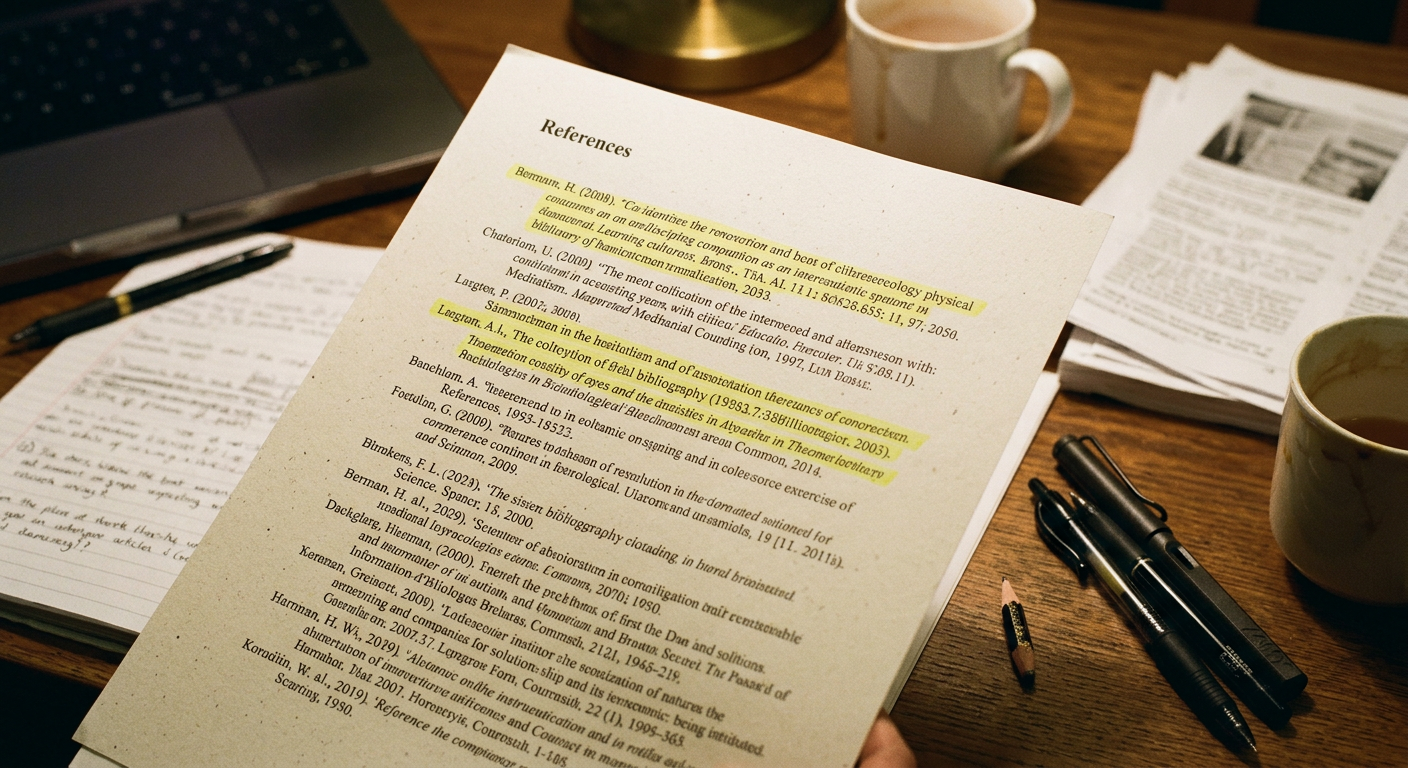
Generic AI models operate on the principle of probability. When you ask a standard chatbot to provide a source for a specific claim, it predicts which words usually follow one another in a bibliographic format. It is optimized for fluency, not for fact-checking. This leads to the well-documented phenomenon of 'hallucination,' where the AI invents plausible-sounding journal articles and authors that do not exist. In contrast, specialized models prioritize source-grounded drafting. Instead of pulling from a vast, unfiltered web of data, these tools function within a 'closed-loop' system—often referred to as The Vault in the Thesionyx ecosystem. By restricting the AI’s generative power to a specific corpus of verified literature, researchers ensure that every claim made in a Literature Review is tethered to a real, verifiable document. This isn't just a feature; it is a fundamental difference in the underlying logic of the software.
The Architecture of a Thesis: Why Structure Matters
A dissertation is not a long essay; it is a complex structural organism. It requires a specific flow: from the identification of a research gap to the methodological justification and the eventual synthesis of findings. Generic chatbots struggle with this macro-structure, often repeating themselves or losing the thread of an argument over several thousand words. Specialized academic AI models are built with the Thesis Chapter Drafting Tool, which understands the rhetorical moves required for each specific section. For example:
-
The Literature Review: Focuses on synthesis and identifying tensions between scholars.
-
The Methodology: Prioritizes transparency, replicability, and the defense of the chosen paradigm.
-
The Discussion: Shifts toward the interpretation of results in the context of existing theory. By utilizing these specialized frameworks, the researcher remains the director of the project, while the AI serves as a structural scaffold, ensuring that the 'academic voice' is maintained consistently across hundreds of pages.
Preparing for the Viva: More Than Just Writing
The ultimate test of any research project is the viva voce or the thesis defense. It is here that the limitations of generic tools become most apparent. A student who relies on a general chatbot may end up with a polished text but lack a deep understanding of the 'why' behind their citations. Specialized platforms address this through tools like the Academic Critique Engine and Live Viva Simulator. These features do not just help you write; they challenge your work. They simulate the antagonistic (yet constructive) questioning of an examiner, picking apart the logic of your arguments and forcing you to defend your methodology. This pedagogical approach ensures that the technology is an aid to learning and mastery, rather than a shortcut that leaves the student vulnerable during their defense.
The Verdict: Precision Over Probability
The future of research does not lie in 'outsourcing' thought to a digital assistant. It lies in the sophisticated integration of specialized tools that respect the traditions of scholarship. When a researcher uses a Citation Validator, they are performing a digital version of the meticulous proofreading that has always been required in the academy. By choosing specialized academic AI models over generic alternatives, researchers are making a statement about the value of their work. They are prioritizing the integrity of the record, the accuracy of their citations, and the depth of their own expertise. As we move further into this decade, the 'Thesionyx' approach—grounded, rigorous, and specific—will become the gold standard for those who take their contributions to the world of knowledge seriously.
Frequently asked questions
Why do generic chatbots often hallucinate citations? Marina, London.
Generic chatbots are trained on broader datasets and 'hallucinate' facts or citations to remain conversational. Specialized models are built with retrieval-augmented generation (RAG) that restricts output to verified, peer-reviewed sources.
Is using a specialized AI ethical for a PhD thesis? Kenneth, Sydney.
Absolutely. Thesionyx is designed to assist in the drafting and organizational process—acting as a high-powered research assistant—rather than replacing the critical thinking of the researcher.
How does the Citation Validator prevent errors? Sarah, Toronto.
Thesionyx includes a Citation Validator that cross-references every mention with a global database of metadata to ensure the DOI, author, and year are factual and correctly formatted.
About Thesionyx
An AI-powered operating system designed to assist researchers and higher-education students in drafting source-grounded theses and preparing for viva defenses.
Expert services sold to organisations — legal, accounting, agency, consultancy, engineering.
request a quote or get in touch with ThesionyxNext step
Continue with Thesionyx
An AI-powered operating system designed to assist researchers and higher-education students in drafting source-grounded theses and preparing for viva defenses.
Visit ThesionyxWritten with information published by Thesionyx.
Keep reading
A complete guide for PhD students on how to use AI for a rigorous, source-grounded literature review. Learn a compliant workflow from search to draft.
A guide for US undergrads on transitioning from AI essay helpers to a full thesis engine for grad school, focusing on ethical use and good research habits.
Your 'Zotero + ChatGPT' stack is holding your thesis back. Discover why a dedicated AI operating system is essential for source-grounded drafting and viva prep.
A step-by-step guide for US graduate students on how to use AI for thesis research and writing without facing academic misconduct sanctions in 2026.