The Ghost in the Library: Why Source Traceability is the New Gold Standard in Academic Integrity
Explore why generic AI fails at academic sourcing and how the new gold standard of source traceability—powered by citation validators—protects your thesis.
The Rise of the Phantom Reference
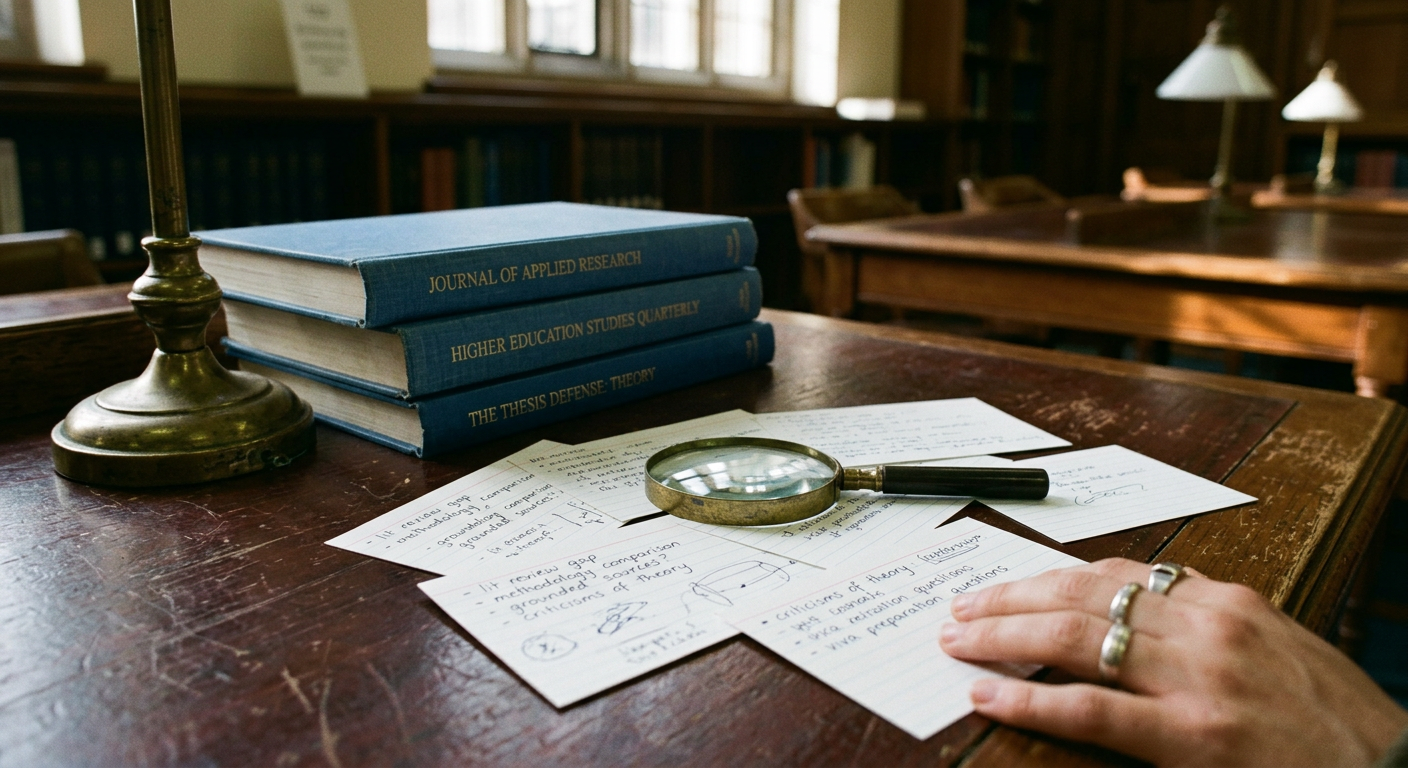
In the cavernous halls of modern research, a new kind of ghost is haunting the stacks. It isn’t a spectral figure from the nineteenth century, but rather the 'hallucinated reference'—a citation that looks, smells, and sounds like a legitimate academic source, but simply does not exist. As students and researchers increasingly turn to Large Language Models (LLMs) to help manage the overwhelming volume of academic literature, they are discovering a dangerous flaw: these models are designed for fluency, not for truth. For the modern academic, the gold standard of integrity has shifted. It is no longer enough to have a well-reasoned argument; one must have a perfectly traceable one. Source traceability—the ability to provide a clear, verifiable path from a claim back to its original data or text—has become the primary defense against the erosion of academic rigor. In an era where AI can manufacture a convincing bibliography in seconds, the use of a dedicated AI citation validator tool is no longer a luxury—it is a necessity.
Why Large Language Models Fail the Library Test
Generic AI tools operate on probability. When asked to provide a source for a specific claim, they don't 'search' a database in the traditional sense; they predict what a citation should look like based on the context of your writing. This often results in a blend of real authors with fake titles, or real titles attributed to the wrong journals. This phenomenon, known as 'hallucinated sourcing,' creates a significant risk for PhD candidates and researchers. A single fabricated source in a literature review can invalidate an entire chapter, leading to accusations of academic dishonesty or, at the very least, a humiliating correction during a viva defense. Thesionyx was built to bridge this gap. Unlike general-purpose chatbots, our system treats every citation as a legal-grade piece of evidence. Through The Vault (Source Management), we ensure that the 'ghosts' are exorcised. Every entry in your bibliography is mapped to a verified digital object identifier (DOI) or a physical archive, ensuring that your research foundation is made of granite, not paper-thin fabrications.
The Mechanics of Verification: How Traceability Works
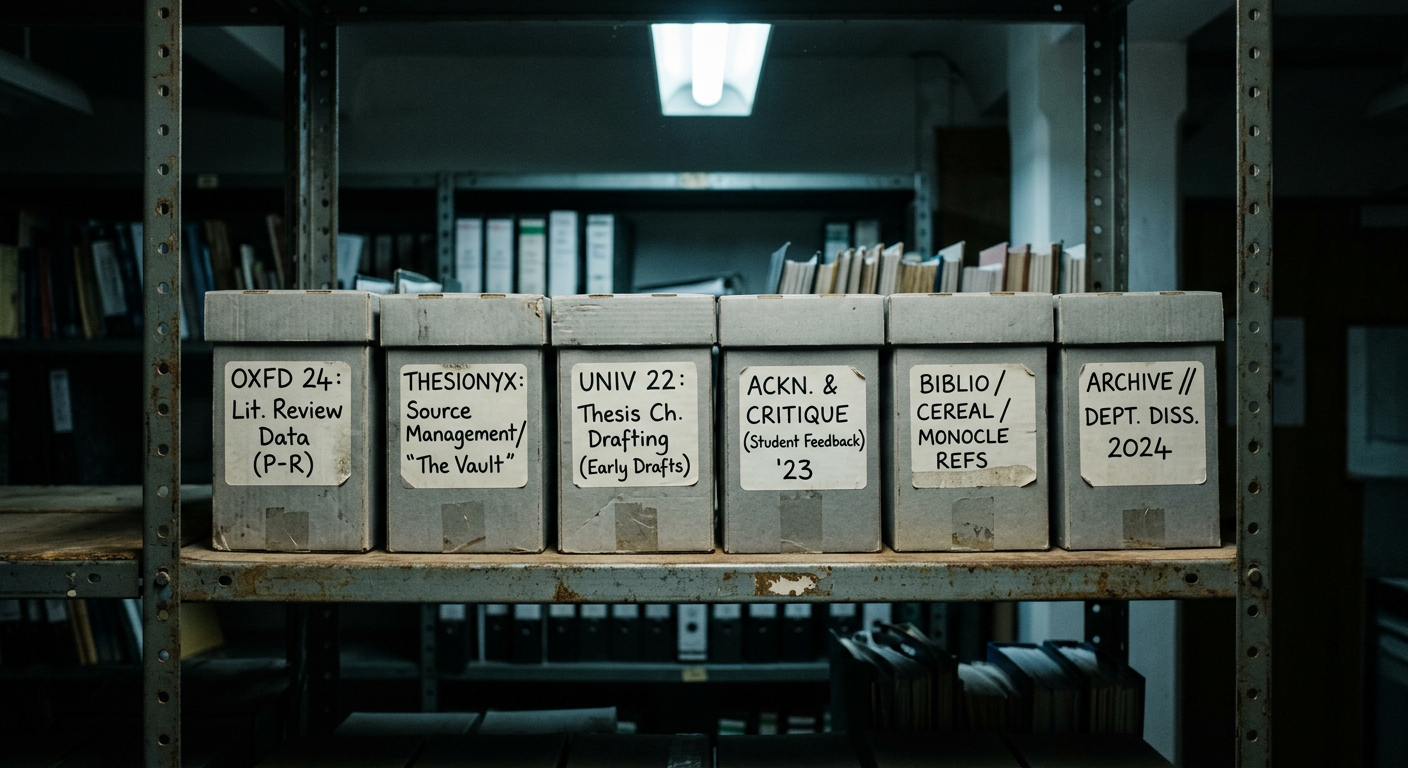
In the traditional research workflow, traceability was maintained through meticulous manual record-keeping—notecards, folders, and bib-tex files. Today, the sheer volume of digital publishing makes manual verification nearly impossible for a single human to manage alongside their primary research. This is where the AI citation validator tool changes the game. Our validator does not simply 'check' your work; it audits it. It scans your draft to ensure that:
- The author actually published the cited work in the year mentioned.
- The page numbers correspond to the correct volume of the journal.
- The quote or paraphrase accurately reflects the source's original intent. By moving away from 'generative' AI and toward 'verificative' AI, researchers can maintain the speed of modern drafting without sacrificing the classic standards of the British and American academic traditions. Traceability means that if a peer reviewer or an examiner pulls a thread on your thesis, the whole garment holds together.
Building a 'Source-First' Workflow
Integrity is not a static state; it is a process. To achieve a gold-standard thesis, researchers must adopt a 'Source-First' philosophy. This means that the drafting process should never be untethered from the evidence. With tools like our Literature Review Generator and Thesis Chapter Drafting Tool, the AI is restricted to a 'closed-loop' system. It is only permitted to draw from the sources you have uploaded to 'The Vault.' This prevents the AI from 'wandering' into its training data and pulling in unverified information from the open web. Furthermore, the Academic Critique Engine serves as a digital 'devil’s advocate,' questioning the strength of your links between sources. It forces you to justify why you have synthesized two disparate papers, ensuring that your synthesis is grounded in logical reality rather than algorithmic convenience. This level of scrutiny prepares students for the Live Viva/Defense Simulator, where the traceability of their logic will be tested by human experts.
The Future of Research Management
As we look toward the future of higher education in the UK, US, and beyond, the definition of 'original work' is evolving. It is becoming less about the solitary act of writing and more about the rigorous act of curation and verification. The 'Ghost in the Library' is only a threat if we allow our tools to operate without oversight. By using dedicated academic operating systems that prioritize source traceability, we can use AI to amplify our intellectual output while remaining firmly rooted in the verifiable truth. The future of the PhD belongs to those who can master the machine without losing sight of the archive.
Frequently asked questions
What is an AI citation validator tool?
A citation validator is a specialized tool that cross-references your references against live academic databases like Crossref or PubMed to ensure the source exists and the data matches the original.
Why do AI models 'hallucinate' academic sources?
Standard LLMs are designed to predict the next likely word, not to fetch facts. This often leads them to create plausible-sounding but completely non-existent book titles or journal articles.
Why is source traceability important for a thesis?
Traceability means that every argument can be audited back to its origin. This is essential for peer review, avoiding plagiarism charges, and maintaining the credibility of a research project.
Next step
Continue with Thesionyx
An AI-powered operating system designed to assist researchers and higher-education students in drafting source-grounded theses and preparing for viva defenses.
Visit ThesionyxKeep reading
Secure, synthesize, and organize academic research with The Vault. Thesionyx provides the leading source management software for researchers in Asia and beyond.
Discover how Thesionyx Enterprise streamlines PhD workflows and literature reviews across universities. Book a demo for institutional research tools.
Explore the transition from AI 'cheating' to authentic AI research collaboration. See how Thesionyx helps scholars enhance judgment and rigour.
Explore the critical importance of research data security in AI for academics. Learn how secure vault environments protect your intellectual property.