Defeating Defense Anxiety: How to Use AI Simulation to Predict Your Viva Questions
Master your PhD viva with AI simulation. Learn how to predict examiner questions, refine your arguments, and build confidence using Thesionyx tools.

The Psychological Weight of the Viva Voce
The PhD viva voce is more than just a formal requirement; it is the culmination of years of solitary labor, intellectual growth, and often, significant personal sacrifice. For many researchers, the transition from the quiet desk of a writer to the "hot seat" of an oral defense is jarring. The primary source of this stress isn't usually a lack of knowledge—it's the unpredictability of the encounter. In traditional settings, students rely on "viva prep tips" that suggest reading through the thesis one last time or asking a supervisor for a quick mock session. While helpful, these methods often fail to mimic the high-pressure, rapid-fire nature of a real defense. This is where the integration of Artificial Intelligence (AI) into the research lifecycle changes the game. By using a Live Viva/Defense Simulator, students can transition from passive review to active engagement, transforming their anxiety into a structured plan for success.
How AI Predicts Your Toughest Questions
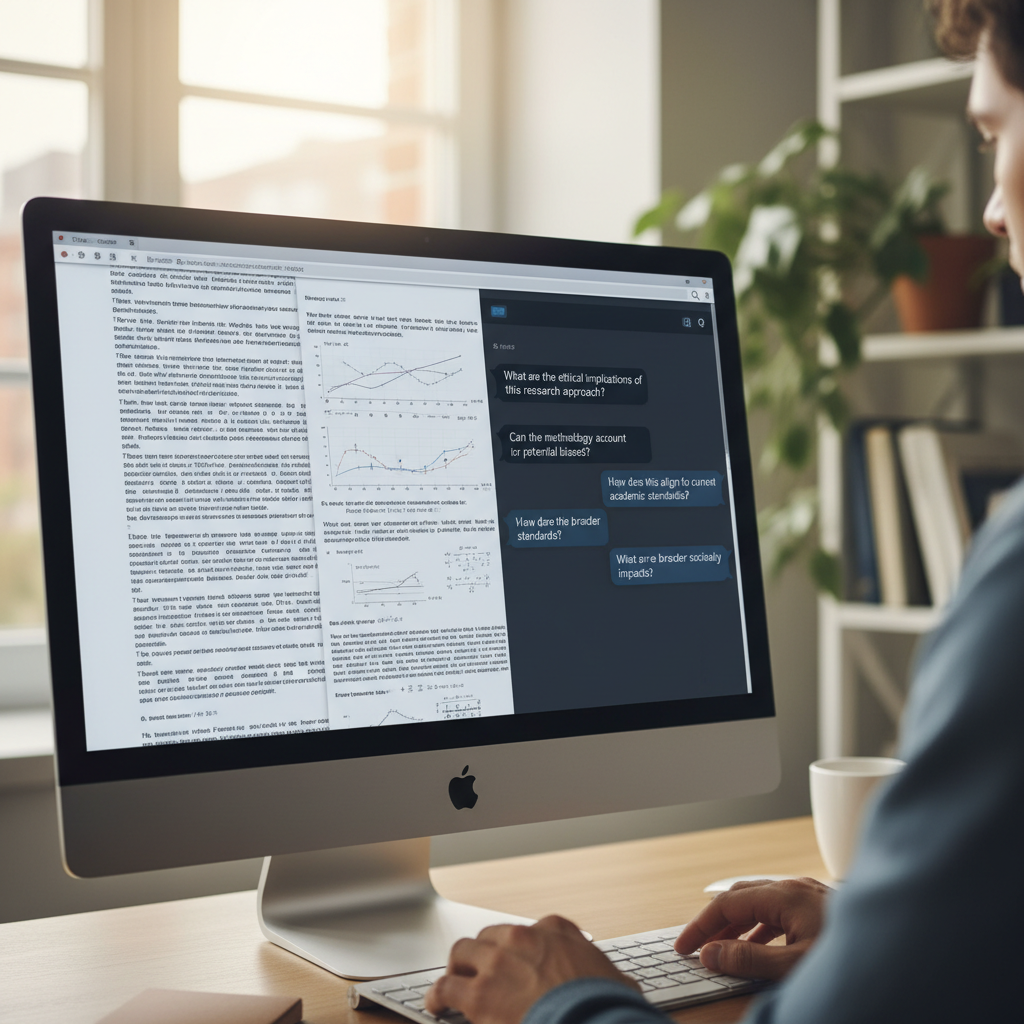
Most PhD candidates fear the 'unanswerable' question—the one that exposes a perceived flaw in their methodology or a gap in their literature review. AI simulation helps eliminate this fear by acting as a digital sparring partner. Thesionyx’s AI tools don't just generate generic academic questions; they ingest the specific nuances of your The Vault (source management) and your drafted chapters. By analyzing the logic of your arguments, the AI can: * Identify inconsistencies: Spotting areas where your conclusions might not fully align with your primary data.
- Predict examiner personas: Simulating different types of examiners, from the methodological stickler to the theoretical visionary.
- Stress-test your bibliography: Probing your understanding of the foundational texts you've cited using the Citation Validator. This predictive power allows you to enter the room knowing exactly where the "pressure points" are located, giving you the chance to prepare robust, evidence-based rebuttals long before the actual day.
Refining Your Argumentative Delivery
Confidence in a viva isn't about memorizing a script; it’s about articulate flexibility. You need to be able to explain complex ideas in multiple ways depending on how the question is framed. When using a simulator, the goal is to build muscle memory. When the AI asks, "Why did you choose a qualitative approach rather than a mixed-methods one?" you aren't just thinking of the answer—you are practicing the delivery. Key strategies for simulation practice:
- The 'Devil’s Advocate' Mode: Instruct the simulator to be critical. This helps you practice staying calm when your work is being challenged.
- Breadth vs. Depth: Practice answering short, punchy questions and then pivot to longer, more discursive explanations of your theoretical framework.
- The Meta-Defense: Use the Academic Critique Engine to analyze your own work from an outside perspective. This helps you understand the "why" behind the questions the AI is generating.
Bridging the Gap Between Text and Talk
One of the most overlooked aspects of the viva is the "paper trail." Examiners will often pick a specific citation on page 142 and ask how it supports your broader claim. If you cannot recall the source or the context, anxiety spikes. By using an integrated system like Thesionyx, your Citation Validator and The Vault work in tandem with the simulator. You can practice "live-sourcing"—recalling not just the author’s name, but the specific contribution they made to your field. This level of preparation signals to examiners that you have total mastery over your intellectual domain. It moves the conversation from a student being tested to two experts discussing a shared field of interest.
Final Preparation: Turning Simulation into Success
While AI provides the tools, the researcher provides the voice. To get the most out of your PhD viva preparation tips, consider these final steps: * Record Your Simulations: Listen back to your AI sessions. Note where you use filler words or where your voice lacks conviction.
- Focus on the 'So What?': Ensure you can explain the significance of your research to someone outside your immediate niche. The AI simulator is excellent at pushing you toward this big-picture thinking.
- Trust the Process: Technology is meant to empower you, not replace your expertise. Use the AI to polish your diamond, but remember that you are the one who mined it. By the time you walk into your viva, the environment should feel familiar. You’ve heard the questions before, you’ve defended the gaps, and you’ve validated every claim. The anxiety hasn't just been managed—it’s been replaced by the quiet confidence of a scholar ready to join the global academic community.
Frequently asked questions
How does an AI viva simulation work?
A viva simulation uses AI to analyze your entire thesis, identifying logical gaps and common examiner themes to generate realistic practice questions tailored to your specific research.
Can AI actually reduce defense anxiety?
Yes. By repeatedly practicing your responses in a low-stakes environment, you build muscle memory and cognitive familiarity with your arguments, which significantly lowers cortisol levels during the actual defense.
Is AI better than a traditional mock viva with a supervisor?
While a mock viva with a supervisor is invaluable, AI allows for unlimited, instant practice sessions and can often play 'devil's advocate' more objectively than someone familiar with your work.
When is the best time to start using a viva simulator?
You should start integrating simulation tools at least 4–6 weeks before your defense date to allow time for refining your oral delivery and addressing any discovered weaknesses in your arguments.
Next step
Continue with Thesionyx
An AI-powered operating system designed to assist researchers and higher-education students in drafting source-grounded theses and preparing for viva defenses.
Visit ThesionyxKeep reading
Explore how AI ensures factual accuracy in academic writing through RAG and source-grounded drafting. Learn to eliminate hallucinations in your thesis.
Learn how to use AI for research while maintaining academic integrity. Discover source-grounded drafting, citation validation, and ethical AI guidelines.
Compare The Vault by Thesionyx with Zotero and Mendeley. Discover why UK PhD students are choosing dedicated source management for thesis drafting.
Learn how to use source-grounded drafting to navigate the new AI integrity checks from major publishers. Protect your research with Thesionyx.