The AI-Aware Viva: 5 Questions Modern Examiners Are Now Asking About Your Sources
Prepare for your viva defense in 2025. Learn the 5 new source-grounding questions examiners are asking in the age of AI productivity tools and research management.

The Shift from Prose to Traceability
The nature of the viva voce is undergoing a quiet but profound transformation. For decades, the oral examination was the final hurdle to prove you had 'written' a masterpiece. However, with the advent of sophisticated AI writing aids, the goalposts have moved. Examiners are no longer mesmerized by elegant prose; in fact, overly polished text can sometimes trigger a deeper investigative instinct. In 2025, the focus has shifted from expression to traceability. The question is no longer just 'What did you find?' but 'How exactly did you get there from these specific sources?' This shift toward 'source-grounding' means your viva defense preparation 2025 needs to prioritize the mechanical link between your citations and your conclusions. Examiners are looking for the 'intellectual paper trail' that proves your work is grounded in reality rather than generated in a vacuum.
1. The 'Chain of Custody' Question
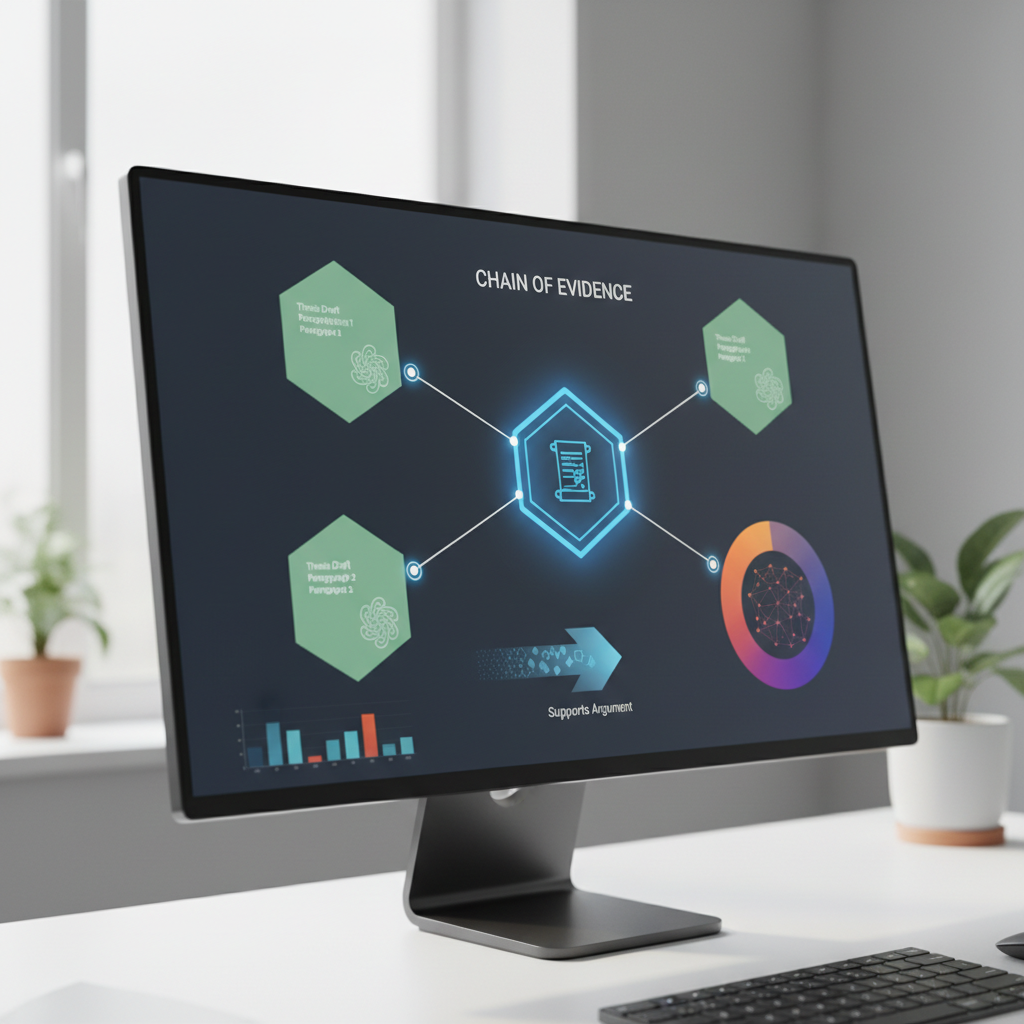
One of the most common questions in the modern viva is: 'Can you walk me through the 'Chain of Custody' for the conclusion on page 142?' This isn't an invitation to summarize your chapter. The examiner wants to see the evolution of an idea. They are looking for:
- The Primary Seed: Which specific paper triggered the hypothesis?
- The Synthesis: How did you move that paper into your 'Vault' or research management system?
- The Transformation: How did that source interact with your raw data to produce a new insight? In an era where AI can draft text, the human researcher’s value lies in managing this chain. If you use a tool like a Literature Review Generator, your defense must focus on the parameters you set and the critical filters you applied to the output. Examiners are testing your role as the 'Director of Research' rather than just the 'Writer.'
2. The 'Architectural Omission' Question
In the past, a 'missing' citation was a minor clerical error. Today, it can be seen as a failure of your methodological architecture. An examiner might ask: 'Why did your literature search omit the 2024 Smith & Rodriguez study on this exact variable?' They aren't just checking your reading list; they are checking your search integrity. They want to know if you relied on a single AI algorithm that might have a data cutoff, or if you used an integrated system designed to validate and refresh citations. To answer this, you must be able to describe your 'Information Architecture'—the specific way you organized your sources (perhaps using a tool like The Vault) to ensure no critical evidence was overlooked. Highlighting your use of systematic citation validators shows a commitment to rigor that manual searching alone can no longer guarantee.
3. The 'Source Validation' Stress Test
A favorite new tactic of the AI-aware examiner is to zoom in on a very specific, perhaps obscure, citation and ask: 'How does the methodology of this specific source differentiate itself from your own, and why did you choose to align with it?' This question is designed to detect 'hallucinated' or 'surface-level' referencing. If a student has used AI to generate a bibliography without deeply engaging with the content, they will stumble here. Proactive Defense Strategy: Use an Academic Critique Engine or a similar tool during your preparation to generate counter-arguments for every major source in your thesis. If you have already 'vetted' your sources against a critique engine, you will have a ready-made answer regarding the source's limitations and why it still maintains a place in your theoretical framework.
4. The 'Epistemological Bridge' Question
With the rise of large language models, examiners are increasingly interested in the 'why' behind the 'what.' A common question now is: 'Your literature review identifies a gap in X; explain the logical bridge that led you from the existing literature to your specific methodology.' This is the 'Bridge Question.' It tests whether the student understands the epistemological connection between what is known and what they chose to do. If the draft was produced through a Thesis Chapter Drafting Tool, the student must be able to explain the 'Logic Gates'—the deliberate decisions made at every step of the draft to ensure the methodology wasn't just a convenient choice, but a necessary one dictated by the preceding literature. Preparation should involve mapping these 'bridges' visually before entering the room.
5. The 'Technological Agency' Question
Finally, examiners are becoming blunter about the use of technology itself. You may be asked: 'How did AI productivity tools influence the direction of your synthesis?' The wrong answer is to be defensive. The right answer is to demonstrate mastery over the tools. Explain how you used a Live Viva/Defense Simulator to find weaknesses in your own logic, or how you used a Citation Validator to ensure your work met the highest standards of academic honesty. By framing your use of Thesionyx or similar platforms as an 'Academic Operating System' rather than a shortcut, you position yourself as a modern, efficient, and technologically literate researcher. You show that you didn't let the AI think for you; you used the AI to allow you to think deeper, faster, and more accurately. Conclusion: The 2025 viva isn't about avoiding AI; it's about proving that you are the master of your research ecosystem. Focus on the grounding, verify your chain of custody, and walk into that room ready to defend not just your words, but your entire intellectual architecture.
Frequently asked questions
Why is source-grounding more important than it used to be? Better AI tools?
Examiners aren't just looking for references; they are looking for the 'chain of custody'—how exactly that source influenced your specific finding or data interpretation.
Should I hide the fact that I used AI tools during my research process?
Transparency is key. Be prepared to explain how you used tools like Thesionyx to organize literature, validate citations, or simulate questioning, emphasizing that the intellectual synthesis remains yours.
What is a 'Source-Grounding Stress Test'?
A source-grounding 'stress test' involves picking a random conclusion in your thesis and manually tracing it back through your notes to the original peer-reviewed primary source.
How do I handle questions about 'missing' literature?
Explain your inclusion/exclusion criteria. A modern examiner may ask why a highly relevant recent paper was omitted to check if your search was limited by a specific tool's database.
Next step
Continue with Thesionyx
An AI-powered operating system designed to assist researchers and higher-education students in drafting source-grounded theses and preparing for viva defenses.
Visit ThesionyxKeep reading
Stop drowning in PDFs. Learn how to manage research information overload and build a digital vault to streamline your literature review and thesis drafting.
Discover why citation validation is essential for modern researchers. Learn how to prevent AI hallucinations and ensure academic integrity in your thesis.
Learn how adding FAQ schema to Literature Review and Citation Validator pages captures zero-click SERP features and boosts visibility in AI Overviews.
Accelerate your PhD research with Thesionyx. Source-grounded drafting, automated literature mapping, and live viva simulations for doctoral candidates.