The New Rules of Research: Navigating University AI Policies Without Risking Your Degree
Learn how to use AI for your thesis while complying with university policies. Explore source-grounded drafting and citation validation to stay safe.

The Shifting Landscape of Academic Integrity
The landscape of higher education is currently undergoing its most significant transformation since the introduction of the internet. University senates and academic boards globally—from the UK to the US and across Asia—are rushing to draft, refine, and enforce policies regarding the use of Artificial Intelligence. For the modern researcher, this creates a paradox: the technology exists to accelerate work exponentially, yet the risk of 'academic misconduct' has never felt more opaque. The primary concern for universities is not the use of technology itself, but the erosion of originality and evidence. Traditional generative AI often operates as a 'black box,' occasionally inventing citations (hallucinating) or presenting unsubstantiated claims. To successfully navigate these new rules, students must move away from generic AI and toward specialized, source-grounded systems that align with the core tenets of academic rigor.
Understanding the Three Tiers of AI Usage
University policies typically categorize AI use into three buckets: prohibited, assistive, and transformative. While 'prohibited' use involves submitting AI-generated text as one's own without oversight, 'assistive' use—which includes structuring thoughts, managing citations, and organizing literature—is increasingly seen as the modern equivalent of a highly advanced spell-checker. The key to remaining in the 'safe zone' is transparency. Institutional policies increasingly demand that students can prove their work is grounded in real research. This is where the concept of 'Source-Grounded Drafting' becomes essential. Instead of asking an AI to 'write a section on climate policy,' a researcher using Thesionyx utilizes The Vault to upload their existing literature. The AI then drafts based only on those specific papers. This creates a verifiable lineage of ideas, allowing the student to defend every sentence by pointing back to the original source text.
The Role of Citation Validation in Compliance
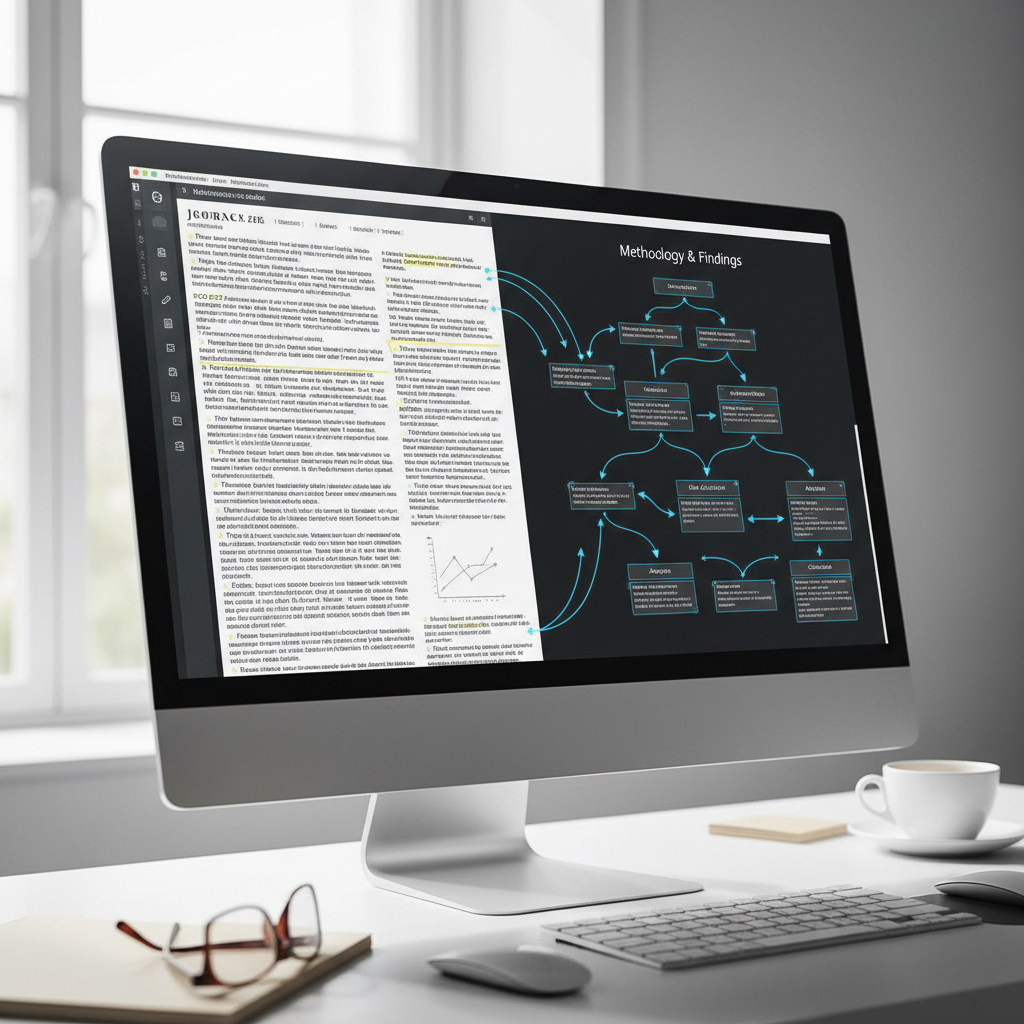
One of the biggest red flags for academic integrity committees is the presence of 'ghost citations'—references that look real but do not exist. Standard AI models are notorious for this, but tools built for researchers, like the Thesionyx Citation Validator, solve this problem by design. To meet the new rules of research, your workflow should follow these steps:
- Centralization: Gather all your peer-reviewed sources in a managed environment like The Vault.
- Verification: Use a validator to cross-reference every claim in your draft against your library.
- Correction: Ensuring that the year, author, and page number perfectly match the source material. By ensuring your AI-assisted drafts are 100% anchored in your actual reading list, you eliminate the risk of accidental fabrication, which is the fastest way to trigger a university investigation.
Preparing for the Viva in the Age of AI
A common misconception is that using AI makes the viva voce (oral defense) easier. In reality, it makes the viva more critical. With the rise of AI, examiners are being trained to look for 'disconnects'—instances where a student’s written work exceeds their verbal understanding of the subject. This is why a Live Viva/Defense Simulator is a crucial part of a compliant research strategy. It doesn't write the answers for you; instead, it probes your understanding of your own drafted chapters. By simulating the pressure of an academic committee, you ensure that the knowledge resides in your head, not just on the page. This 'proves' the authorship of the work during the final examination, satisfying the ultimate requirement of any university AI policy: that the student remains the primary intellectual driver of the project.
Future-Proofing Your Research Strategy
As we look toward the future, the 'new rules' suggest that universities will eventually move toward requiring a 'Statement of AI Usage' with every thesis submission. To prepare for this, researchers should maintain a meticulous audit trail. Using the Thesis Chapter Drafting Tool within the Thesionyx environment provides this trail naturally. It shows that the AI was used as a collaborator to organize the researcher’s own thoughts and sources, rather than a surrogate writer. In conclusion, navigating university AI policies isn’t about avoiding the technology—it’s about using the right technology. By prioritizing source-grounded outputs and rigorous citation validation, you can harness the power of AI to produce a world-class thesis that is both innovative and beyond reproach. The goal is to let AI handle the heavy lifting of organization and formatting, while you provide the critical synthesis and original insight that earns the degree.
Frequently asked questions
What is source-grounded drafting and why is it safer for academic work?
Source-grounded drafting ensures that every sentence generated is directly tied to a verifiable academic source, preventing 'hallucinations' and meeting the strict evidence requirements of university policies.
How do I know if my university's AI policy allows tools like Thesionyx?
Most universities distinguish between 'generative assistance' (which may be banned) and 'research support tools.' To stay compliant, always use AI for structuring and validating existing knowledge rather than inventing new arguments without evidence.
Can AI tools help me avoid accidental plagiarism?
Thesionyx includes a Citation Validator that cross-references all outputs against your uploaded library in 'The Vault,' ensuring that every reference is real, accurate, and correctly formatted, eliminating the risk of accidental plagiarism or fabrication.
Next step
Continue with Thesionyx
An AI-powered operating system designed to assist researchers and higher-education students in drafting source-grounded theses and preparing for viva defenses.
Visit ThesionyxKeep reading
Buy the Thesionyx AI Literature Review Generator. Grounded in your own sources, our tool helps UK, US, and EU researchers draft high-quality thematic reviews.
Discover why specific landing pages for PhD and Masters research are essential for EdTech growth and how to build them for maximum academic impact.
Discover The Vault by Thesionyx: the premier source management software for research groups in Asia. Secure your citations and streamline thesis workflows.
Compare The Vault by Thesionyx against leading source management tools. Discover why UK and EU researchers are switching for better thesis organization.