Outsourcing vs. In-House: The Real Cost of Precision Cleaning for Industrial Castings and Moulds
Compare shot blasting vs. ultrasonic cleaning for industrial castings. Learn the costs, benefits, and trade-offs for US foundries and manufacturers.
The Industrial Cleaning Dilemma: Blasting vs. Sound Waves
For production managers and foundry operators across the United States, the final stage of the casting process often presents the biggest bottleneck. Whether you are dealing with grey iron, ductile iron, or precision aluminum die-casts, the residue left behind—sand, scale, oxides, and release agents—must be removed before the part can move to machining or assembly.
The dilemma is rarely about if the parts need cleaning, but how. Traditionally, shot blasting cleaning equipment for cast iron parts has been the workhorse of the American foundry. However, as tolerances tighten and part geometries become more complex, ultrasonic cleaning has emerged as a formidable alternative. At Castingcleaningservice, we see firsthand how the choice between these two methods impacts both the bottom line and the quality of the final product.
When deciding whether to keep this operation in-house or to outsource to a specialized partner, you must weigh the capital expenditure of machinery against the operational agility of a service provider. In this guide, we will break down the mechanics, costs, and strategic trade-offs of modern industrial cleaning methods.
Comparing the Technologies: How They Work
To choose the right method, you must first understand the physical interaction between the cleaning medium and the casting surface.
Shot Blasting: The Force of Impact
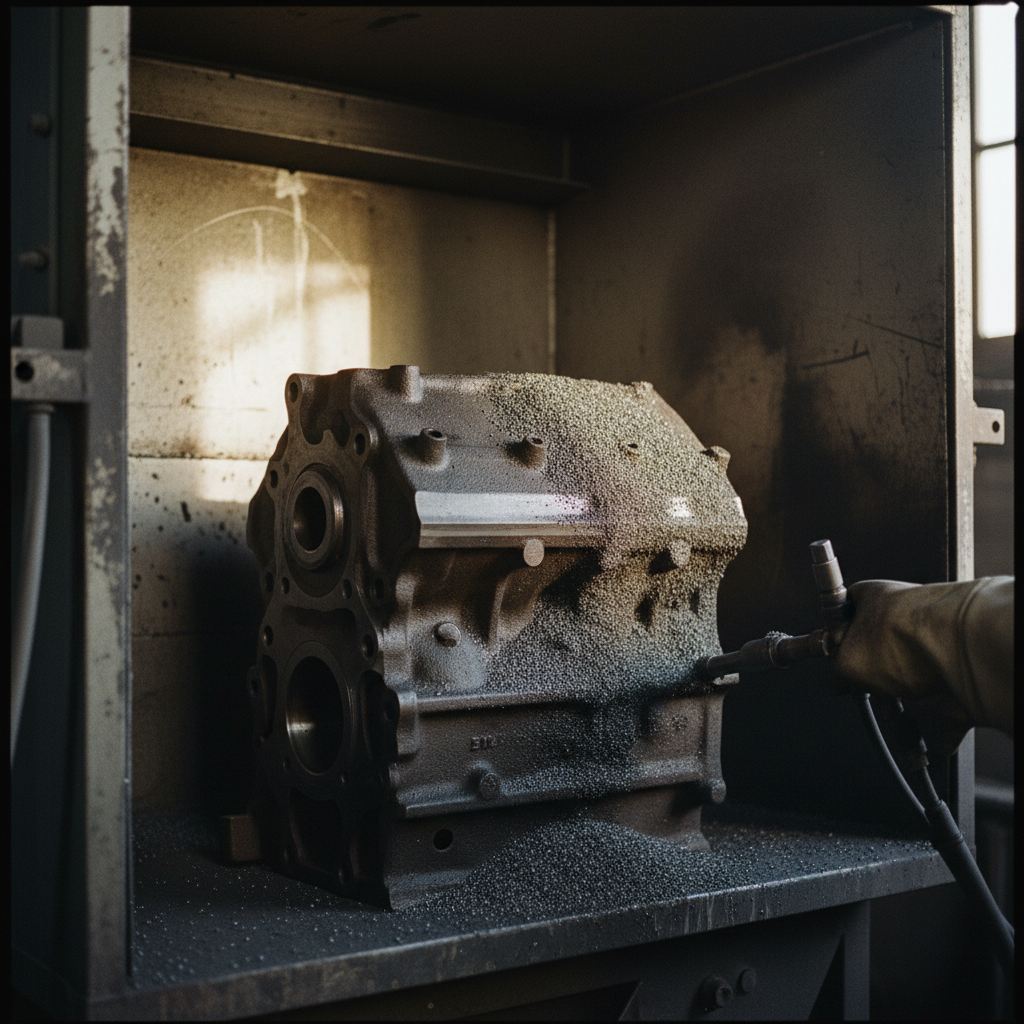
Shot blasting utilizes centrifugal wheels or compressed air to propel metallic or ceramic abrasives at high velocity against the casting. It is a mechanical process designed for:
-
Scale Removal: Stripping away the tough oxide layer formed during cooling.
-
Sand Casting Clean-up: Removing burnt-on foundry sand from the surface.
-
Surface Preparation: Creating a specific "anchor pattern" or roughness (Ra) that is ideal for subsequent painting or coating.
Ultrasonic Cleaning: The Power of Cavitation
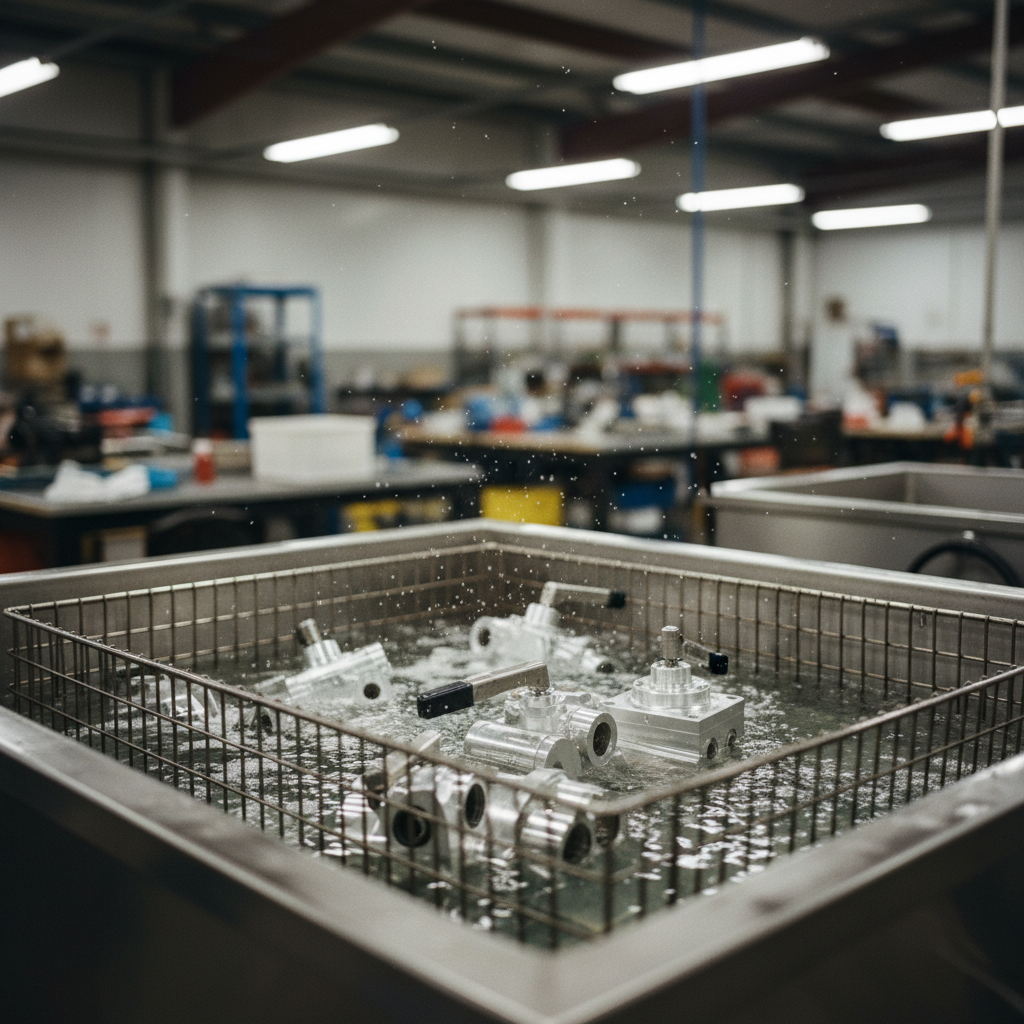
Unlike the blunt force of blasting, ultrasonic cleaning relies on high-frequency sound waves created in a liquid bath. These waves create millions of microscopic bubbles that implode against the part's surface—a process known as cavitation. This is the preferred method for:
-
Complex Internal Channels: Reaching areas where blast media simply cannot travel.
-
Delicate Molds: Cleaning rubber or plastic injection molds without rounding off sharp edges or degrading the tool's precision.
-
Contaminant Removal: Effectively lifting oils, greases, and carbon deposits.
| Feature | Shot Blasting | Ultrasonic Cleaning |
|---|---|---|
| Primary Action | Mechanical Impact (Abrasive) | Sound-induced Cavitation (Chemical/Physical) |
| Best For | Heavy Cast Iron & Steel | Intricate Die-casts & Molds |
| Surface Finish | Textured/Matte | Clean/Original Surface |
| Internal Cleaning | Limited to line-of-sight | Excellent for blind holes |
| Speed | Very Fast (Seconds to Minutes) | Moderate (10 to 30 Minutes) |
| Maintenance | High (Wear on liners/blades) | Low (Fluid management) |
For more details on specific applications, visit our industrial cleaning services page.
Direct Comparison: Which Method Wins for Your Facility?
When evaluating shot blasting cleaning equipment for cast iron parts, the "best" method is dictated by your specific production goals.
Choose Shot Blasting if:
-
You are processing large volumes of heavy ferrous castings (like engine blocks or pipe fittings).
-
The primary goal is removing heavy heat-treat scale or sand.
-
The part requires a specific surface profile for powder coating.
-
You need the fastest possible cycle times for high-throughput lines.
Choose Ultrasonic Cleaning if:
-
You are working with high-precision aluminum or zinc die-castings.
-
The parts have complex internal galleries, such as hydraulic manifolds.
-
You are performing maintenance on expensive molds where dimensional integrity is critical.
-
The residue is oil-based or carbon-heavy rather than metallic scale.
At Castingcleaningservice, we often recommend a hybrid approach for manufacturers in North America: shot blasting for the raw casting stage, followed by ultrasonic cleaning after precision machining to ensure every internal passage is free of chips and coolant.
The Economics of In-House vs. Outsourced Cleaning
The "hidden" costs of industrial cleaning often reside in maintenance and environmental compliance.
In-house shot blasting requires significant investment in dust collection systems and regular replacement of wear-parts like manganese liners and blast wheels. Furthermore, the disposal of spent abrasive media can be a regulatory hurdle in many US states.
In-house ultrasonic cleaning, while quieter and often having a smaller footprint, requires careful management of cleaning chemistries. The "bath life" must be monitored, and the wastewater must be treated or hauled away according to EPA standards.
Outsourcing these tasks to a dedicated facility like Castingcleaningservice allows manufacturers to shift these fixed costs to a variable expense model. This is particularly beneficial for mid-sized plants in the US and Canada that may not have the volume to justify a $250,000 equipment investment but require consistent, high-spec results. By outsourcing, you gain access to multiple technologies without the burden of equipment maintenance or specialized labor training.
How to Choose a Precision Cleaning Partner
Selecting a local service partner is about more than just a price per part. To ensure your production line stays moving, consider these three pillars:
-
Technical Capability: Does the provider offer both mechanical blasting and ultrasonic options? A one-size-fits-all shop may force your parts into a cleaning method that isn't ideal.
-
Turnaround and Logistics: For manufacturers in regional hubs across Mexico and the US, proximity is key. Look for a partner that offers reliable pick-up and delivery or is within a reasonable shipping radius to minimize lead times.
-
Quality Documentation: In industries like automotive or aerospace, a "clean" part must be backed by data. Ensure your provider can offer cleanliness testing or surface profile certifications when required.
Castingcleaningservice prioritizes these metrics, ensuring that the transition from the foundry floor to the finished assembly is seamless. Whether you need deep cleaning for a single high-value mold or a recurring contract for thousands of iron castings, the right partnership transforms cleaning from a chore into a competitive advantage.
About Castingcleaningservice
Castingcleaningservice is a premier provider of industrial surface preparation and precision cleaning solutions. Serving a global market with a focus on the United States, Canada, and Mexico, we specialize in bridging the gap between raw foundry outputs and high-precision finished goods.
We serve a diverse range of clients, from local independent foundries to multinational manufacturing corporations. Our expertise lies in identifying the most efficient cleaning methodology—whether that involves heavy-duty shot blasting or high-precision ultrasonic cavitation—to ensure our customers reduce scrap rates and improve overall operational efficiency. At our core, we are dedicated to the science of clean, providing the technical reliability that modern industry demands.
Frequently asked questions
Is shot blasting or ultrasonic cleaning better for cast iron?
Shot blasting is generally more cost-effective for large, heavy cast iron parts with significant surface scale, while ultrasonic cleaning is better suited for smaller, intricate parts or aluminum die-casts where surface integrity is paramount. Castingcleaningservice can help evaluate which process fits your specific production line.
Can ultrasonic cleaning be used for mold maintenance?
Yes, ultrasonic cleaning is highly effective for removing release agents and carbon buildup from rubber and plastic molds without the abrasive wear associated with traditional blasting methods.
What factors should I consider when outsourcing industrial cleaning?
Key factors include the material of the casting (ferrous vs. non-ferrous), the complexity of internal cavities, the required surface roughness (Ra value), and your total production throughput. Castingcleaningservice recommends a site audit to determine the most efficient workflow.
About Castingcleaningservice
Castingcleaningservice (castingcleaningservice.com) could not be verified from the provided search results and the site's content was unavailable. From the supplied evidence, what they sell, their customers, and locations are not verifiable. The name suggests a cleaning business, but that inference cannot be confirmed from the provided results.
A business that serves customers in a defined local area — trades, clinics, salons, repairs, home services.
Contact Castingcleaningservice
request a quote or get in touch with CastingcleaningserviceNext step
Continue with Castingcleaningservice
Castingcleaningservice (castingcleaningservice.com) could not be verified from the provided search results and the site's content was unavailable. From the supplied evidence, what they sell, their customers, and locations are not verifiable. The name suggests a cleaning business, but that inference cannot be confirmed from the provided results.
Visit CastingcleaningserviceWritten with information published by Castingcleaningservice.