The Citation Trap: How to Validate Your References Before Examiners Flag Them
Learn how to use a citation validator to eliminate 'hallucinated' references and protect your thesis from examiner scrutiny. Essential for PhD and Masters students.

The Growing Crisis of Citation Integrity
For any serious researcher, the bibliography is not just a list of books read; it is the structural integrity of your entire argument. In the current academic climate, the pressure to produce high volumes of work has led to a dangerous phenomenon: the 'Citation Trap.' This occurs when a researcher relies on secondary mentions or unverified AI-generated summaries that inadvertently fabricate or misattribute sources. The consequences of a flawed bibliography are severe. During a viva voce or a peer review, a single 'hallucinated' reference—a source that sounds credible but does not exist—can dismantle your credibility. Examiners are increasingly vigilant, often spot-checking the most obscure references to ensure the candidate has actually engaged with the primary literature. To navigate this, the modern scholar must move beyond manual checks and embrace systematic validation.
Understanding the ‘Hallucinated’ Reference
Wait, how can a citation be 'fake' if it looks real? In the age of computational research, certain tools may suggest a paper title that perfectly fits your narrative, using names of famous professors and reputable journals. However, if that paper was never actually published, you are building your thesis on a foundation of sand. Common reasons for citation failure include:
- The Hallucination Effect: AI tools generating 'ideal' but non-existent sources.
- Source Drift: Misattributing a quote from a secondary source as if it were from the original.
- Typographical Erosion: Small errors in DOIs or volume numbers that make a source impossible to find during an audit. By integrating a citation validator into your writing workflow, you transform your bibliography from a potential liability into a fortress of academic rigor.
How a Citation Validator Protects Your Thesis
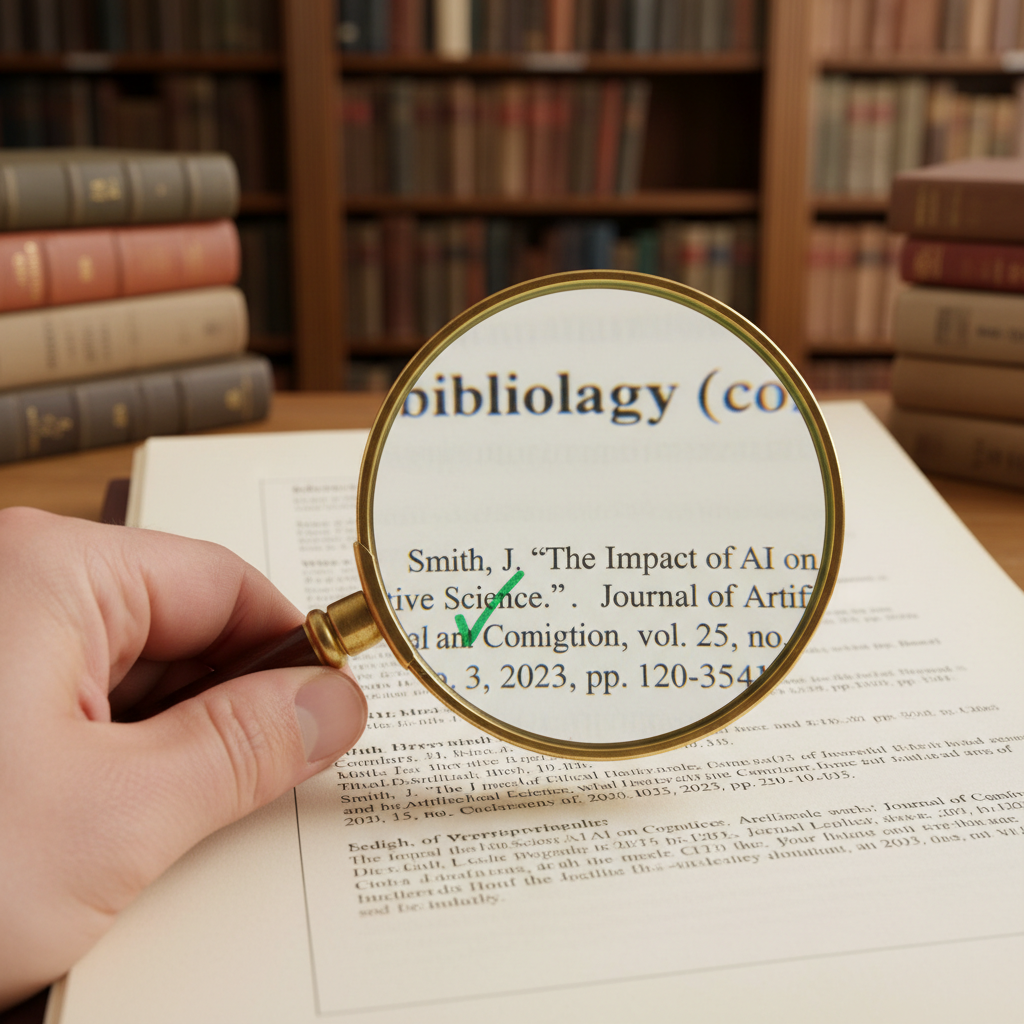
Thesionyx’s suite is designed to prevent these errors before they reach the examiner’s desk. A specialized citation validator works by cross-referencing your bibliography against massive, verified academic databases. It doesn't just check if the format is correct (though it does that too); it checks for the existence and relevance of the work. When you run your draft through a validator, the tool identifies mismatched dates, misspelled co-authors, and journals that don't exist. This level of scrutiny allows you to catch the 'Citation Trap' early. Instead of spending weeks manually checking 300+ entries, the software flags the outliers, allowing you to focus on the intellectual substance of your research. This is particularly vital when using 'The Vault' (Source Management), as it ensures every item stored is a legitimate piece of the academic puzzle.
Strategies for Pre-Submission Validation
Validation isn't just about finding errors; it’s about preparing for the defense. Examiners often look for 'weak links' in a literature review. If they find a citation that is incorrectly formatted or points to a retracted paper, they will likely probe deeper into your entire methodology. Here is a checklist for a 'viva-ready' bibliography:
- Format Consistency: Ensure every entry follows the specified style guide (APA, Harvard, etc.) without deviation.
- Primary Engagement: Verify that you are citing the original work, not just a summary found in a later paper.
- Active DOIs: Test every digital link to ensure the internal examiner can find the paper with one click.
- Recency Check: Ensure you haven't missed seminal works published in the last 18 months. The Thesionyx Citation Validator automates these steps, allowing you to walk into your viva with the confidence that every claim you make is anchored in reality.
Conclusion: Strengthening the Academic Record
Ultimately, the goal of academic writing is to contribute to a body of truth. When we allow unverified or 'hallucinated' citations into our work, we dilute that truth. Using a citation validator academic writing tool is not just a shortcut; it is a commitment to the highest standards of scholarship. As you approach your final submission, remember that your bibliography is the most permanent part of your work. Long after your abstract is forgotten, other researchers will use your reference list to find their own paths. Ensure those paths lead to real knowledge by validating every source today. Knowledge is only as strong as the evidence that supports it—and in the digital age, we have the tools to make that evidence unshakeable.
Frequently asked questions
What is a 'hallucinated' citation in the context of AI tools?
Hallucination occurs when generative AI creates plausible-sounding but entirely fake citations. A citation validator checks these against real databases (like CrossRef or PubMed) to ensure the source actually exists.
Can a citation validator find errors that a typical manual check might miss?
Most manual errors stem from 'copy-paste fatigue,' where volume and issue numbers are swapped, or authors' names are misspelled. Automated validators catch these discrepancies instantly across hundreds of entries.
How does citation validation help with the Viva/Defense?
Absolutely. Even if your citations are real, inconsistent formatting (mixing APA with MLA) can signal a lack of attention to detail. A validator ensures structural uniformity throughout the entire document.
Next step
Continue with Thesionyx
An AI-powered operating system designed to assist researchers and higher-education students in drafting source-grounded theses and preparing for viva defenses.
Visit ThesionyxKeep reading
Explore why academic platforms like Thesionyx need dedicated demo and lead-capture paths to convert institutional partners and high-value researchers.
Learn how to use AI tools like Thesionyx to write your thesis while adhering to UNESCO and global academic integrity guidelines. Professional, safe, and transparent.
Stop worrying about AI hallucinations in research. Learn why a source-grounded workflow is essential for academic writing and how to protect your thesis.
Master the AI literature review workflow. Learn how Thesionyx's Vault Method creates audit-ready, source-grounded thesis chapters without hallucinations.