Beyond the Black Box: Creating Auditable, Source-Grounded Research in the Age of AI Detection
Learn how to navigate AI misconduct detection in academia using source-grounded tools like The Vault and Citation Validator for auditable research.

The Transparency Crisis in Modern Academia
The academic world is currently locked in an arms race. On one side, researchers are utilizing Large Language Models (LLMs) to manage the overwhelming volume of global literature. On the other, publishers and university boards are deploying increasingly aggressive algorithms to identify 'AI misconduct.' The tragedy of this conflict is that legitimate, hardworking scholars often find themselves caught in the crossfire. The problem isn't the use of AI itself, but rather the 'Black Box' nature of traditional generative tools. When a researcher uses a standard chatbot to summarize a field, the output is often a polished paragraph with no visible umbilical cord connecting it to the source material. To a detection algorithm, this lack of a 'paper trail' looks exactly like misconduct. To move forward, we must transition to a model of full-disclosure research, where every sentence generated is auditable, grounded, and verified.
Moving from Generation to Grounded Synthesis
AI misconduct detection in academia doesn't just look for 'robotic' prose; it looks for the absence of specific, verifiable links. Traditional AI often 'hallucinates' citations or mashes together concepts that don't actually coexist in the literature. To satisfy the new standards of academic integrity, researchers need to adopt a Source-Grounded Workflow. This means that the AI is not allowed to 'dream' or pull from its general training data. Instead, it must be restricted to a specific library of verified PDFs and journals. This is where the concept of 'The Vault' becomes essential. By confining the AI's 'knowledge' to a curated silo of academic papers, you ensure that every claim made has a traceable origin. This effectively eliminates the primary signatures of AI misconduct: vagueness and hallucination.
The Power of the Citation Validator
The most common pitfall in modern research is the 'ghost citation'—a reference that looks real but doesn't exist. Publishers now use automated tools to cross-reference bibliographies against databases like CrossRef and PubMed. If your citations don't match, your work is flagged. At Thesionyx, we developed the Citation Validator to serve as a pre-emptive defense against these flags. This tool doesn't just check if a citation is formatted correctly (such as APA or Harvard style); it verifies the existence and relevance of the source. * Veracity Check: Does the DOI link to a real paper?
- Contextual Integrity: Does the cited paper actually support the claim being made in the text?
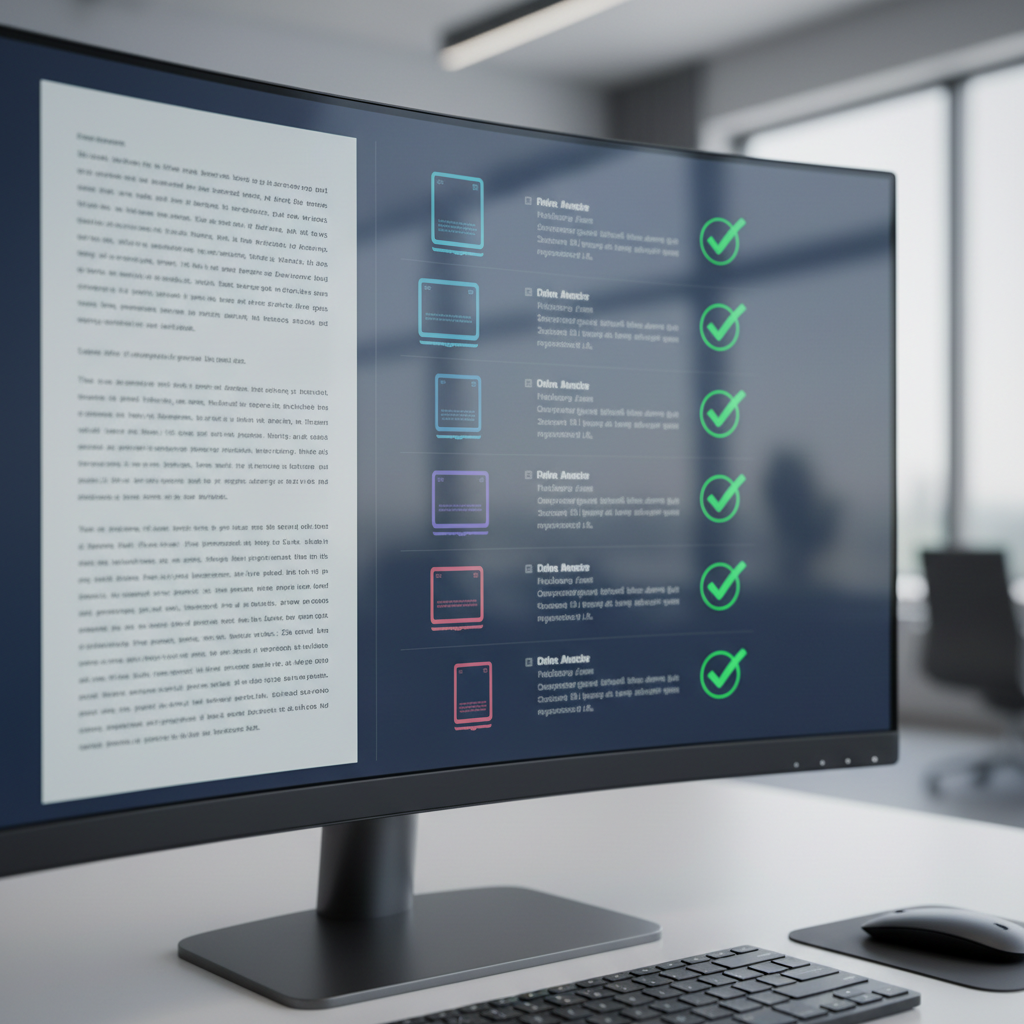
- Audit Trail: It creates a log showing exactly which page of which PDF informed a specific paragraph. By having this validation layer, a researcher can present their work to a supervisor or publisher with an 'Audit Log'—a document that proves the AI was used as a sophisticated filing clerk rather than a ghostwriter.
The Vault: Building a Fortress of Integrity
The future of the PhD and high-level research is not humans versus machines, but the 'Cyborg Researcher' versus the 'Black Box.' The distinction lies in The Vault. The Vault is not just a storage folder; it is a structured intelligence environment. When you upload your primary and secondary sources into The Vault, you are creating a closed-loop system. When you use the Thesis Chapter Drafting Tool within this environment, the system is forced to pull 'evidence blocks' directly from your uploaded materials. This creates a transparent lineage:
- Source: The original peer-reviewed paper in The Vault.
- Synthesis: The AI identifies the relevant data point.
- Output: The draft includes a precise, validated citation.
- Audit: The researcher can click the citation to see the highlighted source text immediately. This level of transparency is the only way to remain 'future-proof' against evolving AI detection algorithms. While detection tools get better at spotting patterns, they can never argue with a perfectly cited, source-grounded document that follows a clear logic trail.
Conclusion: The Audit as the New Standard of Excellence
Ultimately, defending your research against claims of AI misconduct happens long before you submit the final draft. It happens during the drafting and simulation phases. Using tools like the Live Viva/Defense Simulator allows you to test your grounded research in real-time. If you cannot explain the logic of a paragraph or point to the source in your Vault during a simulated defense, you know your draft needs more grounding. As we navigate this new era of EdTech, the goal is not to hide our use of technology, but to use it so responsibly that our transparency becomes our greatest strength. By moving 'Beyond the Black Box,' researchers in the UK, US, and beyond can reclaim the efficiency of AI without sacrificing the soul of academic rigor. Quality research is about the search for truth, and truth requires a visible path back to the evidence.
Frequently asked questions
How do publishers detect AI misconduct?
Publishers use sophisticated algorithms to look for patterns in syntax, lack of specific citations, and linguistic 'hallucinations.' An auditable trail provides the raw evidence needed to disprove a false positive.
What is 'source-grounding' in the context of research tools?
The Vault is a source management system that ensures every piece of text generated is anchored to a specific, verified PDF or paper, preventing the 'black box' effect where AI creates information from nothing.
Does using AI productivity tools automatically count as misconduct?
No. These tools are designed to facilitate 'Cyborg Writing'—a partnership where the human directs the inquiry and the AI manages the data synthesis, with every step being fully documented and verified.
Why is a Citation Validator necessary?
A Citation Validator cross-references generated text against global databases (like DOI registries) to ensure that every reference actually exists and supports the claim it is attached to.
Next step
Continue with Thesionyx
An AI-powered operating system designed to assist researchers and higher-education students in drafting source-grounded theses and preparing for viva defenses.
Visit ThesionyxKeep reading
Learn how to use AI for literature reviews while meeting 2026 transparency standards. Master citation validation and ethical synthesis with Thesionyx.
Learn how to move from fragmented notes to a unified AI-native research workflow. Discover the power of a source-grounded operating system for your PhD.
Learn how to use a citation validator to eliminate 'hallucinated' references and protect your thesis from examiner scrutiny. Essential for PhD and Masters students.
Explore why academic platforms like Thesionyx need dedicated demo and lead-capture paths to convert institutional partners and high-value researchers.