The Ethics of Efficiency: Using AI as a Co-Author for Your Literature Review
Learn how to use AI for literature reviews while meeting 2026 transparency standards. Master citation validation and ethical synthesis with Thesionyx.

The New Paradigm of Academic Synthesis
The academic world has reached a tipping point. For years, the integration of Artificial Intelligence into the research workflow was met with a mixture of skepticism and outright resistance. However, as we navigate the current landscape, the conversation has shifted from if we should use AI to how we use it ethically. The 2026 transparency standards, adopted by major publishing houses and global university boards from London to Singapore, have introduced a clear framework for this partnership. The "Ethics of Efficiency" is no longer a paradox; it is a discipline. At its core, it suggests that using AI to handle the heavy lifting of source synthesis is not a shortcut—it is an evolution of the research process that allows the scholar to focus on high-level critical analysis. When we treat AI as a "Co-Author" for a literature review, we aren't suggesting the machine possesses agency. Instead, we are utilizing a sophisticated synthesis engine to identify patterns, gaps, and thematic clusters within thousands of pages of text—a task that would take a human researcher months to perform manually.
Validation: The Antidote to Hallucination
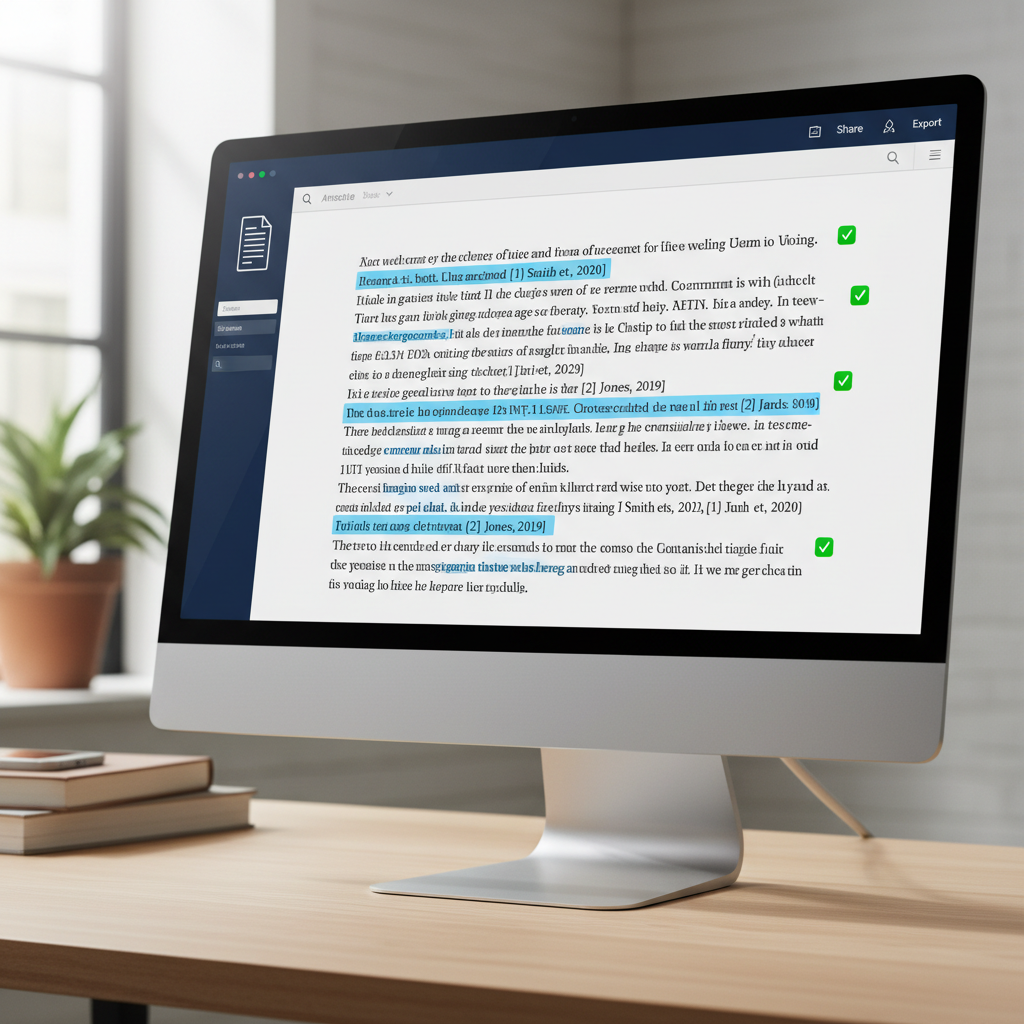
The most significant hurdle in the adoption of AI-driven research has always been the risk of misinformation. In the early days of generative models, "hallucinated" citations were a plague on the industry. Today, the 2026 standards mandate a "Validation First" approach. Using tools like Thesionyx's Citation Validator, researchers can now ensure that every claim made by the AI is tethered to a verifiable, peer-reviewed source. Ethical efficiency requires:
- Fact-Checking at the Source: Never taking a summary at face value without clicking through to the primary DOI.
- Provenance Tracking: Maintaining a digital trail of how a source was found and why it was included.
- The Vault Management: Using centralized repositories to store and categorize verified sources, ensuring the AI only draws from a curated pool of legitimate literature. This "closed-loop" system prevents the AI from wandering into the realm of fiction, maintaining the integrity of the thesis.
Transparency Standards and the 2026 Framework
A common mistake among early adopters was the "Black Box" approach—outputting an AI-generated review and passing it off as human-only work. Under current global policies, transparency is the primary metric of academic honesty. To meet these standards, your literature review must include a clear disclosure of the AI's role. This involves:
- Methodological Disclosure: Detailing the prompts and parameters used to generate the synthesis.
- Synthesis vs. Sentiment: Distinguishing between what the AI summarized and the unique critical perspective you, the researcher, provided.
- Audit Trails: Keeping records of the drafting process, showing how the human researcher edited, challenged, and refined the AI's initial drafts. By being open about the use of tools like the Literature Review Generator, you demonstrate a mastery of modern research tools rather than a dependency on them.
Bridging the Gap: Strategic Critical Thinking
The goal of a literature review is not just to summarize what has been said, but to find what has not been said. This is where the AI-human partnership shines. While AI can identify thematic clusters across vast datasets, it often lacks the "intuitive leap" required to spot a niche research gap. The researcher’s role in 2026 is to act as the architect. You use the AI to lay the foundation and scan the horizon, but you must be the one to designate where the new structure—your original contribution—will be built. Using an Academic Critique Engine, you can push back against the AI's findings. You can ask the system to "find flaws in this prevailing theory" or "locate contradictions between the 2022 and 2025 data sets." This turns the AI from a mere scribe into a high-level sparring partner.
From Draft to Defense: The Full Lifecycle
The final stage of the literature review is the ability to defend it. The transition from the written page to the oral defense (the Viva or Thesis Defense) is where many students feel the most vulnerable. Ethical AI use extends into preparation. By utilizing a Live Viva Simulator, researchers can test the strength of their literature review before it ever reaches the examiners. A well-constructed AI simulator will:
- Question the Bibliography: Ask why certain authors were prioritized over others.
- Challenge Synthesized Claims: Play "devil's advocate" with the AI-generated summaries to see if the researcher can defend the underlying logic.
- Refine Verbal Articulation: Help the researcher move from the dense language of a draft to the clear, authoritative tone required for a successful defense. Ultimately, the ethics of efficiency boil down to responsibility. The AI may help you write the review, but you are the one who must stand behind it. In 2026, the most successful researchers are those who see AI not as a way to avoid work, but as a way to do better work.

Frequently asked questions
How do I declare AI usage in my thesis? Home
Transparency is key. Most policies in 2026 require a formal declaration of AI use in the methodology or acknowledgments section, detailing exactly which tools were used and for what purpose.
Is it ethical to use AI for citations?
AI models are prone to 'hallucinations.' You must use a dedicated citation validator like Thesionyx to cross-reference every generated claim against archived DOI databases.
Does AI count as a co-author?
In the 2026 framework, AI is viewed as a 'technical assistant' rather than a co-author. It can synthesize data, but the interpretation and intellectual 'thread' must belong to the human researcher.
Next step
Continue with Thesionyx
An AI-powered operating system designed to assist researchers and higher-education students in drafting source-grounded theses and preparing for viva defenses.
Visit ThesionyxKeep reading
Learn how to navigate AI misconduct detection in academia using source-grounded tools like The Vault and Citation Validator for auditable research.
Learn how to move from fragmented notes to a unified AI-native research workflow. Discover the power of a source-grounded operating system for your PhD.
Learn how to use a citation validator to eliminate 'hallucinated' references and protect your thesis from examiner scrutiny. Essential for PhD and Masters students.
Explore why academic platforms like Thesionyx need dedicated demo and lead-capture paths to convert institutional partners and high-value researchers.